Our next Zoom meeting is on Tuesday 11th November 7pm – Please contact simongibbon@casav.uk for further details.
Full notes below, after a quick summary – follow links for the detail:
- Waste
- Out of the box thinking from a company says we should all be using biodegradable boxes rather than plastic bin bags to put our waste especially food waste.
- North Yorkshire Council is working with a doorstep collection company who will take the things you don’t want.
- Reduce / Reuse / Recycle / Circularity:
- blister Blister pack recycling now at Great Ayton and Stokesley libraries.
- Blanket squares for the World – turns spare/waste yarn into blankets for the homeless
- Working with Kirby and Great Broughton Primary school children on repurposing their things to stop them going to waste
- Christmas upcycling workshops in Great Ayton and Stokesley
- Good news – the new bins really do increase recycling rates, early days, but Ryedale is already seeing the benefits where the bins have been introduced.
- Food:
- Farmers are often stuck with surpluses as supermarkets won’t take them
- Textiles:
- Our first Clothes Swap was a great success.
- 18/10-16/11 at Danby Lodge exhibition of eco-conscious fashion design
- Pilot Haloween costume exchanges at Scarborough / Northallerton / Ripon / Selby libraries
- Earthshot prize competitor has a filter which remove microfibres from washing machine water
- Zero Carbon
- North Yorkshire Council is driving the new version of the York and North Yorkshire Routemap to Carbon Negative
- North Yorkshire Council is still committed to delivering its commitments to achieve net zero
- Chemicals
- Despite massive press exposure forever chemicals are still on the products we use
- Procter & Gamble with Imperial College and Durham University with matching UK government funding has developed many new ways of reducing chemicals, water and energy used in cleaning, while also making garments last longer
- Communication
- A school has requested a children’s version of the CASaV monthly newsletter – watch this space
- The Plastic Paradox is a narrative of misinformation aimed at making us see plastics as the solution with no problems, at least if you ignore plastic waste
- CASaV Wide
- Coop have many ways to accept feedback, we want to make our food collections even less wasteful, do you have thoughts on what they could better locally or nationally?
Actions
- Simon – pen reinking – contact Nigel Carden about possibility of doing something similar around Stokesley.
- Anne look into available dates for a Climate Action Stokesley and Villages Christmas market stall.
- Kate look into whether a children’s version of the CASaV monthly newsletter is practical.
Background – Our Monthly Waste Discussions
If you have just signed up to the Waste Group or stumbled across this page, then welcome, I hope these notes of our discussion make sense.
We meet once a month to talk about topics connected to waste and plan / report progress on our ongoing activities such as the Repair Cafes, Foodshare, Refill scheme and events such as the Bilsdale Show. If you visit the “Thoughts on Waste” page on the CASaV website you can find all our past discussions – https://climateactionstokesleyandvillages.org/waste/thoughts-on-waste/
Please get in touch if you have any questions.
Notes form 9th September 2025 CASaV Waste
The meeting discussion ranged from the shows that Climate Action and Villages has recently had stalls at to the risks from plastics in contact with food.
Previous Actions
- Simon will look into what can be done going forward to better support the shows to obtain recycling facilities.
- Tracey working with the commercial waste group to produce guidance document – which would include support for events – Simon follow up before end of year
- Simon follow up with engagement of show committees to help them with recycling and environmental policies.
- Show reviewing this year will contact again before end of year to talk about greening next year’s shows.
- Kate check on ability to recycle multiple blister packs at Boots.
- Boot website describes the scheme requiring an Advantage Card in order to get points. Visited Northallerton Boots and they are happy to take blister packs without needing to have an Advantage card.
- Placed a blister pack collection box in Stokesley Globe Library – going to be publicised, then considering possible extra box in surgery.
- Great Ayton Library are already collecting blister packs and taking them to Boots in Guisborough.
- Fred send details of pen refilling.
- Nigel Carden in Guisborough has purchased refill cartridges for a range of different pens, people drop off exhausted or jammed pens at Guisborough Repair Cafe and then drops them back locally. Typically he fixes jammed mechanisms and renews the ink.
- Action: Simon – pen reinking – contact Nigel Carden about possibility of doing something similar around Stokesley.
- Some medical students are using fountain pens to avoid producing plastic waste – excited that the pen lasts forever.
Matters Arising
Repair Cafes: 20th September at Swainby went well, we were a bit short of front of house people, so if you want to get involved no need for special repair skills, just a desire to help the event run well. The next repair cafe on 11th October at Stokesley will involve draught excluders to help people stay warmer this winter.
Clothes Swap: Our first Clothes Swap organised by Jan Mercer and Jo Ackroyd with 9 others volunteers helping. A successful clothes swap involving 410 items of clothing was held on Saturday, 60 attendees, looking into holding another in January – numbers below. Summary: 108: starting stock, 302: stock received during event + 23 prom items received and donated to school, 410 total stock, 255 stock out, 155: balance stock remaining. Currently the plan is to run another one in January. Even after starting with 100 plus items, people didn’t immediately see what they liked, so people waited for clothes to come in, and a late comer didn’t find what she was looking for. The clothes turned out to be very inclusive size / style wise, but no children’s clothes and while men’s clothes were there, no men came and no men clothes were taken. Fantastic first event with some learning.
Updates
Michelle
Switched to a community energy purchase scheme so part of a group getting cheaper energy.

Volunteered at Pickering Give & Take – there were 15 volunteers, working both on the day and the night before, with Duke of Edinburgh students bring stuff out of cars. Sorting takes a reasonable amount of time to make sure that people are able to find things and the event doesn’t descend into chaos. They only take small furniture items, as large items get left as people are unable to take them away. At the end of the event they have a network of people to take things away. They run about 3 a year at carefully chosen times, so in end of September / early October as seasons change, then in February when people are clearing out after Christmas, … There is quite a lot of health and safety behind the scenes and PAT testing worked well on all the electrical items which came in. With donations for charity. The council covers hire of the hall hire and insurance is covered the hall insurance.
Reclaim – Remake – Reimagine @ Danby Lodge NYMNP – 18/10 – 16/11 – “Fashion designer, Sarah Thompson explores the deep-rooted connection between textiles and her farming heritage in North Yorkshire. Through her brand ‘TOM-O’, she uses fabric and textiles to tell stories, uncover history and champion sustainability. With a commitment to fashion that doesn’t cost the earth, Sarah’s work reflects her dedication to creating meaningful, eco-conscious designs that honour both tradition and the environment.”
The pilot Halloween costume first with drops at Scarborough / Northallerton / Ripon / Selby Libraries & County Hall (into clean big bins), then lots of sorting and repair, splitting into age groups, removing items that aren’t correctly labelled to meet current standards (fire, etc..) including handmade item, then will made available to be collected from the same locations. Looking into follow-up eco-activities, may include a Christmas Jumper swap later in the year.
International E-waste day 14th October is particularly encouraging people to tackle their “drawer of doom” full of old phones, chargers, cables etc.. There is a Great Cable Guide. Also 14th October is the day when Microsoft stop automatically supplying updates to Windows 10 machines, have a look at https://casav.uk/windows10 to see what you can do to keep using your current computer and stop it becoming more e-waste.
Tracey
North Yorkshire Doorstep Collections is a service run for the council by Anglo Doorstep Collections to make sure things get a second life, they will collect anything from your house – NYC has been publicising this on Facebook etc.. There is some debate about its effect on charity shops. Overall feel it is another way of trying to reduce the amount of waste we produce, it takes a bit of organisation i.e. arranging collection time etc., so similar issues to Freecycle, but give some money to charity and not as simple as just taking stuff to charity shops.
The Northern Echo has highlighted that everywhere in North Yorkshire can now recylce the same things across the county.
Anne
An Earthshot prize competitor is a device which removes microfibres from washing machine waste water – filters the water – removes 95% of the micro fibres. An article in the Times, has the infographic below:
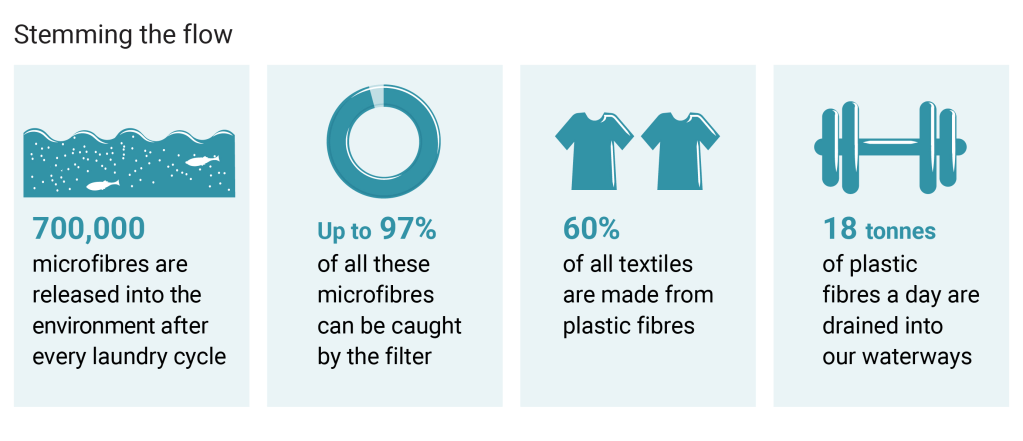
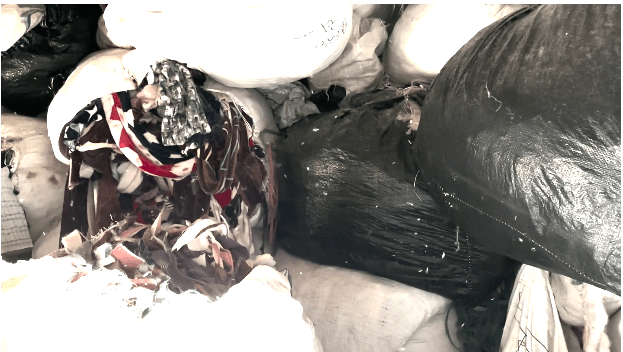
There are factories in India which effectively mashes up waste clothes to make new clothes with little concern for safety and very long working hours, so the workers are now suffering on lung diseases from fibres floating around in their work environment. The fundamental cause is our over consumption having a big impact in the third world, the clothes have often been given to charity shops, but were so poor that they ended up being exported to India. These factories need to implement safe working conditions, we need to reduce our consumption of fast fashion and avoid mixed fibres which don’t biodegrade. The Guardian today a comprehensive article with video showing fibres and lint in the air.
The Labour Party Conference had an inspiring range of fringe events on making climate things better. With more labour MPs in rural areas there were many farmers so giving a better chance of making a green economy.
One issue farmers face is that they can’t know exactly how much they will produce, but supermarkets won’t buy surpluses off them. If supermarkets were more flexible with prices to customers they would sell more and so use up surpluses, rather things going to waste, this year cherries were particularly plentiful. David is lucky with eggs that manufacturers will take surplus eggs for mayonnaise and for grain there are lots of products such as animal food which can use them, not just supermarkets and their direct suppliers.
Our Christmas market stall last year was well received.
Action: Anne look into available dates for a Climate Action Stokesley and Villages Christmas market stall.
Kate
Blanket squares for Teesside being run by Redcar Palace is part of Blankets for the world, has people making knitted or crocheted squares which are then sewed into blankets to keep the homeless warm on Teesside. We have been running knitting sessions with people knitting together.
Been working with Kirby and Great Broughton Primary School, delivered an idea drop ahead of students doing an activity to reduce environmental impact, the children were incredibly receptive with questions and there own ideas of what could they do / etc., so 10 minutes became 1 hour. With children saying they won’t buy new clothes, will only wear second hand clothes, will spot clean rather so reducing machine washing. Last week we supported the school in running a morning event where all the year 6 children brought items to swap with eachother or repurpose in a way they will use them again. On Wednesday afternoon having the school is having fashion show to let the parents see what the children have and hopefully give them some ideas of what they can do.
The school now want to start a little green group, one of first things they want to do is to plant up school grounds.
Marwood School wanted a printed version of our newsletter to go on the wall, so now thinking about doing a junior version of the newsletter for children. Could include items focused at children, such as walk to school day or the Guisborough bike bus.
Action: Kate look into whether a children’s version of the CASaV monthly newsletter is practical.
Upcycle Christmas decoration workshops: Great Ayton Library are planning one, so will combine with them – 14th November. CASaV are going to take part in the Stokesley Christmas Tree competition again this year, so looking at doing an event in Stokesley library to make trees using natural materials that rot down / or things that would just go to waste.
Jenny
Forever chemicals are everywhere in the environment, as well as on your own things like fire retardant on clothes and waterproofing these chemicals have potential toxicity issues for kids.
Coop are great at asking for feedback in many different ways, so at Local Coop meeting we have asked them to put surplus food into cardboard boxes rather than plastic bags, and nationally asked that they need to reduce the amount of plants they sell which just die in the shops. On the positive side Coop aim to double bean consumption, great for health and great to free up land.
David
There is a higher rate of recycling with the new bin roll out in Ryedale – with the two separate bins, paper and card – mixed – both significant increased. Hambleton did well recycling being about 60th in the UK, the unitary authority is 129th, but last year’s figures weren’t accurate due to join up. The new figures should be available at the end of year should get figures for first full year.
East Riding/Hull have high recycling rates due partly to food waste collection areas always higher.
As NYC Climate Champion spoke to Environment Group in NYC to reassure them that unlike some other local councils NY Councillors are still very much behind the climate policies that the council has been working on for a number of years.
The 2027 council election campaign started today, so talking to people on the doorstep about climate issues.
Working on the next version of the combined authorities “Routemap to Carbon Negative” (Net Zero), trying to ensure that the version is properly aligned and owned by North Yorkshire Council.
Yorskhire Post Climate Change Conference is on 16th October, as a climate group member you can get free entry with the code CC2025.
Simon
Just finished being part of the science advisory panel for Procter & Gamble’s ANNTENA Prosperity Partnership with Imperial College and Durham University on sustainable cleaning. The project has researched new ways to reduce the impact of cleaning, less water, less energy, less chemical and helping clothes last longer. The 4 year project ends at the end of this year, one of the last activities is going to be a Hackathon where teams of students / staff will “develop experimental prototypes that enable new cleaning methods and formulations for precision sustainable cleaning. Participants are invited to design macro-and microfluidic devices that boost efficiency while reducing water use, energy (temperature) levels and chemical concentrations.”

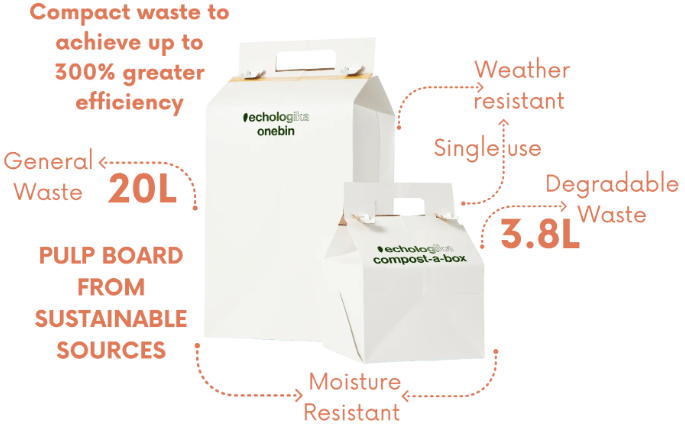
The company Echologika is keen to replace plastic bags for holding waste, so produce boxes into which waste is put. The boxes are fully biocompostible, so make obvious sense for food waste, less obvious they for waste which is going to be incinerated aside them being made from grown resources they are sustainable over a 20-30year period. The ability to compact waste may also help with storing. Anyway some out of the box thinking about how plastic bin bags could be replaced.
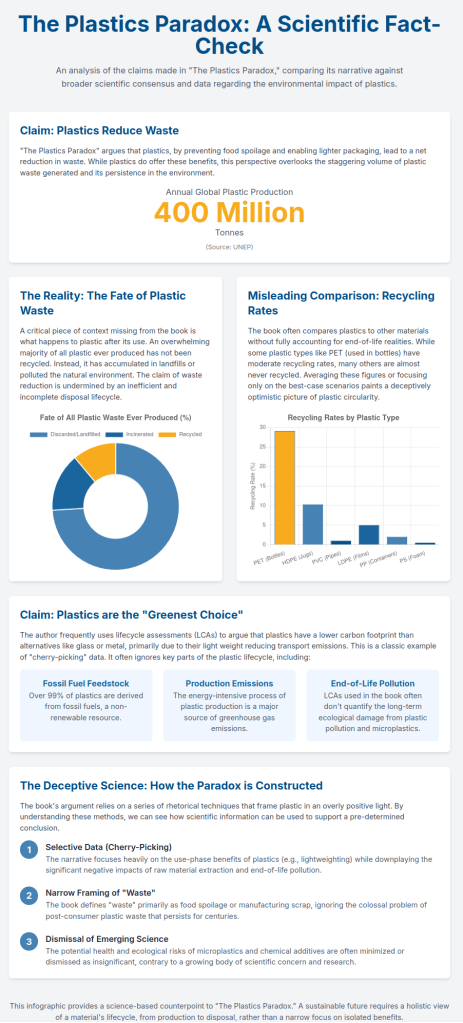
The “Plastic Paradox” is a website and downloadable book – https://plasticsparadox.com/, which attempts to say that there is no plastics problem. The plastic paradox is a typical example of the “tobacco industry playbook“, in that it is extremely economical with the truth, deceptive in the way it tells the science, bigs up the positives of plastics and belittles the negative. On pages 7-8 the author explains how polypropylene will degrade at room temperature in less than a year, which is true if the polypropylene has no stabilisers in it, but all the polypropylene you encounter will have been stabilised to have stop degradation for decades, otherwise your car bumper would fall apart within a year. Whether a material is environmentally friendly is always a multi-dimensional question, so while aluminium uses a lot of energy make, once in use it leaves little waste and can truly recycled time and time again, where a plastic uses far less energy to produce, ends up as waste after a single use and often isn’t or can’t be recycled. The book uses a lifecycle analysis to explain how plastic are more sustainable, but does not address the waste issue or at least states that waste is not a problem.
While I can’t claim to have read the whole book, I got Google Gemini to analyse the whole book and it paints a damming picture of it – report (Scientific Review of “The Plastic Paradox”: Deconstructing a Narrative of Misinformation) and infographic below. “This report provides a comprehensive scientific evaluation of Dr. Chris DeArmitt’s “The Plastics Paradox.” Our analysis concludes that the book is not an objective scientific assessment but a work of sophisticated industry advocacy. It systematically misrepresents the state of environmental science on plastics through a consistent pattern of selective data presentation (cherry-picking), the dismissal of entire fields of scientific inquiry as “junk science”, and the use of flawed rhetorical framing to construct a narrative that runs contrary to the global scientific consensus on the plastic pollution crisis. This review will deconstruct the book’s arguments section by section, providing evidence from peer-reviewed literature and official data sources to correct the record on Life Cycle Analyses, waste management, the sources and fate of plastic pollution, and the toxicological risks of microplastics. Ultimately, we demonstrate that the “paradox” presented by the author is a false dichotomy designed to defend the status quo of plastic production and consumption.”
Meetings
Repair Cafe – 11th October Stokesley Globe Library – 10am – 12pm
CASaV Group Meeting – 21st October Stokesley Library – 7.30pm
AOB
Next Meeting
Tuesday 11th November 7pm – Please contact simongibbon@casav.uk for further details.
 Climate Action Stokesley and Villages