At our Repair Cafe in Stokesley on 8th February 2025 as part of “Show the Love” month we gave away green goody morsbags – read about “Show the Love” month” and morsbags below.
1st-28th February The Climate Coalition’s ‘Show the Love’ month
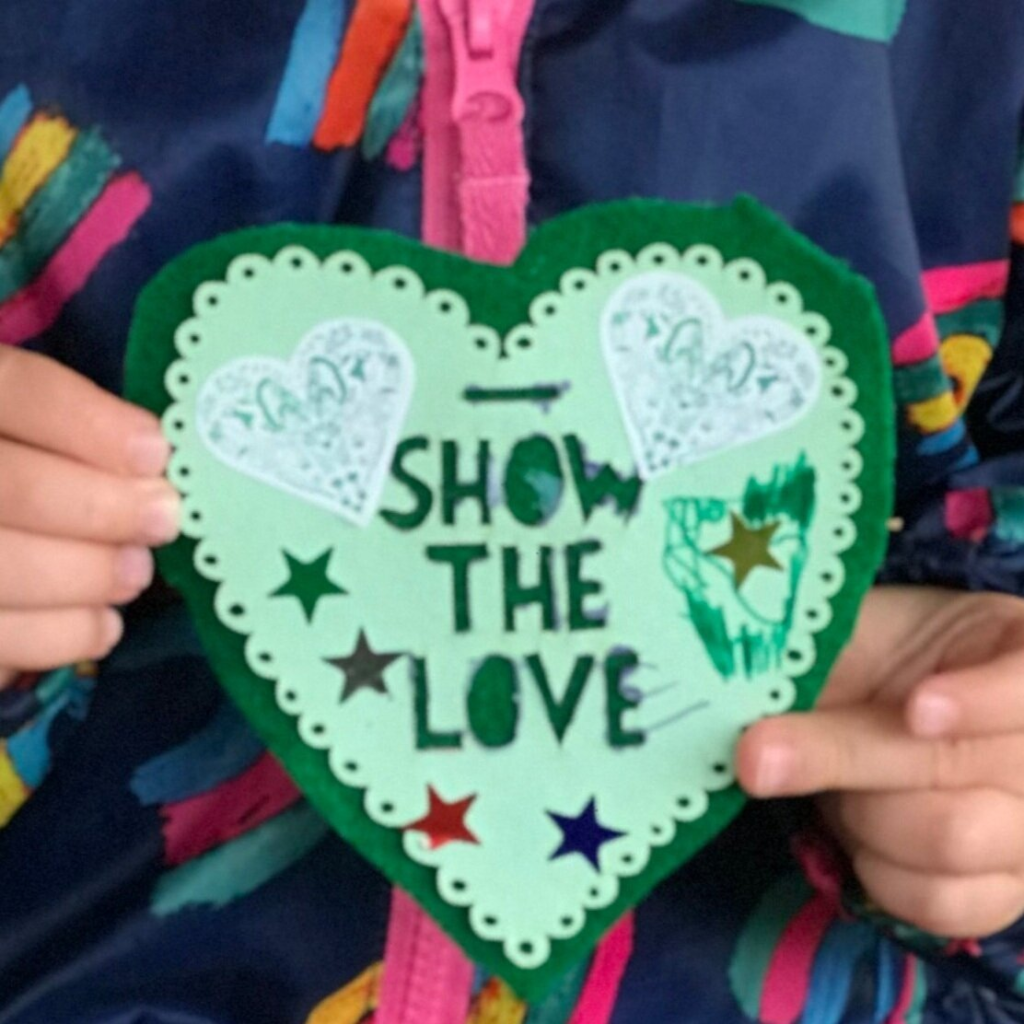
For ten years, The Climate Coalition (which also organises the Great Big Green Week) has united communities behind the power of green hearts every February. “Show The Love” has grown public support for climate action through local events, heartfelt conversations and green heart craftivism in every corner of the country.
Groups and individuals across the UK who are already taking action for the people and places they love are encouraged to showcase their activities and stories to others, to government and to other national and local decision makers through the ‘Show the Love’ campaign.
The Climate Coalition believes stories are powerful; they believe every action people take together is a story that can inspire others and spark more actions. Starting this month they plan to bring these stories of hopeful action together to demonstrate to politicians that we are a nation of green hearts.
morsbags – what’s the story of this bag?
It is handmade from recycled fabric, meaning it is completely unique and really durable. It is made from a pattern developed by morsbags to help people reduce their reliance on plastic bags. Nearly 600,000 morsbags are now being used worldwide (as of February, 2025) and each one saves around 500 plastic bags.
This is a positive way to reduce the hideous number of plastic bags being used and to keep textile waste out of landfill – 1 million plastic bags are consumed per minute globally – of which hundreds of thousands end up in the oceans and devastate wildlife.
The idea is to get together with people in your local community to form a crafting ‘pod’, make reusable morsbags and then give them away for free. Can you sew? Go to www.morsbags.com to download the free pattern and make morsbags from old curtains, duvet covers, tablecloths etc. or find a ‘pod’ to join for sewing togetherness fun! Please spread the word…
This bag was made for you by a pod called Stokesley and Villages Repair Cafe, part of Climate Action Stokesley & Villages. Join us!
What’s in your bag?
We can all take simple steps now to fight climate change & biodiversity loss and make this world a better place to cherish for future generations. We’ve included some little gifts and resources to help you take those steps:
- Packet of peas to grow your own
- Fairtrade tea bags & info on Fair Trade
- Resources from North Yorkshire Rotters to save food waste
- Handmade recycled paper pulp heart with flower seeds to scatter in your garden & attract pollinators
- Sustainable pen – to reduce use of plastic pens
6 ways to take action now
1. Food
We all have to eat, but what food you eat and how you source your food can make a huge impact on the planet. Eating a largely plant based diet can cut up to 90% of food related carbon emissions. Better still, grow your own food! And you don’t need a garden, you can sprout your free peas on a window sill for the freshest pea sprouts you’ve ever tasted.

Notice where your food comes from – think about the food miles your food has travelled and choose locally grown food wherever possible. Buying organic means less harm to nature and Fair Trade food is also usually cultivated with a sensitivity to the environment.
Use your resources from North Yorkshire Rotters to love your food more and waste your food less.
Aim to buy food with a minimum of packaging as well, which brings us to…
2. Waste / consumption
We probably own far more household items (including clothes and ‘tech’) than we can really ever make full use of. We have developed a ‘throw away’ culture, buying more than we need and binning it when we get bored with it or it becomes damaged. The big problem is that there is no ‘away’ – waste going to landfill or incineration adds to the climate problem.
Start by reducing the numbers of things you buy and make what you have last longer, popping along to a Repair Cafe if it needs fixing. Use a ‘Share Shed’ or ‘Library of Things’ for equipment you only use occasionally and use clothes hire for special occasion outfits.
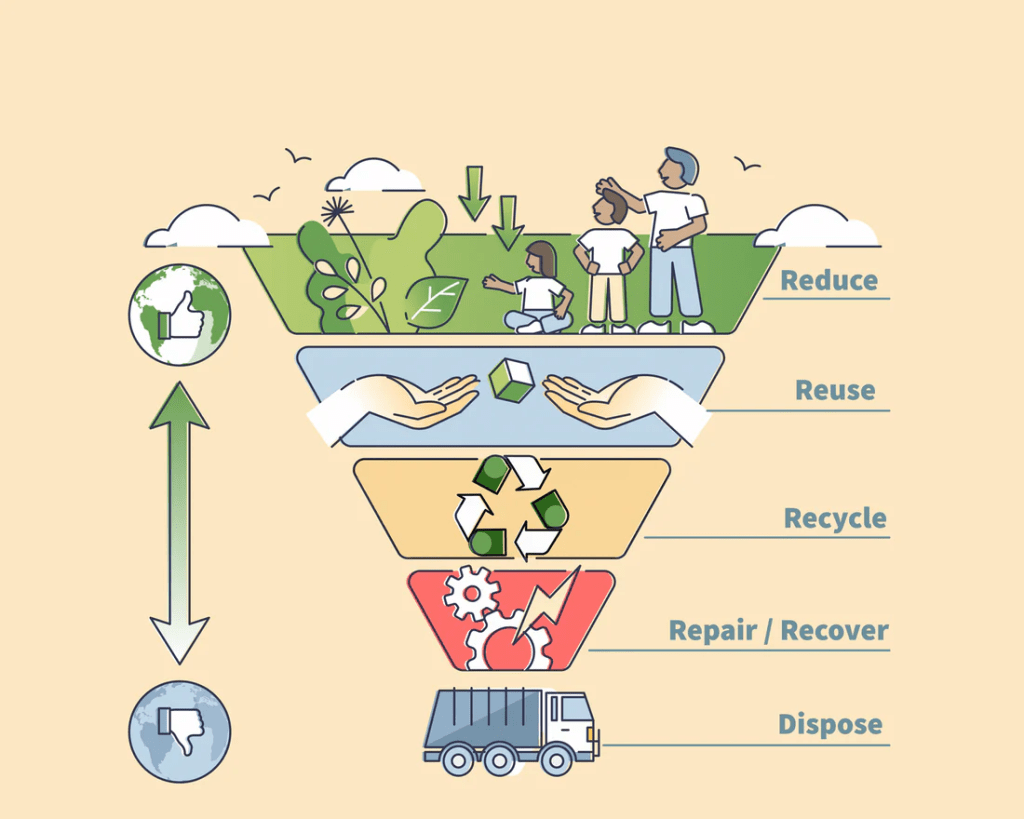
See “waste” as a “resource” to be reused in imaginative ways – use newspaper for wrapping, plastic tubs for storage.
3. Travel
About 28% of our carbon emissions comes from travel – gas guzzling planes and fossil fuelled cars contributing most. Switch to more sustainable ways of travelling whenever and wherever possible – walk or cycle rather than take the car, travel longer distances by train rather than flying.
By making your journey part of your holiday you become an adventurer rather than just a tourist.
4. Energy
So much of our energy costs are accounted for by heat being lost through a poorly insulated home. By properly insulating and / or retrofitting your home you not only save money and improve your home’s energy performance certificate (EPC) rating, your home is cosier and healthier to live in as insulation helps control condensation and prevents mould growth.
Start by your insulating your hot water cylinder, then consider insulating walls and loft, then insulate your floor. Not only will you feel warmer at home, you get a warm feeling from reducing carbon emissions from reduced energy production.
Continue that warm feeling with a heat pump or maybe install solar panels – lots of grants exist to help you do this.
5. Look after your surroundings
The more time we spend in nature, the better we feel physically and psychologically but also the more we feel connected to, and motivated to care for, our natural world. Sow a wildflower meadow, plant some trees or hedgerows; take a collecting bag and a pair of protective gloves with you when you go out and do a litter pick on a beach, along a riverbank, across a moorland or just on your street; join a Citizen Science project, spend time in nature and gather critical information about the state of our biodiversity.
6. Make your voice count
While we can do things ourselves to make big changes we need our government (local / national) and companies to do the right things for nature and climate too.
Petitions – sign petitions which are asking for positive change, for 100,000 signatures means a petition will be debated in parliament.
L obby your MP – if you feel you want to do more than sign a petition, write to your MP. Many organisations are lobbying government for changes to help nature and the climate, such as: RSPB, Wildlife Trusts, Surfers Against Sewage, Greenpeace, Friends of the Earth, National Trust, Just Stop Oil, Find a campaign that resonates with you and the organisation will have guidance on how to write to your MP asking them to act. For example lobbying for bees has resulted in the banning of neonicotinoid pesticides (1g kills 125million bees).
 Climate Action Stokesley and Villages