Yarrow – Achillea millefolium
| Yarrow is a very common flower with feathery leaves and a small white flower. It has a pungent smell. It supports over 100 insects including butterflies and moths. | |
 | Infused flowers can be used as a facial steam and tonic lotion or in a relaxing bath |
Lady’s Mantle – Alchemilla vulgaris
| Lady’s Mantle has large, almost round leaves with loose clusters of small yellow-green flowers. The nectar supports butterflies and other insects. | |
 | Infused dried leaves make an astringent and may stem bleeding. The young leaves can be torn into small pieces and added to salads. |
Meadowsweet – Filipendula ulmarai
| Meadowsweet is a common flower found on verges. It grows up to 1.2 metres. The leaves are dark green with grey green undersides. They have a pleasant fragrance. The flowers are small and have a frothy appearance. They have an almond fragrance. It is the food source for the emperor moth and other moths | |
 | Asprin was originally synthesised from the flower buds. The leaf can be added to soup and the flower can be added to jams. The flower can be dried for a pot pourri. Aspirin was originally synthesised from the flower buds |
Sweet Woodruff – Galium odoratum
| Sweet Woodruff is found in woodland. It grows up to 30 cm. The leaves are in circular spokes around the stem which is squarish. The flowers are small, white and star shaped. They appear in late spring. . | |
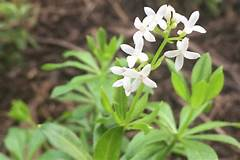 | The fresh leaf can be used to make a drink. The dried leaves smell like hay and can be used in a potpourri. The leaves can deter moths. |
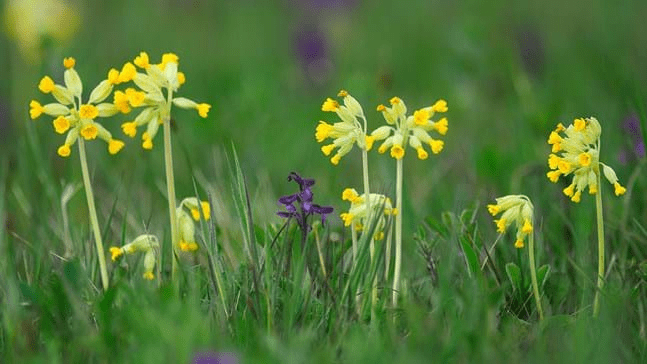
Cowslip – Primula Veris
| Cowslips are small common flowers that appear in early spring. They can be found in woodland and meadows. The flowers are on long stems. The leaves form a rosette around the stems. They provide nectar to insects and butterflies notably the Brimstone and Duke of Burgundy | |
 | The flower can be used in jam making. The leaf can be used in salads and for meat stuffing. |
Primrose – Primula Vulgaris
| Primrose are one of the first woodland flowers appearing in early spring. The flowers are pale yellow with one flower per stalk. The leave is oblong, crinkly and yellow green. They are important to the Brimstone and Small Tortoiseshell butterflies. | |
 | The flower can be eaten raw in salads. The leaf can be boiled and used as a vegetable. The plant can be infused to make a tea |
Common Sorrel – Rumex acetosa
| The leaf is lance shaped with a broad base. The flowers are reddish-green spikes that come out during summer. If they are removed young leaves will continue to emerge. It is a food plant for the Small Copper caterpillar. | |
 | The leaf contains potassium and vitamins A, B1 and C. The leaves can be used in salads and in sorrel soup. The leaf may help mouth ulcers, boils and infected wounds |
Garlic Mustard – Alliaria petiolata
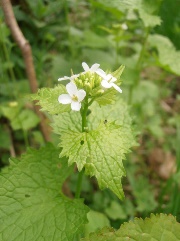
| The Garlic Mustard is early-flowering in hedgerows. It reaches 1m in height. It has heart shaped indented leaves which give off a strong garlic smell when crushed. The flowers are small and white and in clusters. It is the larval foodplant of the Orange-tip butterfly. | |
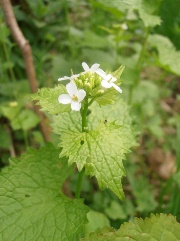 | The leaves when chopped can be added to a salad. The leaves can be fried or boiled in sauces. The leaves are slightly diuretic. |
ALL THESE PLANTS CAN BE EASILY GROWN IN YOUR GARDEN
Silver birch – Betula pendula
| The silver birch has a silvery bark and heart shaped green leaves. It has male and female catkins in spring. The silver birch supports a wind variety of moths. The Green Silver-lines is completely dependent on the silver birch. It also supports a variety of fungi. | |
 | Birch twigs can be used as brooms. Wine and vinegar can be made from the sap. Tea can be made from the leaves and oil from the bark can be used for medicated soaps |
Elder – Sambucus nigra
| The elder tree is very common. From May to July the small creamy white flowers can be seen and in autumn the purplish black come out. The elder supports a variety of moths | |
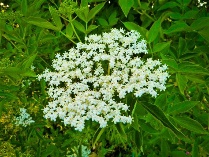 | The flowers can be used to make elderflower cordial and wine. The berries can be used in jams, cordials and wine. |
Small-Leaved Lime – Tilia cordata
| The small leaved lime has glossy dark green leaves with serrated edges. The clusters of yellow flowers are heavily scented and attract bees and butterflies. It is much loved by aphids which attracts birds and other predators. | |
 | Tea can be made from the dried leaves and the flowers can be used to flavour sweets and liqueurs. |
| Further information |
| The Woodland Trust – https://www.woodlandtrust.org.uk/ |
| The Wildlife Trusts – https://www.wildlifetrusts.org/ |
| The Royal Horticultural Society – https://www.rhs.org.uk/ |
| Plantlife – https://www.plantlife.org.uk/ |
| The Biodiversity Gardener – Paul Sterry |
| The Complete Book of Herbs – Lesley Bremness |
| Wild Flowers of North East Yorkshire – Nan Sykes |
| Wild Seeds* |
| Emorsgate – https://www.wildseed.co.uk |
| Meadow Mania – https://meadowmania.co.uk/ |
| British Wildflower Meadow Seeds – https://britishwildflowermeadowseeds.co.uk/ |
| Landlife Wildflower – https://www.wildflower.co.uk/ |
| * CASaV does not recommend any particular company and these are suggestions |
| Avoid general seed mixes that include exotic alien species. They will provide nectar and pollen but will not support the larva of insects and butterflies. They are also less likely to reappear the following year. |
| Collect seeds from the wild |
| Seeds can be collected from the wild but always get permission from the owner or Natural England before collecting from a SSSI or nature reserve. Wildflowers should never be uprooted. |
CASaV Leaflets
This page is also available as one of a series of CASaV Leaflets, so you can download a printable pdf here – double sided tri-fold leaflet or an editable version which you can make your own and use for your group – OpenOffice document.
 Climate Action Stokesley and Villages