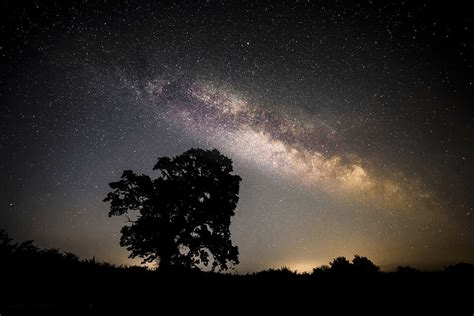
Most people on planet Earth don’t now live under truly dark night skies. Though you might be aware that you can’t see the stars in London or Newcastle, you might not realize that there’s some degree of light pollution in most of the places humans live today. Light pollution is any form of excessive or obtrusive light that interferes with the natural starlight in the night sky.
Currently, light pollution is growing at two percent every year—that’s twice the rate of population growth. Rapid industrialization and booming cities have made artificial lighting ubiquitous. However, the effects of this aren’t just limited to starless skies. Several studies link light pollution to deteriorating health of wildlife, humans, and the planet.
There is evidence to suggest that bright lighting is responsible for the accelerated decline of biodiversity amongst insects (a.k.a. the insect apocalypse).

You can find this map yourself. https://www.lightpollutionmap.info/
1. Wildlife
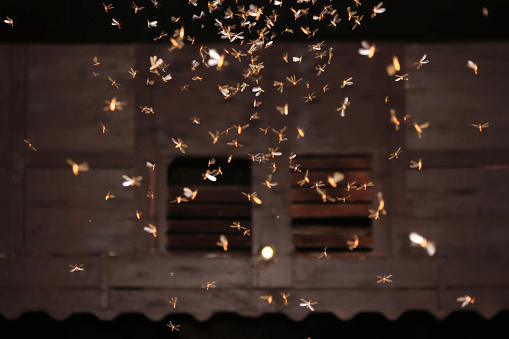
Nocturnal moths play a very important role in boosting the ecological health of the countryside, but even as we learn how undervalued they are, recent research suggested that moth populations in Britain are shrinking by 10% each decade.
Moths are attracted to lights and bats are attracted by the moths. Impacts include denuding the surrounding land of prey species, exposing bats to predation by owls etc. Flight paths of birds and bats is disrupted by artificial light as barriers are created by lighting.
Hedgehogs prefer dark skies but can become habituated to artificial light. This brings them more into contact with roads and the consequent high mortality of hedgehogs on our roads.
Every year, light pollution contributes to the death of millions of birds. It alters the natural patterns of light and dark in ecosystems. It can change birds’ migration patterns, foraging behaviours, and vocal communication. Depleted energy reserves put them at risk of exhaustion, predation, and fatal collision with buildings.
2. Human health
Life on Earth has adapted to the changing patterns of light and darkness caused by the Earth’s rotation. Known as circadian rhythms, these 24 h biological rhythms are regulated through light exposure and coordinate a range of behaviours such as sleep-wake cycles, eating, activity levels, and more. However, artificial light at night can disrupt these rhythms, altering how the human internal clock regulates sleep, metabolism, and even mood. Health impacts include cancer, and depression.
3. Seeing the night sky
The ability to see the Milky Way and planets like Saturn and Jupiter is something that should not be missed or thrown away by careless lighting. It is estimated that 80% of the UK population have never seen the Milky Way. Much of our history, culture and scientific discovery has been associated with dark skies. We are an island nation and for much of our history, sailors used the planets and constellations to navigate their way. On a clear dark night you might be able to see as many as 2000 stars and maybe meteor showers and if you are very lucky, the Northern Lights.
http://www.northyorkmoors.org.uk/darkskies
4. Dark Skies Friendly Lighting
Is the light needed
Before installing or replacing a light, consider the purpose of the light and what the impact will be on the surrounding area including wildlife and neighbours. Reflective paints or luminous markers can be used as alternatives for marking curbs, steps and paths.
Light only where needed
Direct light only to where it is needed. Consider pointing any flood lights downwards or change to asymmetric downlights to reduce wasted stray or upward light that can be intrusive to others
Choose the correct colour
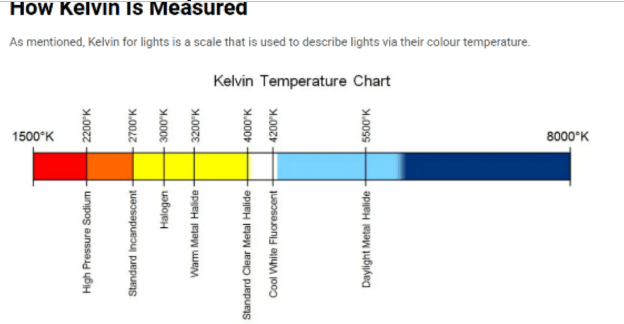
Blue light produces more sky glow and is most harmful to wildlife and human health. Select bulbs that are a maximum of 2700 kelvin.
Light only when needed
Use controls such as timers and motion sensors to ensure light is dimmed when possible and off when not needed. Light using well positioned sensors is often better for detecting intruders than lights which permanently show what is on offer from a distance and create shadows for criminals to lurk in.
Keep light to a suitable level
Light should be no brighter than necessary for the task. For lights with an operational or safety purpose, two lower power shielded down lights are better than poor angled high-power lights which just create glare
5. Lighting Glossary
Kelvin – unit of measurement for temperature. Kelvin for lighting is a scale used to describe their colour temperature.
Lumen – Unit of luminous flux, a measure of the perceived power of usable light
Lux – Equal to 1 lumen per square metre

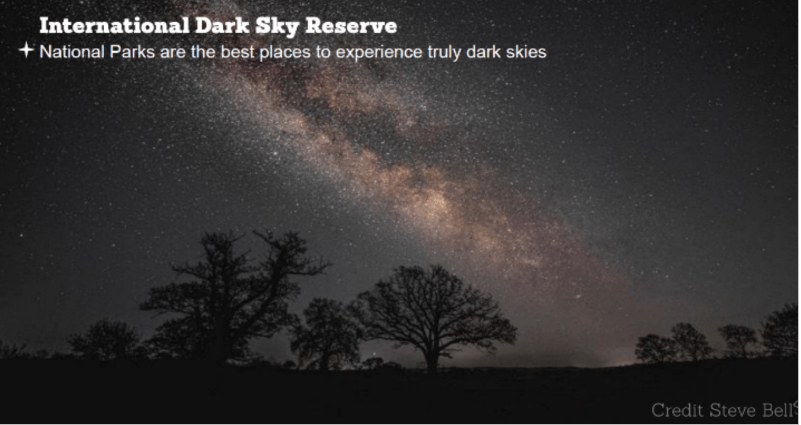
Help protect the Dark Sky Park on the North York Moors
6. Sources of advice
- North York Moor National Park: www.northyorkmoors.org.uk
- Campaign for Rural England (CPRE): www.cpre.org.uk
- Dark Sky Parks: https://darkskyparks.org
- The Bat Conservation Trust: www.bats.org.uk
- Institute of Lighting Professionals: www.theilp.org.uk
- Conservation of Migratory Species: www.cms.org
CASaV Leaflets
This page is also available as one of a series of CASaV Leaflets, so you can download a printable pdf here – double sided tri-fold leaflet or an editable version which you can make your own and use for your group – OpenOffice document.
 Climate Action Stokesley and Villages