Linear Economy
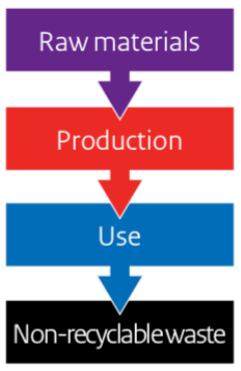
Our current economy often follows this linear path: we take resources from the Earth, make products, use them, and then dispose of them as waste. This “take-make-dispose” model is reaching its limits.
What is the Circular Economy?
The circular economy offers a different approach. It’s a system where we keep resources in use for as long as possible, extract the maximum value from them whilst in use, then recover and regenerate products and materials at the end of each service life.
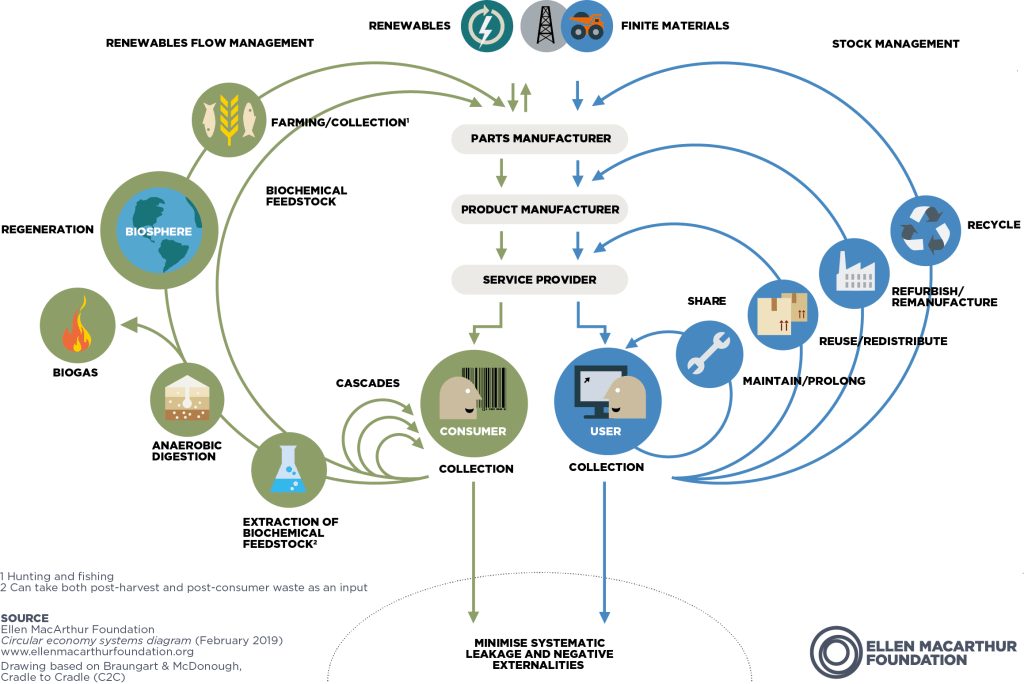
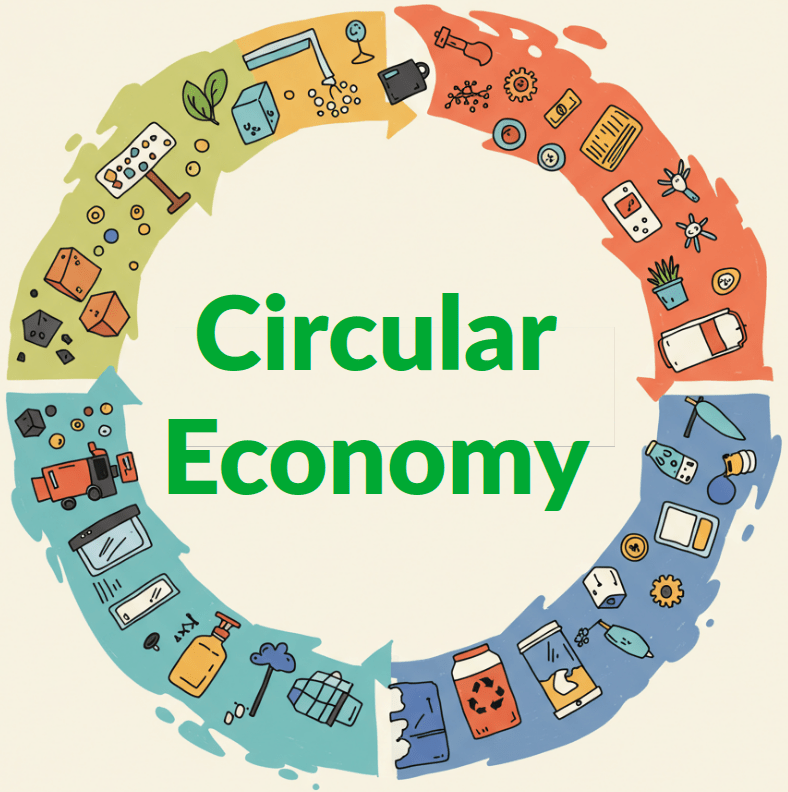
Think of it like this: Instead of a straight line to the bin, we create a circle where waste becomes a valuable resource. Ellen MacArthur Foundation is a good starting place to get a definitive view of what circular economy is all about – overview, principles, animation.
Key Principles of a Circular Economy:
- Design out waste and pollution: Products are designed to be durable, reusable, repairable, and recyclable from the start.
- Keep products and materials in use: Through activities like reuse, repair, refurbishment, and remanufacturing, we extend the life of products and components.
- Regenerate natural systems: The circular economy aims to return valuable materials to the biosphere safely, contributing to the health of natural systems.
Why is a Circular Economy Important?
- Reduces waste: Minimising the amount of waste sent to landfill and incineration.
- Conserves resources: Less need to extract new raw materials, protecting natural resources.
- Creates economic opportunities: Fosters innovation, new business models, and job creation in areas like repair, remanufacturing, and recycling.
- Boosts resilience: Reduces reliance on finite resources and volatile supply chains.
- Combats climate change: By using fewer virgin materials and reducing waste, we lower greenhouse gas emissions.
How Can We Achieve a Circular Economy?
It requires a shift in thinking and action from everyone:
- Businesses: Designing sustainable products, offering repair and take-back services, using recycled materials.
- Consumers: Choosing durable and repairable products, reusing and repairing items, recycling properly.
- Governments: Implementing policies that support circular practices and infrastructure.
The circular economy is not just about recycling – it’s about rethinking how we produce and consume to create a more sustainable and prosperous future for all.
Less mining, less landfill, less incineration will improve not only human health but the health of all nature.
The circular economy will provide more space for biodiversity and reduce the pressures that consumption places on nature – tropical forests rather than palm oil plantations, lakes rather than mineral settling ponds, clean air rather than smoke.
How you can help to build the circular economy
- Extend product life:
- Support repair businesses
- Use repair cafés
- Buy at second-hand shops
- Buy less:
- Choose items that will last and can be repaired
- Share items
- Avoid single-use items
- Recycle properly
- Lobby for circular-friendly policies:
- Right to repair legislation – February 2025 status
- Extended producer responsibility – October 2024 status
- Deposit return schemes – February 2025 status
- Doughnut economics – Thoughts December 2024, Boro Doughnut
CASaV Leaflets
This page is also available as one of a series of CASaV Leaflets, so you can download a printable pdf here – double sided tri-fold leaflet or an editable version which you can make your own and use for your group – OpenOffice document.
 Climate Action Stokesley and Villages