An informative session on Flood Resilience provided by Frayer Fletcher – Flood Resilience (Environment Agency) and Jason Wainwright – Emergency Planning Officer (North Yorkshire Council) happened on Tuesday 20th January in The Globe Community Library, North Road, Stokesley. You can view the presentation and see a summary with additional links below. Following the presentation Frayer shared a set of links and surface water maps.
We found out what Flood Resilience means and looks like for us and our communities and learnt about what is already underway in the Stokesley and villages area. We were encouraged to make a difference by getting involved with our local Community Flood Groups.
This was part of Climate Action Stokesley and Villages group’s series of bi-monthly talks. The talk was followed by a short update on the work of the sub-groups.
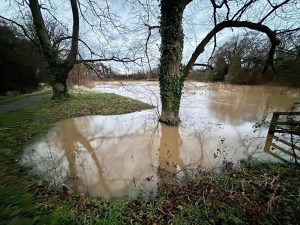

Flood Resilience
Frayer Fletcher (Environment Agency) – Flood Resilience Community Engagement Officer.
Flood Resilience & Awareness: Resilience varies by individual circumstances. It involves understanding risk and preparing for potential flooding.
Flood Groups & Wardens:
Volunteers who help prepare, respond, and recover from flooding. Their role includes monitoring weather/river levels, acting as a link between the community and emergency services, and supporting vulnerable residents. Stokesley currently has a group with volunteer wardens.
Planning:
Community Flood Plans: Guides for wardens containing contact lists, maps, and procedures,.
Personal Flood Plans: A checklist for residents (e.g., where electricity / gas are turned off, where torches are stored, key contacts, etc.) to use during an emergency.
Mapping & Risk:
Residents should check their specific property risk online using their postcode (long term flooding risk by poscode, long term flooding risk map). There is a distinction between fluvial (river) risk and surface water risk; a property might be low risk for one but high for the other.
Flood Re: A scheme to help properties built within certain years get insurance if they are at flood risk.
Warning Services:
- Flood Alert: Flooding is possible; prepare a bag, check access routes.
- Flood Warning: Flooding is expected; immediate action required (move items upstairs, turn off gas/electricity).
- Severe Flood Warning: Danger to life; evacuate.
Follow-Up / Action Items:
Check Risk: Residents should check their flood risk online (both river and surface water) (long term flooding risk by poscode, long term flooding risk map).
Check current situation: You can check the current river level and how it compares to the average level.
Sign Up: Register for the free flood warning service (sign up). Even those outside the direct zone can sign up as a “person of interest” to stay informed,.
Resources: Environment Agency’s Prepare – Respond Recover advice. Frayer will circulate surface water maps and flood plan templates.
Volunteering: Residents interested in becoming wardens or connecting with existing groups should contact Frayer.
NYC Emergency Response
Jason Wainwright (North Yorkshire Council) – Resilience and Emergency Planning Officer (covering Richmondshire, Hambleton, and York)
Civil Contingency: The council coordinates “blue light” services and utilities during major incidents (e.g., severe weather, power outages, fires, etc.).
Community Emergency Groups: These groups act as a “force multiplier” for emergency services, especially when communities are cut off (e.g., by snow). They help identify vulnerable people whom the council might not know about. They can organize “warm safe spaces” or hubs for information and basic supplies (hot drinks/food).
Command Structure: Bronze: Operational/on the ground (doers). Silver: Tactical/coordination and authorization (e.g., booking hotels). Gold: Strategic command for major incidents (e.g., coastal flooding, widespread snow).
Personal Preparedness (“Grab Bags”): Jason demonstrated a “Bronze Commander’s bag” as an example of preparedness. Essential items suggested: Stainless steel flask (keeps water hot for 6 hours), solar power banks, wind-up radio (for information when power is out), foil blankets, first aid kit, and bottled water. A larger kit might include work gloves, masks, and long-life food.
Follow-Up / Action Items:
Create a Plan: Communities should create a Community Emergency Plan. Jason can provide a template for this,.
Exercise the Plan: Once a plan is written, it must be tested (exercised) to ensure it works.
Reporting Issues: For specific road or drainage issues (like blocked drains or field runoff), residents should use the council hotline.
Personal Preparation: Residents are encouraged to create their own “grab bags” and keep a stock of water (e.g., 10–20 litres),.
Online Resources: Refer to NYC Get Ready for an Emergency, North Yorkshire Local Resilience Forum, National Prepare Guidance.
 Climate Action Stokesley and Villages