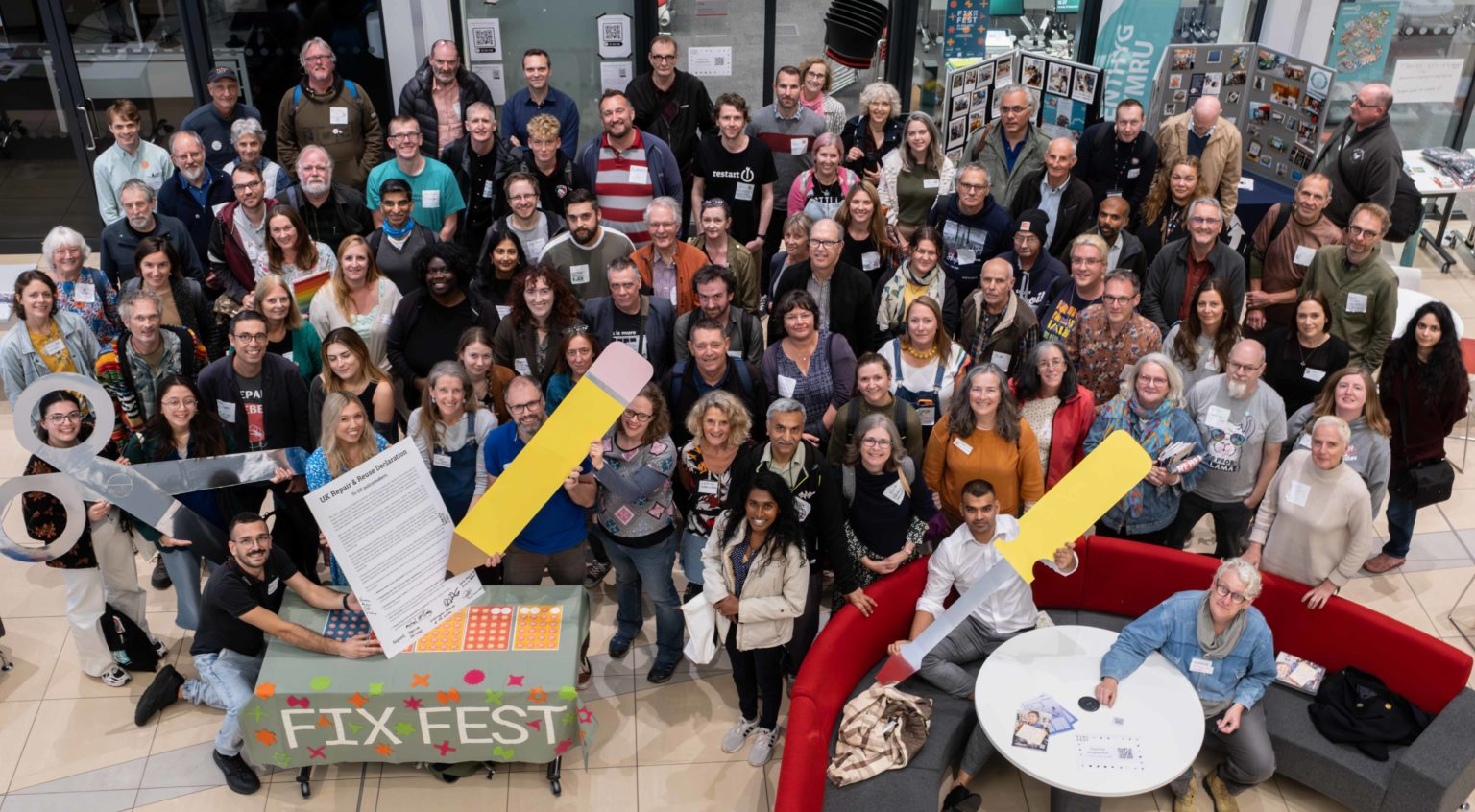
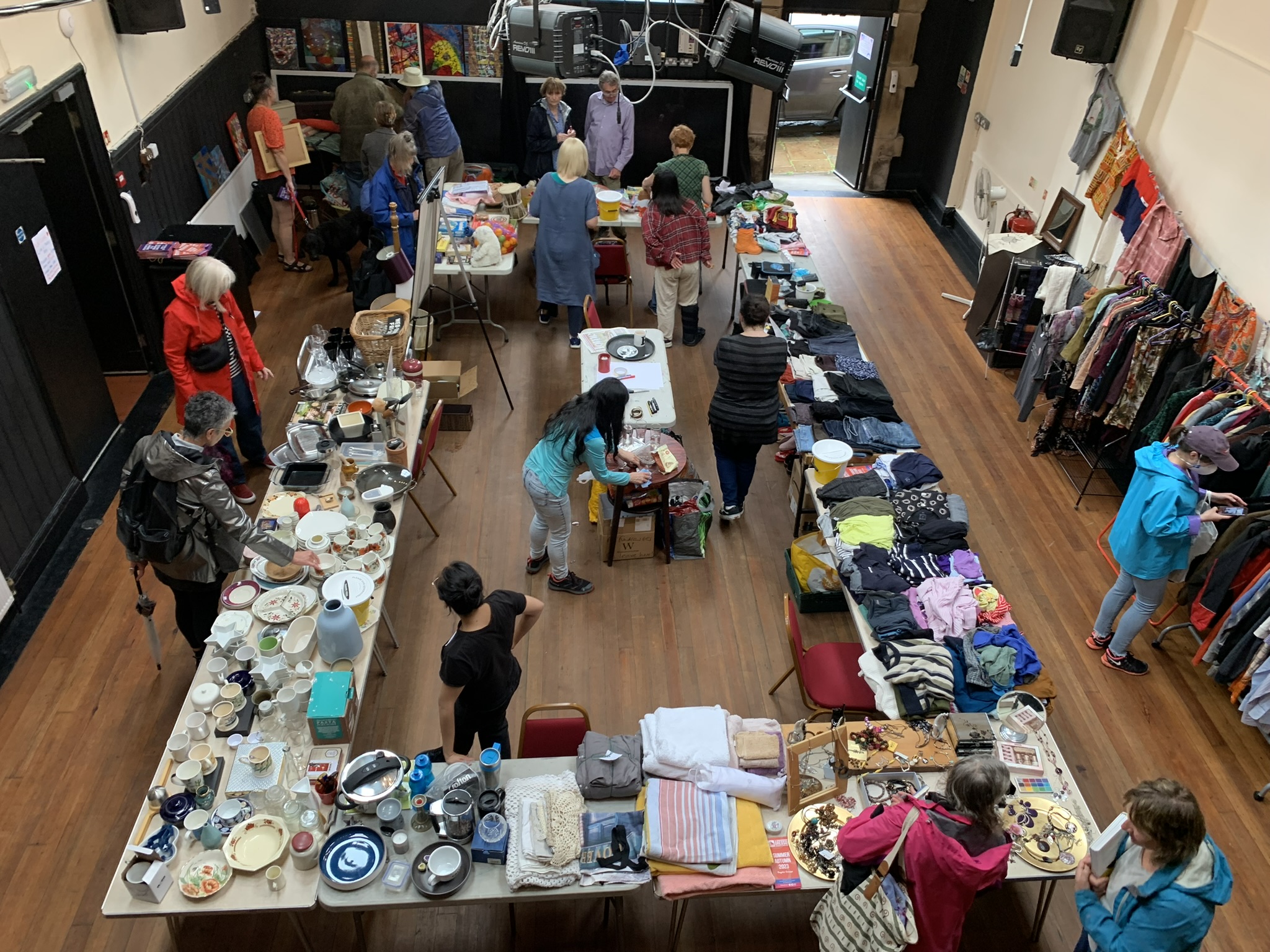
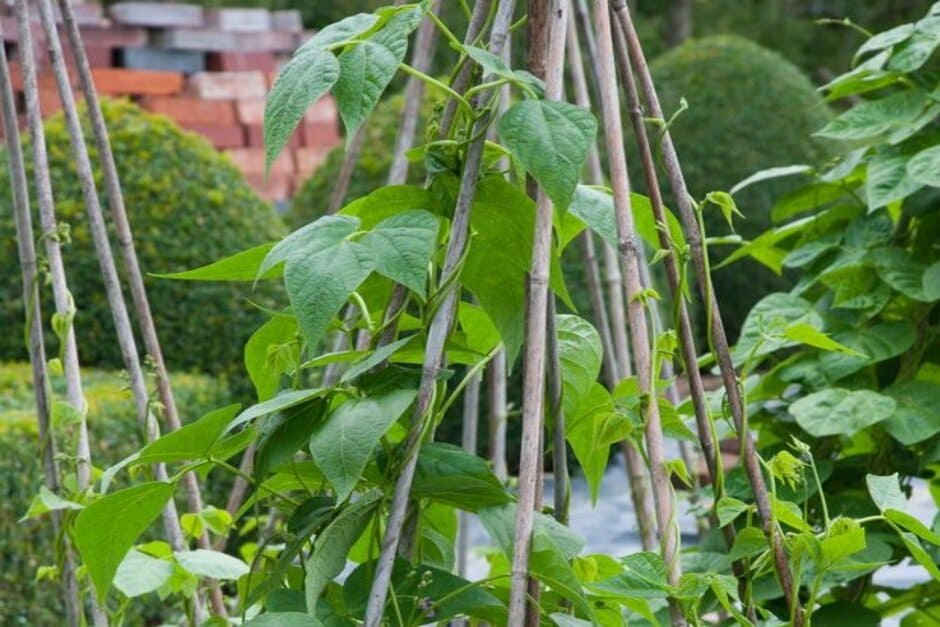
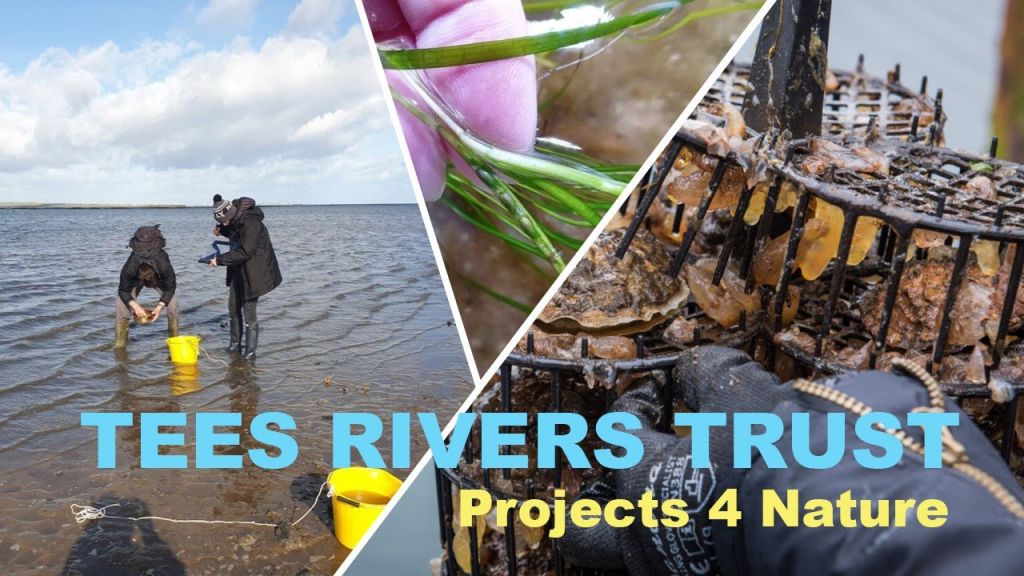
On Tuesday 15th April the second of CASaV’s bi-monthly talks on “Revitalising our Estuaries: Tales from the River Tees” was be given by Henry Short and Judy Power from the Tees Rivers Trust.
Many of the UK’s estuaries have experienced high levels of pollution and habitat loss over the last 100 years leading to localised extinctions of many species. The River Tees is no exception with 90% or intertidal habitat lost to land reclamation, and the river being declared ecologically dead in the 1970s. The Tees used to be home to both Oysters and seagrass, but populations of both have dropped drastically around the UK in the last 50 years and have become extinct in the Tees.
The team at the Tees Rivers Trust are working to bring them back. This talk explored the biology of these species, the reasons for their decline, methods and challenge behind restoration and the benefits that these species can provide.
If you missed the talk you can watch a recording, see the presentation slide and read a summary here.
Climate Action Stokesley and Villages – Monthly Meeting
The talk was followed by updates on CASaV activities.
1. Energy:
Scaling Back of Advice on Home Improvements and Energy Saving: On behalf of North Yorkshire Climate Coalition being put together by Zero Carbon Harrogate was putting together a bid to the combined York and North Yorkshire Mayor’s carbon negative fund to provide 6 one stop pop-up shops around North Yorkshire to provide home improvement and energy saving advice over 2 years. This bid would have included a shop in Northallerton, so CASaV as part of NYCC has provided a letter of support. Just before submission the bid was scaled back to 3 locations over 1 years so as to meet the fund cost requirements and so there will no longer be anything happening locally, as Northallerton was not deemed to be sufficiently large compared to other locations in York and North Yorkshire. We await sight of the final bid application in order to assess what might be possible locally in the future.
New Biodiversity Legislation: New legislation coming into effect in December is being met with “outrage” and claims of being “not workable” by landowners. However, positive intentions of the legislation, focusing on biodiversity, flood risk management, climate action, and air quality. We should be encouraging public support for these aims to counteract landowner lobbying.
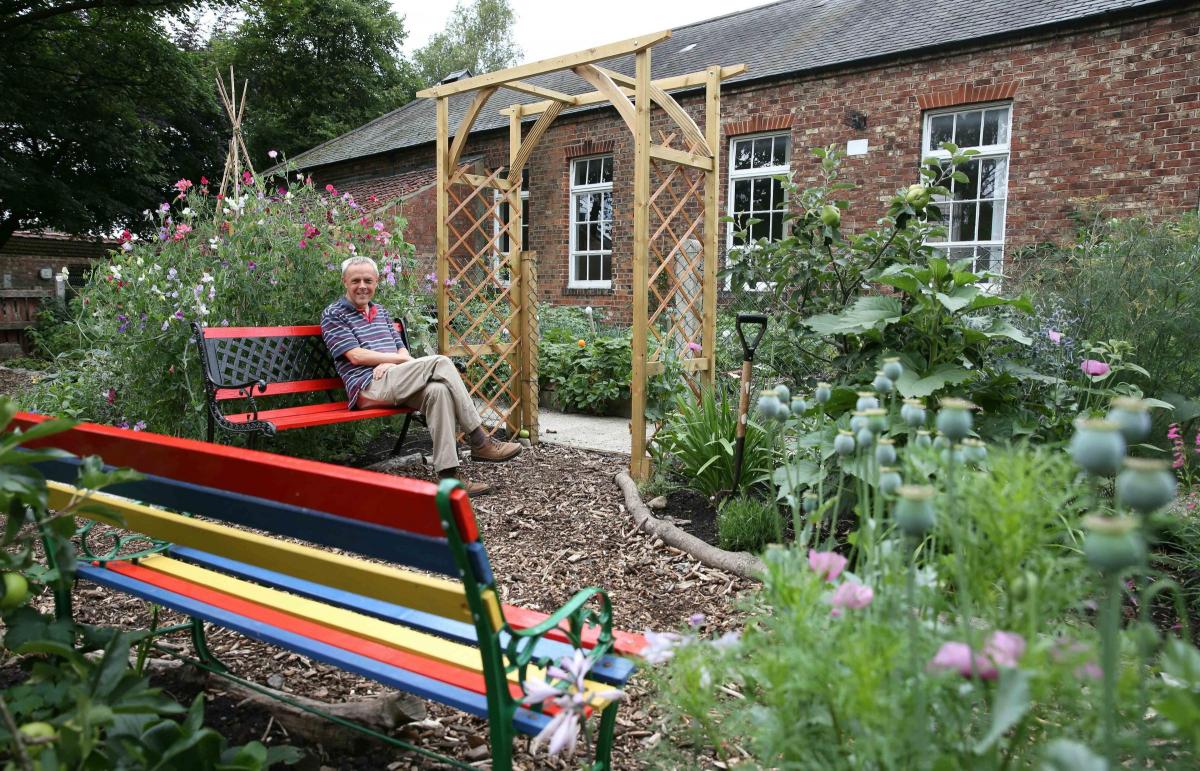
Friends of Great Ayton Station Planters: The group is facilitating the purchase of new planters for Great Ayton station, funded by Friends of Great Ayton Station, with a focus on pollinator-friendly planting.
Swift Boxes: Efforts are underway to install swift boxes donated some years ago, with the Tannery in Great Ayton being a potential location.
Weed Killer on Football Fields: A query was received regarding the use of weed killer on football fields in Great Ayton, but the group lacked the capacity to follow it up. A forthcoming bill in Parliament aims to restrict pesticide use by parish and town councils, which the Nature group will address.
Collaboration with Stokesley Station Coffee + Kitchen: The Food and Nature groups are collaborating with the plant-based cafe/restaurant at Stokesley station to develop their garden, including ideas for planting and a child-focused watering initiative.
Connection with Stokesley Primary School Gardening Projects: The group is establishing connections with the primary school involved in gardening projects.
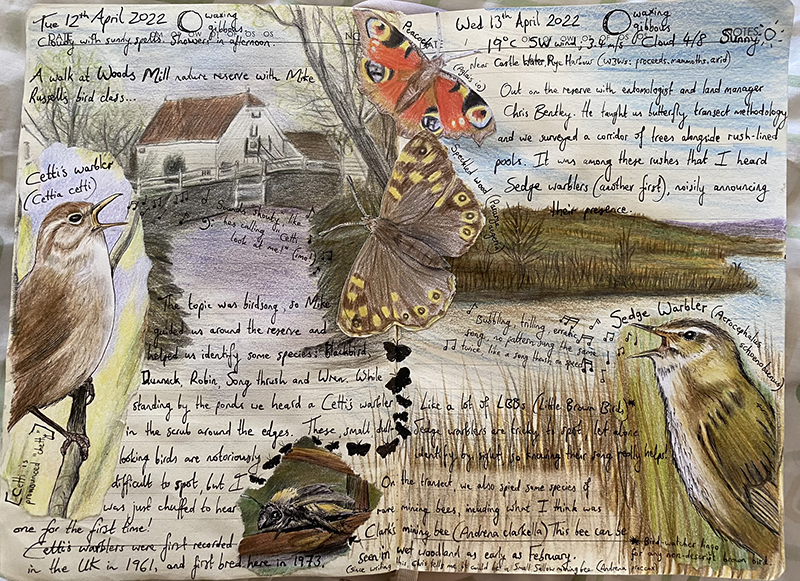
Nature Journaling Idea: Following a visit to the Harrogate Climate Coalition, an idea emerged to potentially organise nature journaling sessions as a different type of activity to engage a wider audience and address potential eco-anxiety. This would involve a paper-based journal for observations of nature (photos, drawings, collected items).
Zen Pen Sessions: “Zen Pen” is described as a nature-based mindful creative writing session run by Jackie , which helps people relax and connect with nature. There is a suggestion to potentially run Zen Pen sessions in June, possibly outdoors, perhaps at the Yaton House community garden.
3. Transport and Infrastructure:
Speed Monitoring for 20mph Limits: The group has met with the highways team to discuss monitoring speed levels in Stokesley and Great Ayton. If average speeds are below 24mph in identified areas, the council is willing to consider implementing 20mph speed limits. Monitoring sites have been identified, and funding options (potentially Section 106 money) are being explored.
4. Waste and Circular Economy:
Repair Cafe Success: The repair cafe is reported to be going well, having themed events focused on circularity. It is recognised as a leading repair cafe based on recorded data, with 36 events held. Other repair cafes in the surrounding area (Middlesbrough, Northallerton, Saltburn, Guisborough) are also increasing, and there is new interest from Ingleby Barwick.
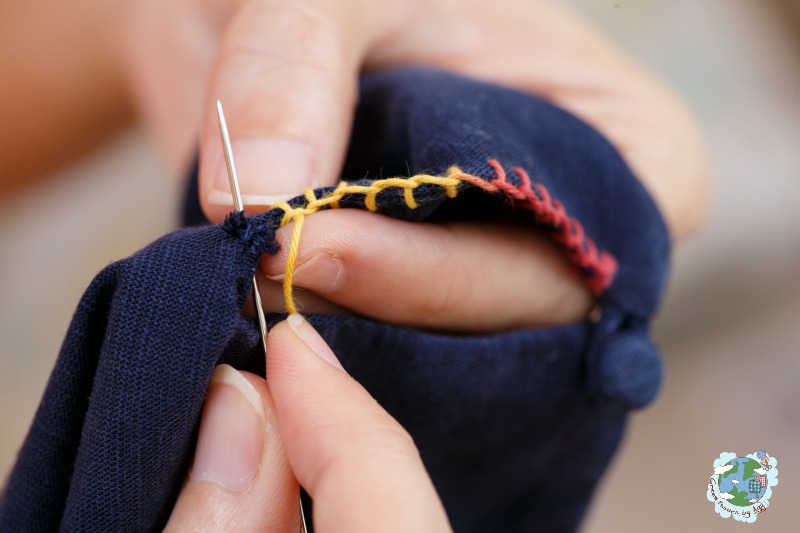
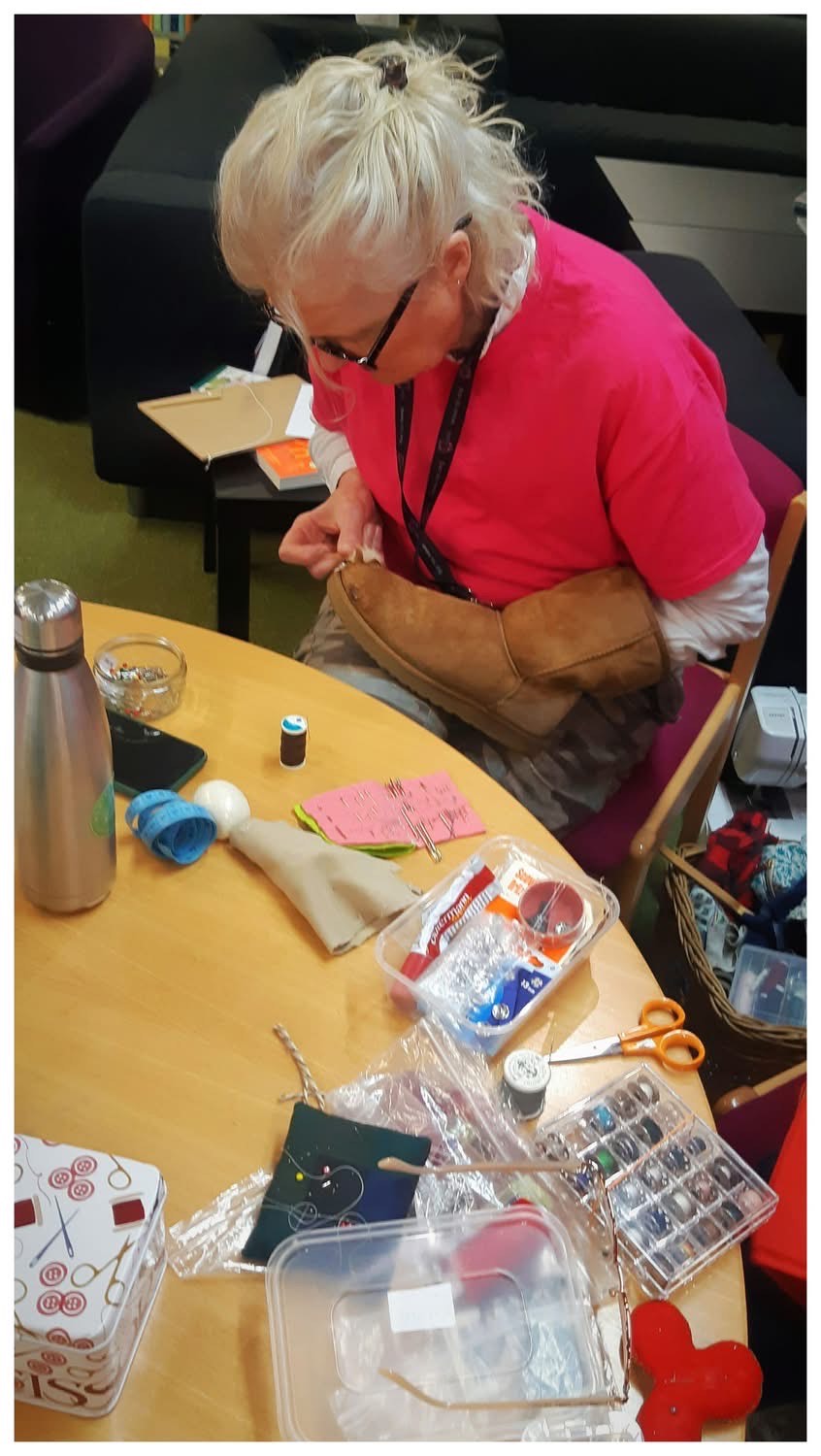
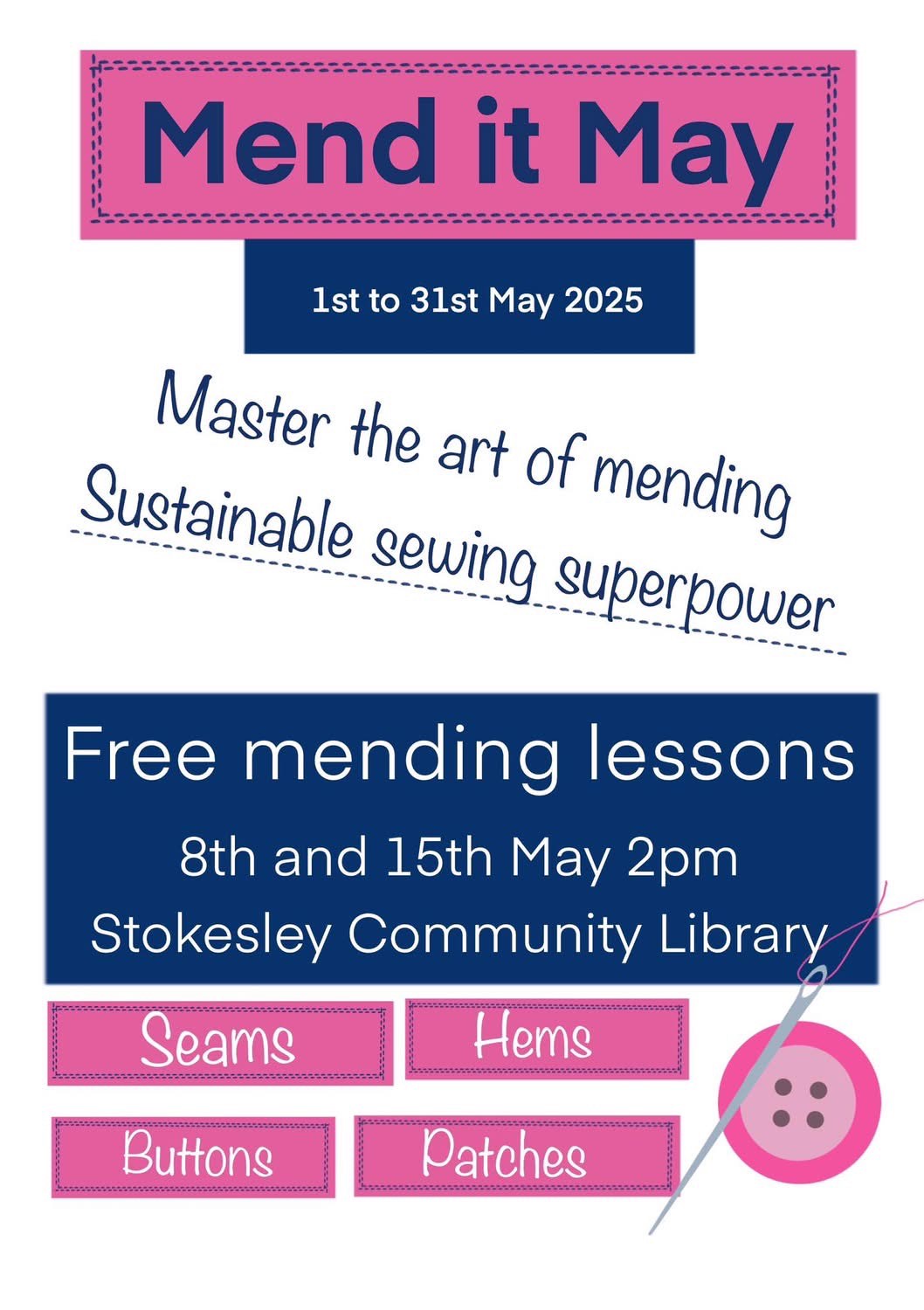
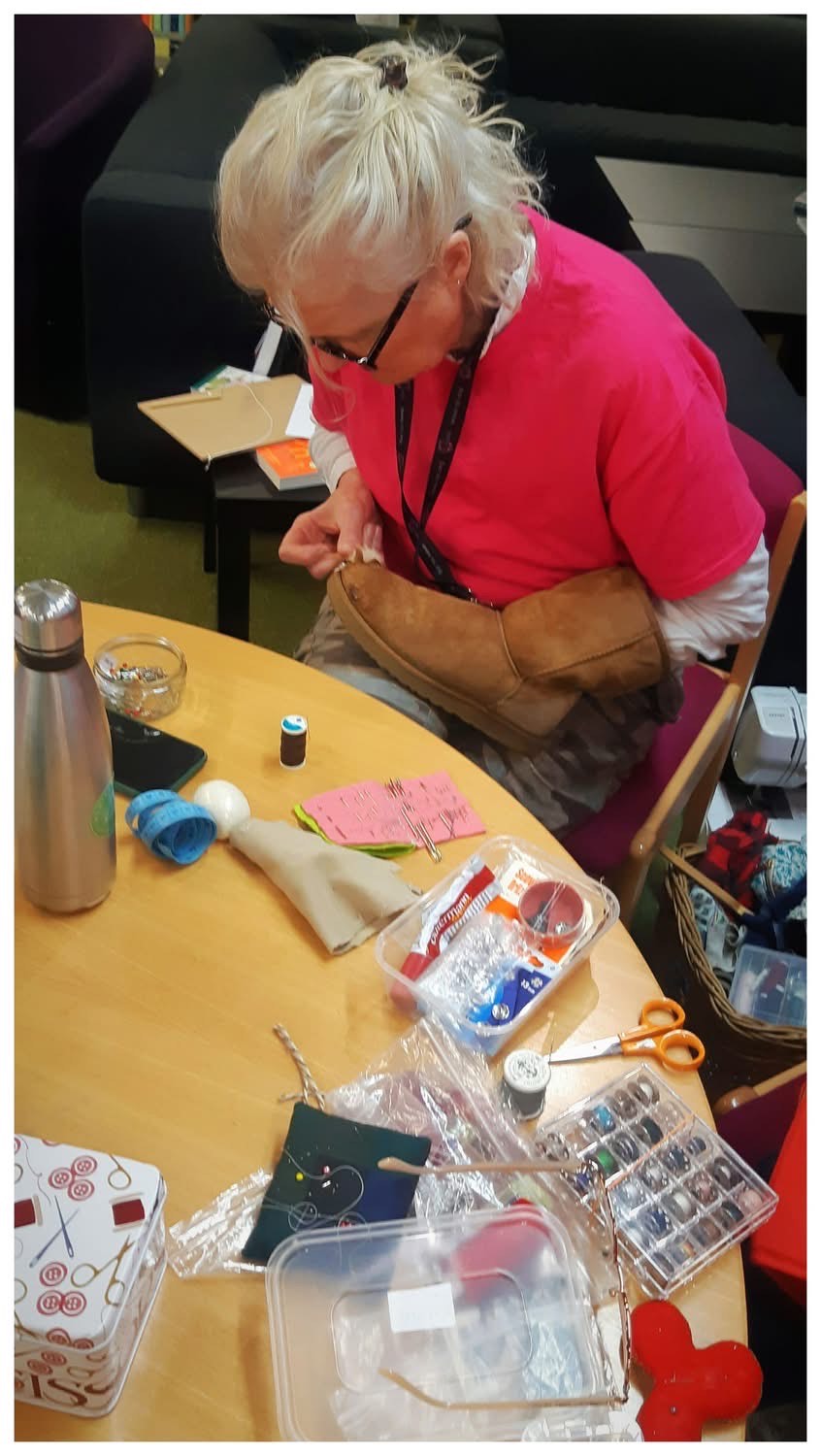
Mend It May: A related initiative, “Mend It May,” organised by members of the Repair Cafe Sewing Team, will involve two free basic sewing/mending sessions to teach skills like sewing buttons and hemming. Attendees will receive a small sewing kit, utilising donated materials from the Repair Cafe.
5. Community Engagement and Well-being:
Eco-Anxiety: Discussion arose about how to support people, particularly younger individuals, experiencing eco-anxiety and feeling overwhelmed by climate change, leading to inaction. The nature journaling and Zen Pen ideas are partly seen as ways to address this by offering more accessible and less overtly action-oriented engagement with nature.
Collaboration with Yaton House Community Garden: The Yaton House community garden is suggested as a potential venue for events like nature journaling or even the AGM. The manager is supportive and can discuss their work on sustainability with adults with learning difficulties and disabilities.
Sustainable Coast: As part of Scarborough Big Ideas by the Sea festival on Saturday 17th May 12pm to 3pm – Sustainable Coast: What is going on with the sea? What do we want the sea to be? With talks by Paul Rose, Hugo Tagholm (OCEANA), and Mike Cohen (National Federation of Fishermen’s Organisations). St. Mary’s Church, Castle Road, Scarborough. A Pay What You Feel Event, booking recommended. – https://www.bigideasbythesea.com
Easter Egg Donation for Nightlight: Please contact Jenny Earle if you have unwanted Easter eggs which will be donated to Nadia for the Nightlite charity – jennyearle@casav.uk.
Climate Column in Local Publication: CASaV produces a monthly climate column. The recent article was on encouraging wilder gardens (“Let it Grow”) – https://www.darlingtonandstocktontimes.co.uk/news/25065156.embracing-uncut-grass-now-vital-ever/. Ideas are being sought for future articles (around 500 words, with potential for accompanying images). The articles have been well received by the readership, with one letter of complaint after article linking continuing peat burning to air pollution risks.
Meeting Schedule: The next meeting is scheduled for the third Tuesday of May (20th of May). The group aims to have plans for the Big Green Week more developed by then.
Thank you for your role in taking urgent action globally and locally on climate breakdown and biodiversity loss.

Celebrate our emerging wild flowers and fight for our dwindling pollinators at the Nature Group’s Dandelion Stall at a Stokesley Friday market, enjoy Fair Trade chocolate cakes whilst learning about how circularity can supportthe planet at April’sRepair Cafe, hone those gardening skills alongside others at Yatton House Community Garden working parties and hear about the revitalisation of our river Tees at our bimonthly talk at the whole group meeting ahead of the Rivers Trust Big River Watch citizen science survey at the end of the month where you can make a real contribution to addressing the pollution and biodiversity loss in our local rivers.
Diary dates
(details of all events below in Newsletter section)
Tuesday 15th April 19.30 – 21.00 Talk from Tees Rivers Trust on ‘Revitalising the River Tees’ & Whole Group Meeting, Globe Community Library, Stokesley
Tuesday 1st April 10:00 – 12 noon and 13:00 – 15:00 Yatton House Community Garden Additional Gardening Working Party – special feature for school children
Tuesday 1st – Saturday 6th April National Community Gardens Week
Wednesday 2nd April 18.00 (Local) People Planet Pint gathering, Northallerton
Friday 4th April 9.00 – 13.00 Dandelion Stall at Stokesley market celebrating wildflowers
Friday 4th April National Walk to Work Day celebrating active travel
Tuesday 8th April 19.00 Waste & Circularity Group (incl Repair Cafe) Zoom Meeting (see Waste & Circularity Group section below)
Saturday 12th April 10.00 – 12.00 Repair Cafe & Focus on Circularity with free book & magazine giveaway, Stokesley Globe Community Library
Thursday 17th April 15.30 CASaV Nature Group meeting, the Globe Community Library (see Nature Group section below)
Thursday 17th April Deadline to object to gas extraction at Burniston, near Scarborough, North Yorkshire
Saturday 22nd April International Earth Day – do something positive for the planet
25th April – 1st May National Big Rivers Watch citizen science survey
1st – 31st May National No Mow May to boost biodiversity
NewsletterOur online newsletter / magazine focuses on our group’s values and purpose, summed up by our motto ‘Think global, act local’, beginning with global / national / county issues including ways in which you can influence policy, followed by local news and activities you can participate in that develop our relationship with the environment and fight climate change and biodiversity loss.
“Think global”
Tuesday 1st – Saturday 6th April National Community Gardens Week
National Community Garden Week celebrates schools and community gardens up and down the country. Gardens can significantly aid in combating biodiversity loss by creating diverse habitats, supporting pollinators, and promoting sustainable practices like composting and native plant cultivation. Community gardens are areas of land gardened or cultivated by a group of people for the benefit of the local community. As well as helping the environment they are a great way to promote healing and happiness as they can have a positive effect on our sense of well-being.
What can I do now?
We have a great local community garden at Yatton House, Great Ayton (see below) where you can volunteer and learn gardening skills alongside others or simply enjoy relaxing in a growing environment. Our bus stop community garden in Stokesley is cultivated by our Food Group volunteers where you can pick free fresh fruit and vegetables in season. Also have a look at the Secret Garden in Northallerton where you can find peace and reflection as well as volunteer with like minded people.
Wednesday 2nd April 18.00 People Planet Pint: Sustainability Meetup, The Potting Shed, Northallerton
People, Planet, Pint is a national project organised by Small99 People, Planet, Pint which empowers local communities to organise gatherings of people who are interested in the environment and sustainability to find out what’s going on locally with sustainability, share ideas, network and get involved with a free pint thrown in! (Non alcoholic drinks also provided). Our most local gathering is based in Northallerton at the Potting Shed and happens monthly, this month on Wednesday 2nd April 18.00. Book a place via Eventbrite at eventbrite.co.uk/e/northallerton-small99s-people-planet-pinttm-sustainability-meetup-tickets-1113080205859
Friday 4th April National Walk to Work Day celebrating active travel
Walk to Work Day, organised by Active Together is a chance to change up your routine and see how a start to the day that incorporates a brisk walk can lead to a more efficient life overall whilst reducing your dependency on cars. Not driving a car back and forth to work is one small way that you can reduce your carbon footprint. In this age of growing awareness about how being sedentary affects a person’s health, walking to work can make a huge difference in people’s lives, and their lifespans.
What can I do now?
If the whole distance is too far to walk, try to walk at least some of the way. Use the Choose How You Move website choosehowyoumove.co.uk/ to help you find more sustainable ways to commute.
Frack Free Coastal Communities need your support; deadline April 17th
Europa Oil & Gas have now submitted their plans to North Yorkshire Council to drill for gas within metres of homes in Burniston near Scarborough, North Yorkshire. Europa wants to use hydraulic fracturing (“fracking”) despite calling it “proppant squeeze”. (Proppant is the name for the material that is injected during fracking along with water and chemicals under pressure).
Frack Free Coastal Communities are concerned about the impact on the local community in addition to the wider impact of extracting and using more fossil fuels. They assert that there will be little local benefit even in terms of employment as fracking operations usually bring in workers from elsewhere. Furthermore they assert that the UK does not need this gas, and this extraction won’t reduce energy bills. Planned production represents only 1% of our national gas consumption (which is falling year on year anyway) and is likely to be sold on the international market for export.
What can I do now?
Frack Free Coastal Communities is calling on as many people as possible to object to these plans and the deadline to object is 17th April. If you would like to support them you can object via email, letter or by the planning portal more information here:
Saturday 22nd April International Earth Day – our power, our planet
Earth Day, celebrated annually on April 22nd now for 55 years, is a global event that aims to raise awareness and encourage action to protect the environment and our planet. The theme for Earth Day 2025 is OUR POWER, OUR PLANET, inviting everyone around the globe to unite behind renewable energy, and to triple the global generation of clean electricity by 2030.
What can I do now?
Join in with Earth Action Day, encouraging all to take action—educate, advocate, and mobilize. Pledge an Earth Action on social media. Other ideas here: earth-day-2025
25th April – 1st May National Big Rivers Watch citizen science survey
Our rivers are far from healthy. They’re polluted with sewage, plastic, chemicals and nutrients, and just 15% of river stretches in England are in good overall health.
To address this, twice a year the Rivers Trust run a Big River Watch, and the next one takes place from 25th April to 1st May. These are week-long citizen science surveys in which everyone can take part in a simple activity that helps build a picture of river health across the UK and Ireland.
If you’d like to collect even more information about your river, you can also sign up to the Great UK WaterBlitz, and test the water for phosphates and nitrates after you’ve completed a Big River Watch survey.
What can I do now?
To support the restoration of our waterways, more information about how they’re doing needs to be gathered. You can help identify and locate the issues. With the Big River Watch app, you can help identify the issues, and will contribute to a national data set that will help build a picture of river health. More info here: take-action/the-big-river-watch
1st – 31st May National No Mow May to boost biodiversity
We’ve lost approximately 97% of flower-rich meadows since the 1930’s and with them gone are vital food needed by pollinators, like bees and butterflies. But your lawn and outside verges can help! A healthy lawn with some long grass and wildflowers benefits wildlife, tackles pollution and can even lock away carbon below ground. With over 20 million gardens in the UK, even the smallest grassy patches add up to a significant proportion of our land which, if managed properly, can deliver enormous gains for nature, communities and the climate.
What can I do now?
No Mow May is the perfect starting point to get your greenspace on track for a wild summer. You’ve taken the first step – now learn more about how to manage your wild lawn all year round!
“Where flowers bloom, so does hope” – Lady Bird Johnson
Also pop along to the Nature Group’s Dandelion stall at Stokesley market on 4th April (see below)
How your choice of chocolate this Easter could protect or destroy rainforests
Global demand for chocolate is soaring, particularly at this time of year but chocolate production can have significant environmental impacts, including deforestation, carbon emissions and water usage stemming from cocoa farming, processing, and transportation.
What can I do now?
Organisations like Rainforest Alliance are working to minimise this impact and The Ethical Consumer has published a guide to help you make informed choices to protect rainforests and workers conditions.
This month’s local activities and ideas from our focus groups (Nature, Food, Waste, Energy, Transport) to address biodiversity loss and fight climate breakdown
Tuesday 15th April 19.30 Talk on ‘Revitalising the River Tees; the return of oysters & seagrass’ by Tees River Trust ecologists followed by whole group meeting, the Globe Community Library, Stokesley
Many of the UK’s estuaries have experienced high levels of pollution and habitat loss over the last 100 years leading to localised extinctions of many species. The River Tees is no exception with 90% or intertidal habitat lost to land reclamation, and the river being declared ecologically dead in the 1970s. The Tees used to be home to both oysters and seagrass, but populations of both have dropped drastically around the UK in the last 50 years and have become extinct in the Tees.
On Tuesday 15th April, starting at 19:30 in The Globe Community Library, North Road, Stokesley the team at the Tees Rivers Trust will give a talk on their current work to bring these species back, exploring their biology, the reasons for their decline, methods and challenge behind restoration and the benefits that these species can provide.
The talk will be followed by our whole group meeting which will include updates from our subgroups with a look ahead to plans for the Great Big Green Week in June.
Tuesday 1st April 10.00 – 12.00 & 13.00 – 15.00 Yatton House Community Garden Working Party
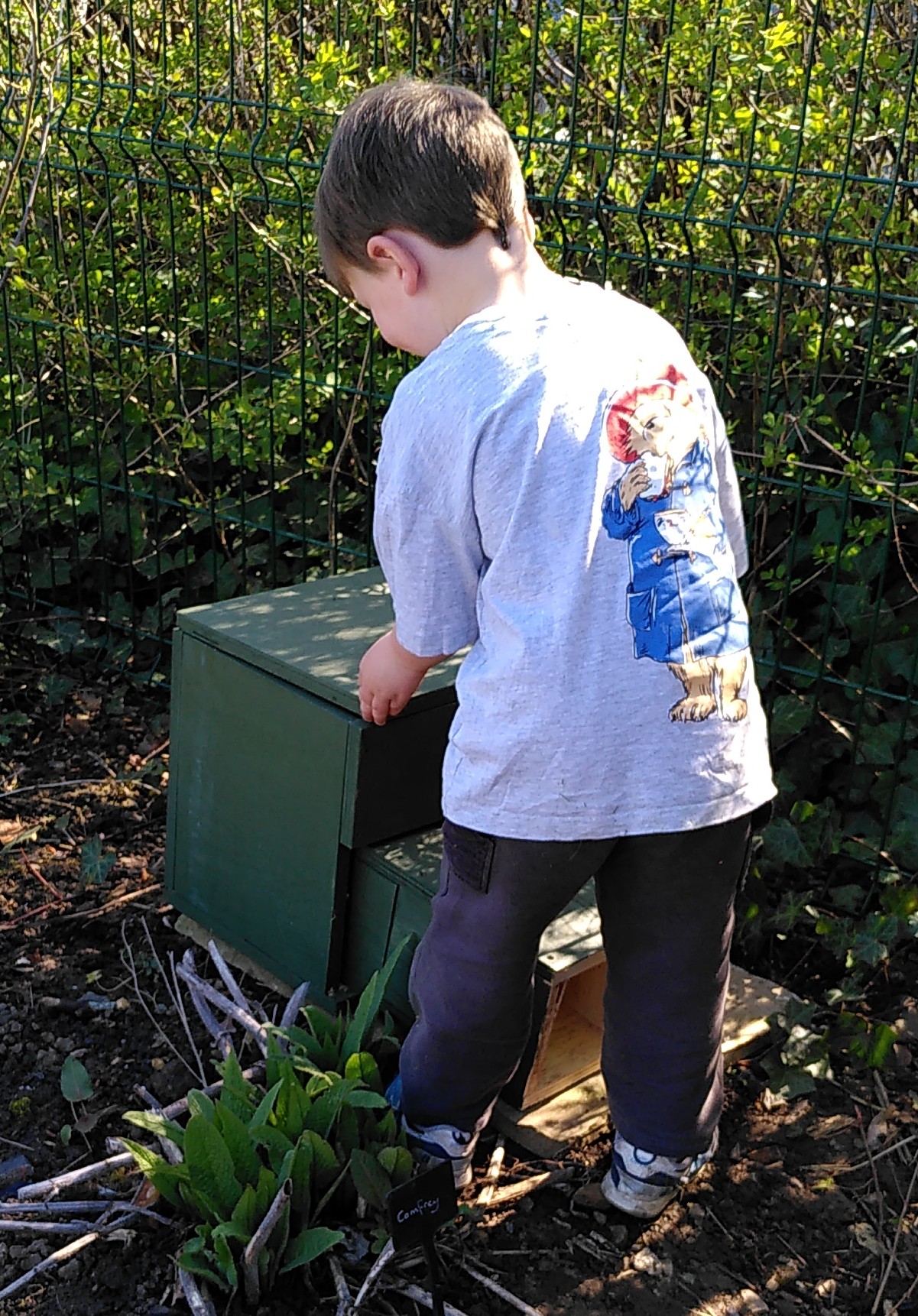
Help is needed in the Yatton House Community Garden, during Community Gardens Week, on Tuesday 1st April, between 10:00 – 12:00 and 1:00 – 3:00pm. We will be putting in stepping stones, siting a hedgehog box and wildlife camera, sowing seeds and planting out cowslip plants plus some other tasks if time. There are already some bat boxes put up. The ideas were suggested by the children of Marwood C of E Infant School and funded by a donation from Cleveland Mountain Rescue’s Santa Sleigh Ride.
All welcome to come and help or just enjoy looking round.
Meet at the car park at Yatton House, Guisborough Road, Great Ayton
Friday 4th April 9.00 – 13.00 Dandelion Stall at Stokesley market celebrating wildflowers
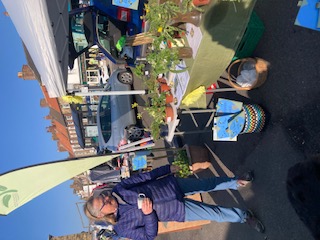
It’s national Dandelion Day on April 5th so to celebrate the Nature Group are holding a Dandelion Stall at Stokesley market on Friday 4th April. Sadly sometimes dismissed as an unwanted ‘weed’, dandelions are not only vibrantly beautiful but actually essential for our pollinators in early spring when there are limited food sources. Dandelions also are delicious from petals to roots and the stall will have leaflets of dandelion recipes and samples of edible dandelion treats as well as displays on their environmental importance. At our Dandelion Day stall will be a display of native wildflowers you can cultivate and in your own gardens to encourage biodiversity and feed pollinators.
What can I do now?
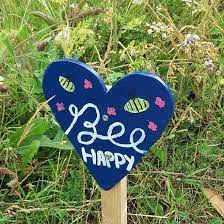
Come along to the stall and pick up information. You can also decorate and take away your own wooden ‘Blue Heart’ to add to your garden or outside verge to let people know you are leaving some areas wild to feed pollinators. More info bluecampaignhub.com/
We look forward to seeing you there!
Saturday 12th April 10.00-12.00 3rd Birthday Repair Cafe at the Globe Community Library, Stokesley with a focus on Circularity Living
Our Repair Cafe celebrates its 3rd birthday this month! Since we started our incredible volunteers have fixed over 1800 items, saving their owners money and allowing them to carry on using their cherished items for longer as well as saving waste from landfill or incineration and so reducing carbon emissions.
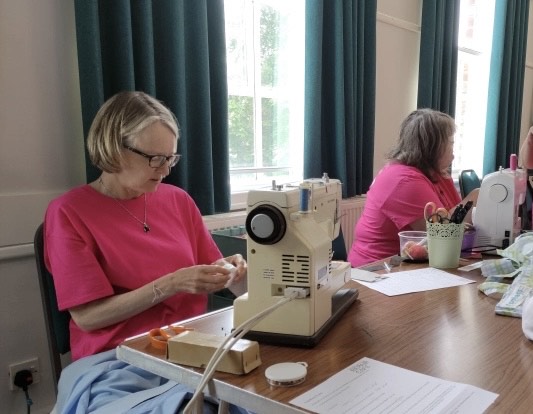
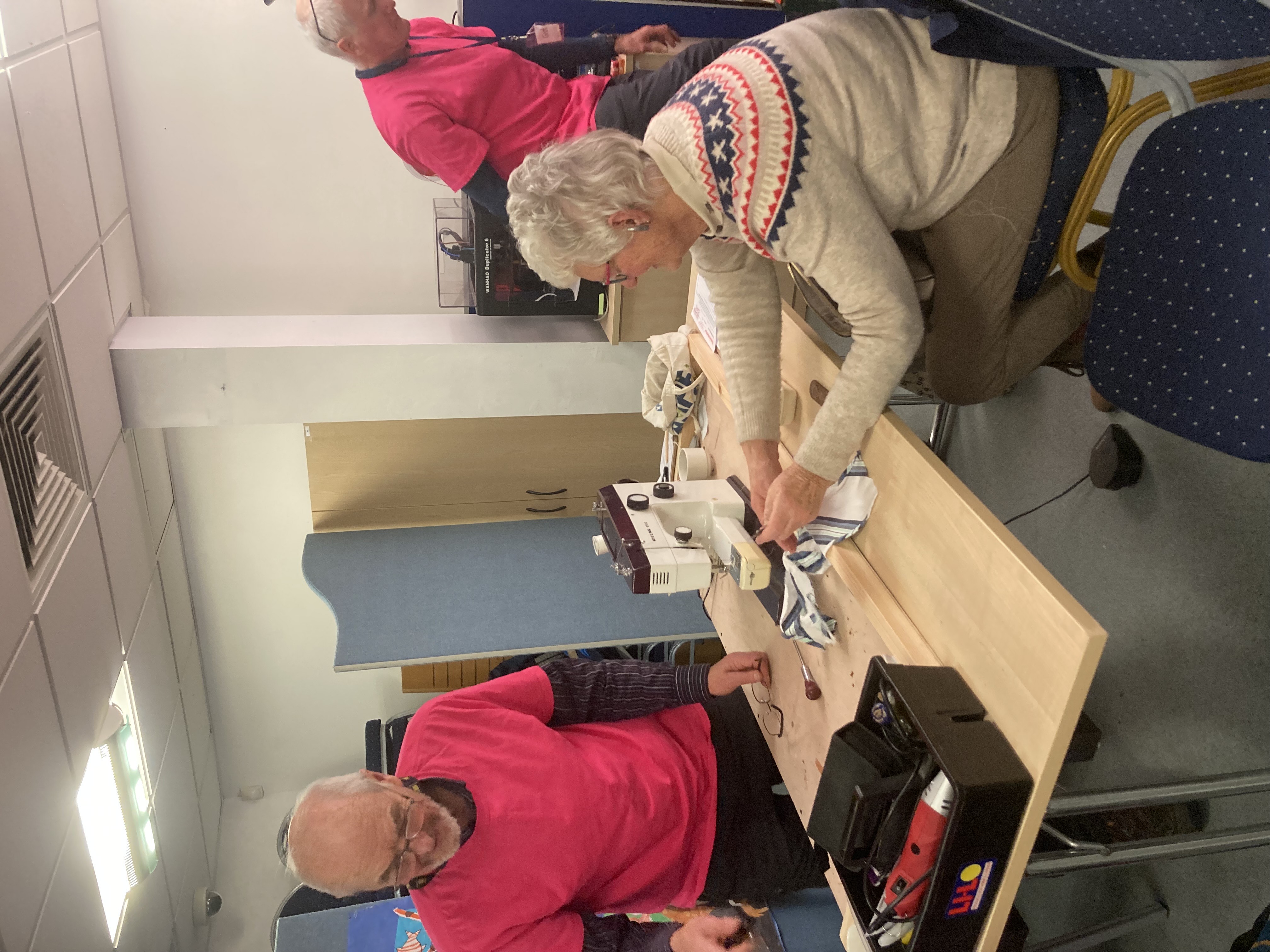
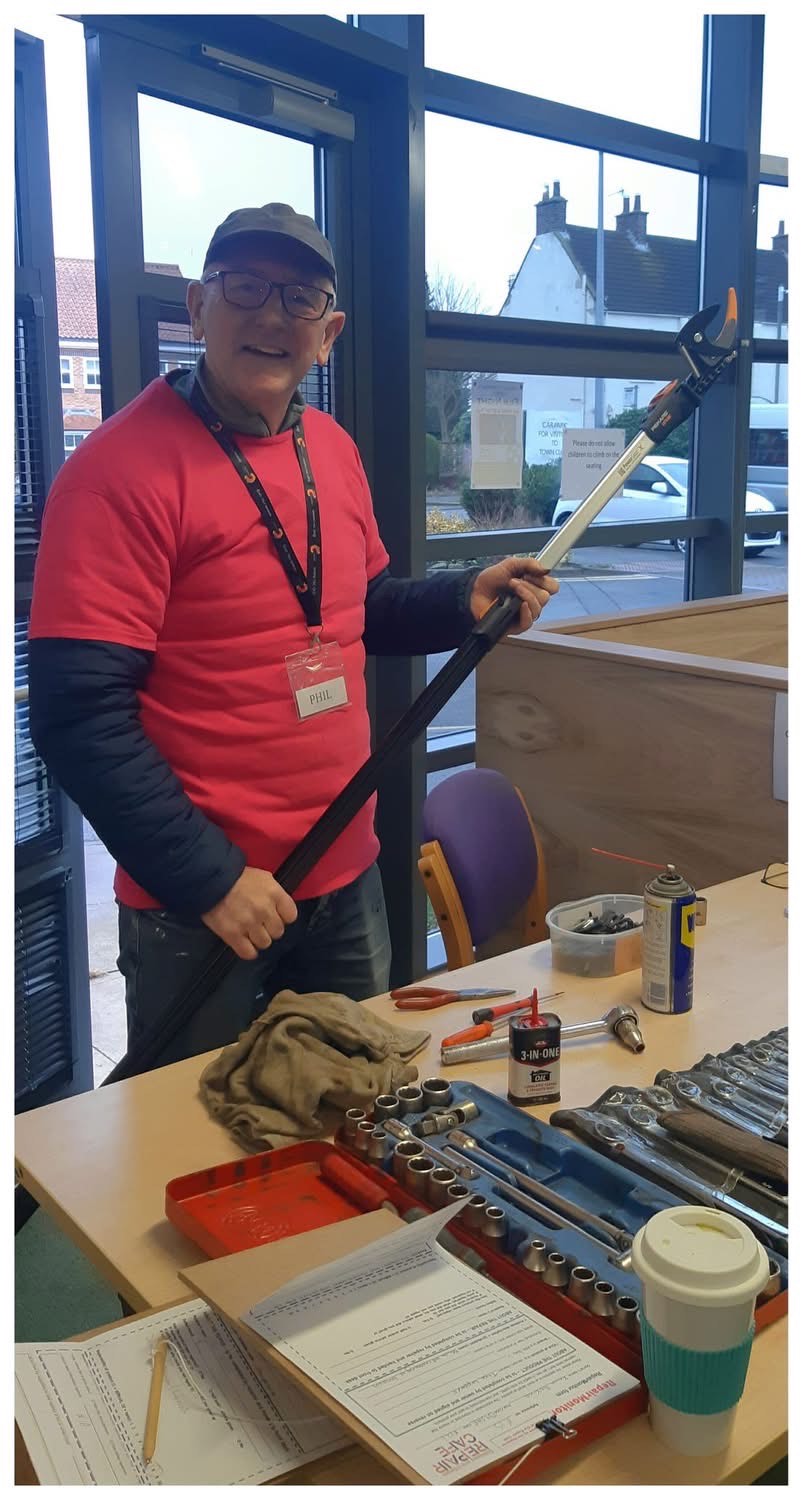
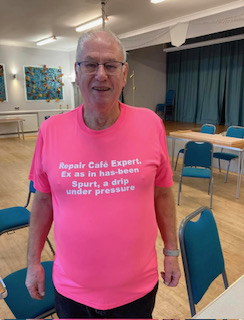
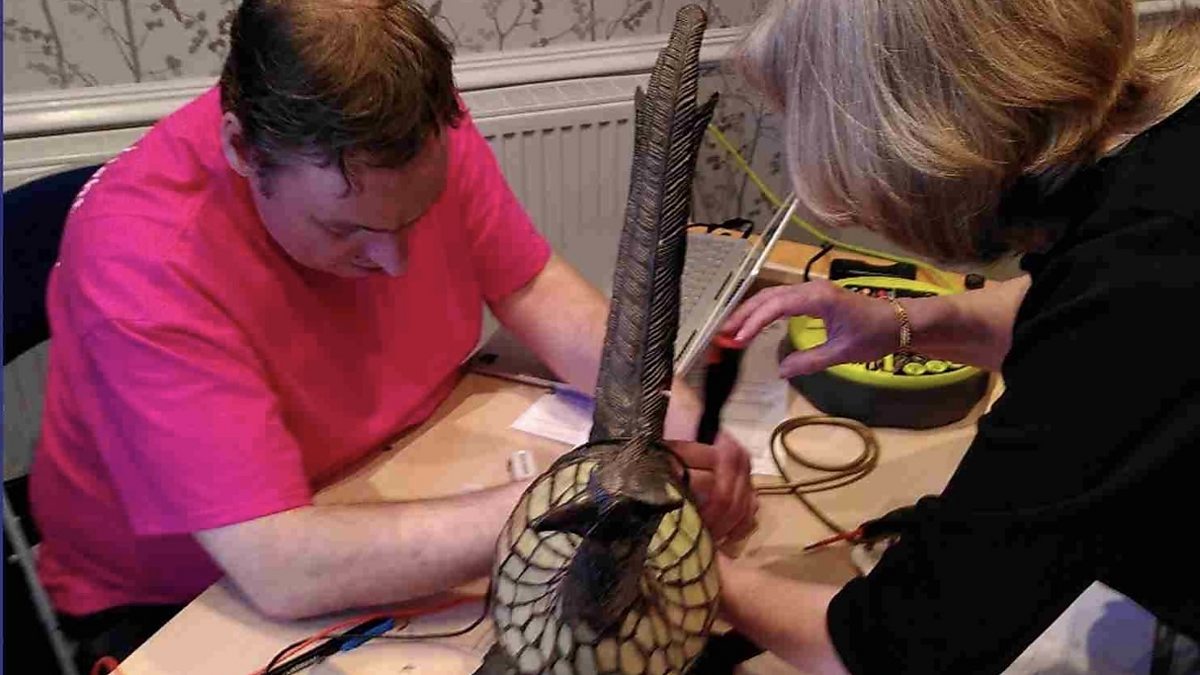
Our pre Easter Repair Cafe includes ETHICAL CHOCOLATE TREATS to refresh you whilst our volunteer repairers meet your fixing needs. Bring along your treasured household items in need of repair on Saturday 12th April 10-12 at the Globe Community Library. Our pink T-shirted volunteers will endeavour to fix your items, saving you the cost of buying new and protecting the climate and the earth’s natural resources by reducing waste going to landfill or incineration and reducing the need to manufacture new.
Household items for repair can include: clothing & textiles, electrical appliances, wooden furniture, toys & bikes, laptops & mobile phones.
Please note we will be unable to sharpen any blades as our hard working blade sharpener will not be present this month.
Alongside the repairing we will have information on CIRCULARITY LIVING (see Waste group notes below) and a FREE SUSTAINABLE BOOK & MAGAZINE GIVEAWAY where you can bring along any books and magazines on sustainable living – plant based cookery, gardening, mending – you are not using and / or pick up new ones you’d like. There will also be a display on CIRCULARITY LIVING and news of our forth coming GIVE OR TAKE EVENT.
On average, we manage to fix 70% of items, give advice on possible repair steps for 20% and how best to recycle the 10% that are sadly beyond repair (statistics). But 100% of attendees are offered free refreshments of tea, coffee or juice as well as cakes and biscuits and a great opportunity to chat with friendly, like minded people and learn new repair skills.
This month’s free refreshments include Fair Trade beverages and home made sweet treats (including vegan!) made with Fair Trade ingredients, kindly donated by Stokesley Co-op.
What can I do now?
Come along with your item to be repaired and become an important part of the circularity movement; also bring along any unwanted books and magazines and / or picking up some new ones! New repair and reception volunteers always welcome – come along, have a cuppa and a chat or email Simon Gibbon.
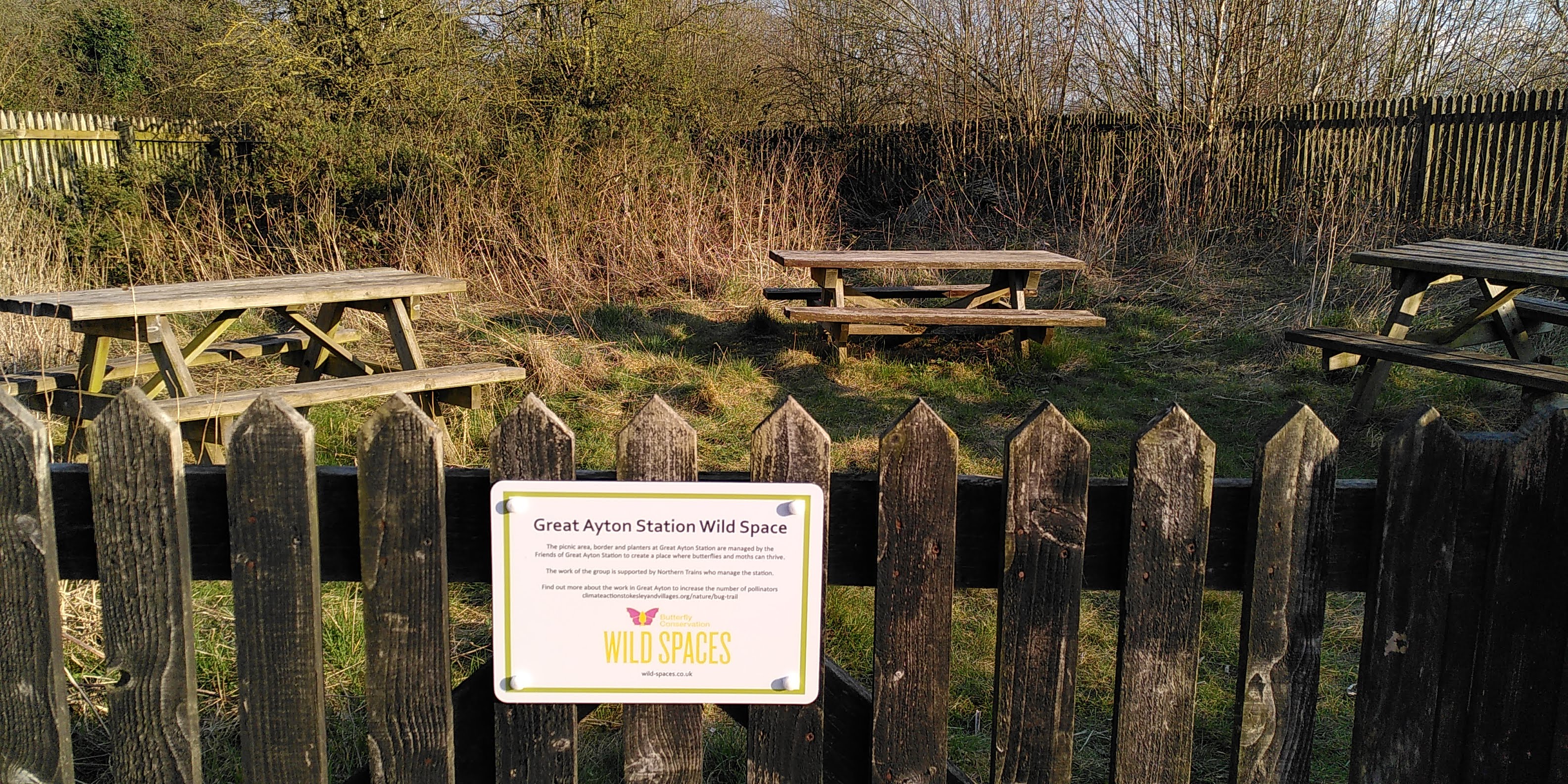
Great Ayton Station Butterfly Conservation Wild Space
If you are catching the train from Great Ayton Station or walking past, then spend a few minutes at one of the picnic tables in the Great Ayton Station Butterfly Conservation Wild Space. Let us know if you spot any butterflies or moths. Funds from the Bug Trail, that CASaV manages, paid for the sign and we will also be helping manage a grant from Northern, for new planters with plants for pollinators on the station platform, as the Friends of Great Ayton Station group don’t have a bank account.
Following the results of Butterfly Conservation’s Big Butterfly Count 2024, the Butterfly Conservation Trust “declared a butterfly emergency. Time is running out: 80% of butterfly species have declined since the 1970s. Climate change and biodiversity loss are pushing much of the natural world to the brink.
At the heart of the Butterfly Conservation 2021-2026 strategy are three goals:
Halve the number of the UK’s threatened species of butterflies and moths
Improve the condition of 100 of the most important landscapes for butterflies and moths
Transform 100,000 Wild Spaces in the UK for people, butterflies and moths”
What can I do now?
Butterfly Conservation is asking for everyone’s help in creating more Wild Spaces where butterflies and moths can thrive. “You don’t need a garden to make more room for nature. Whether you live in a flat with a balcony or a house with a patio, you can help make a difference. Every Wild Space should be free of pesticides, and if you are using compost it should be peat free. Finally, we want to encourage each Wild Space to be permanent.”
Report from the North Yorkshire Climate Coalition ‘Inspiring Community Action’ Day
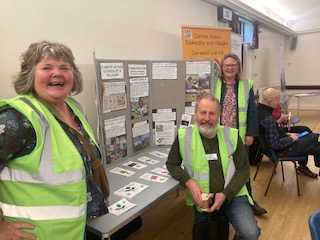
The North Yorkshire Climate Coalition invited our group to take part in an ‘Inspiring Community Climate Action’ day in Harrogate, hosted by Zero Carbon Harrogate and facilitated by North Yorkshire Council. We provided a ‘marketstall’ with a specific focus of interest to approximately 70 attendees from over 20 climate and environment action groups across North Yorkshire. We focused on ‘Communications: spreading the climate action message’ and gave presentations to timetabled groups about how we use a range of methods and approaches to spread the word about action on climate change and biodiversity breakdown which was well received. We also took part in a number of workshops and presentations as well as networking with the other brilliant groups across the county, sharing ideas and being inspired by their work – Ryedale Environment Group are restoring the wildflowers in verges working with North Yorkshire Council, Action on Climate Emergency Settle are setting up the Settle Energy Local Club to give the community energy, Fossil Free North Yorkshire are working to get fossil fuels out of the NY pension fund.
Ideas & news from the groups
1. Waste / Circularity (including Repair Cafe)
This subgroup focuses on reducing waste through circularity: rethinking & reducing consumption; and repairing, repurposing and recycling materials that might otherwise go to landfill or incineration.
Please join us at this month’s meeting: Tuesday 8th April 7.00pm by zoom – contact email Simon Gibbon for a link
1. Circularity – what and why?
Circularity, in terms of sustainability, aims to minimise waste and maximise resources by keeping products and materials in use through practices like reusing, repairing, repurposing, and at the last resort, recycling. The benefits of this are that it can help tackle climate change, biodiversity loss, waste, and pollution as well as saving us money and saving the earth’s limited resources for future generations.
At this month’s Repair Cafe there will be a display / information on Circularity Living and an opportunity to reuse books and magazines on sustainable themes such as plant based cookery, gardening & growing your own and mending or repurposing your household items.
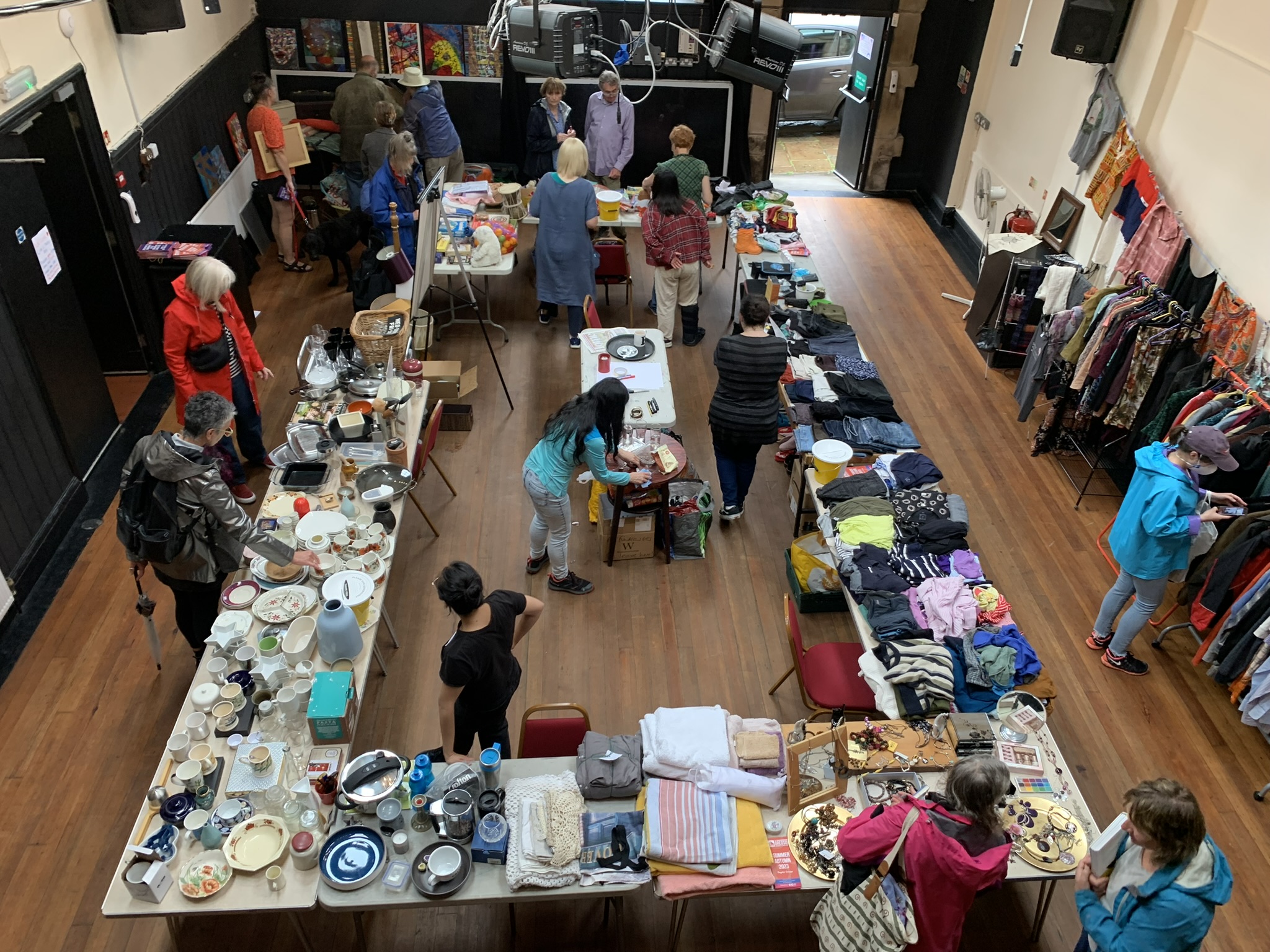
2. Household items circularity: Give or Take Event in July
Most of us have cupboards, under beds and garages full of household ‘stuff’ – kitchen equipment, bedding & other household textiles, books & magazines, ornaments, DVDs, CDs, toys, hobby equipment – that we never use and / or have duplicates of (just how many saucepans do you really use / need?).
At the same time there are many in the local community who need these household items but cannot afford them, particularly in this cost of living crisis as bills continue to rise
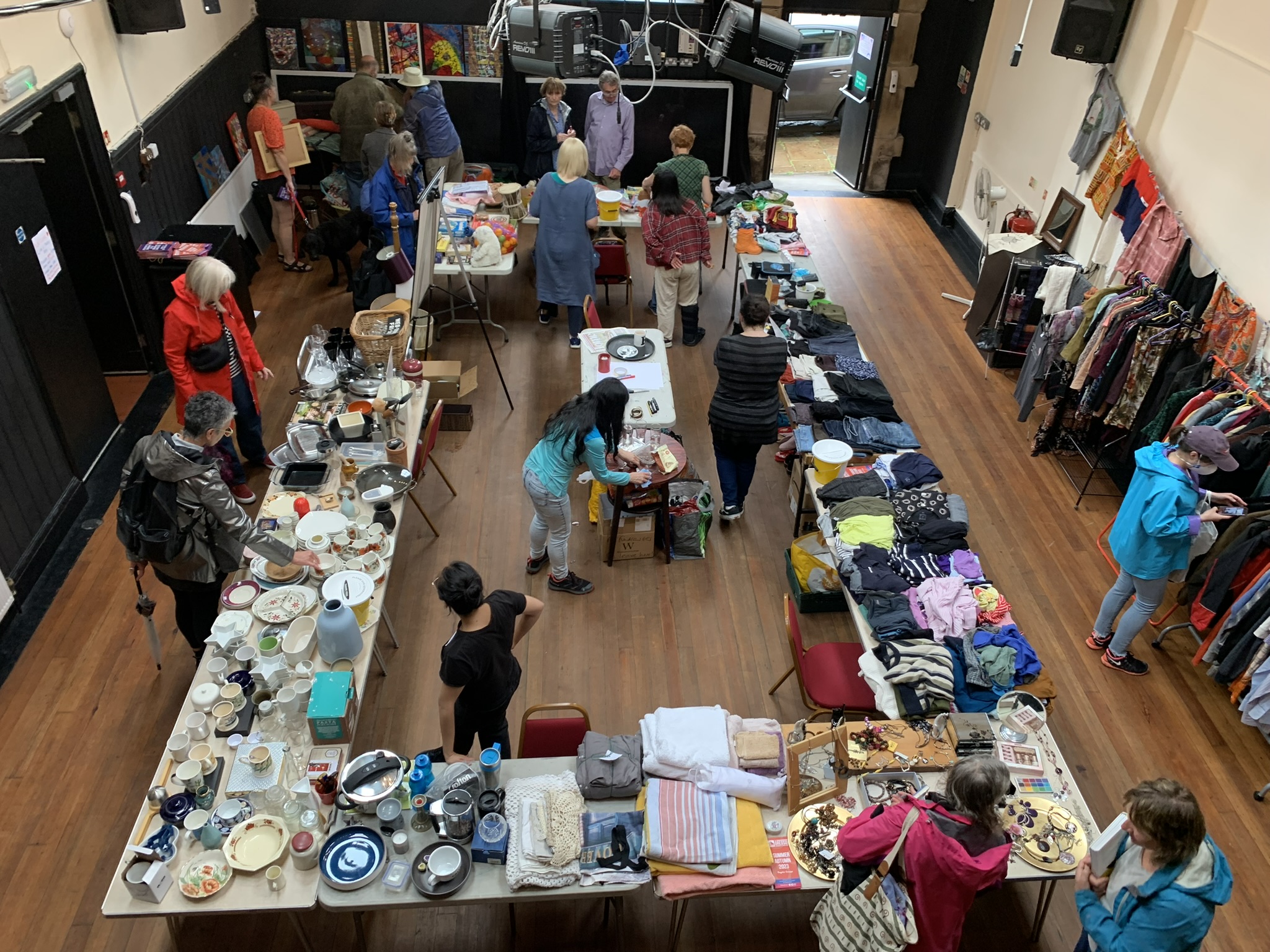
‘Give or Take’ events – where people who have unused surplus household items have a good clear out and people who need household items pick up things they need for free – have been running across the country for a while with some excellent ones running regularly in nearby Ryedale.
Waste / Circularity group members are planning a GIVE OR TAKE EVENT in July based in Stokesley (venue to be confirmed) for the local community to give a new life to their surplus, unused but usable household items and for others who can make good use of them. Any items left over will be offered to local charities and community groups or collected and recycled by North Yorkshire Council.
What can I do now?
We need volunteers to help plan and run the event (meeting soon) so if you can help or have household goods you want to repurpose please contact giveandtake@casav.uk
3. Clothing circularity: New to You Clothes Swap Event – equipment & volunteers & participants needed
The climate impact of clothing is significant, with the fashion industry considered one of the most polluting industries globally, contributing heavily to greenhouse gas emissions through its production processes, material sourcing, and waste generation, primarily due to the high water usage, energy consumption in manufacturing, and reliance on synthetic materials like polyester which are derived from fossil fuels.
Not only this, but “fast fashion” encourages frequent clothing purchases and quick disposal whilst garment workers are often exploited with low pay, unsafe working conditions, and long hours. Fast fashion’s affordability and new trends can make consumers value clothing less so instead of taking care of our clothing and repairing any damage to extend the life of our clothing we end up buying more and more that will sit in our wardrobes and never see the light of day.
What can I do now?
– Support sustainable and ethical fashion brands and choose high-quality clothing that lasts longer.
– Recycle or repurpose clothing when it’s no longer needed.
Most of us have far more clothing stuffed in our wardrobes that we no longer wear or in some cases have never worn after an impulse buy.
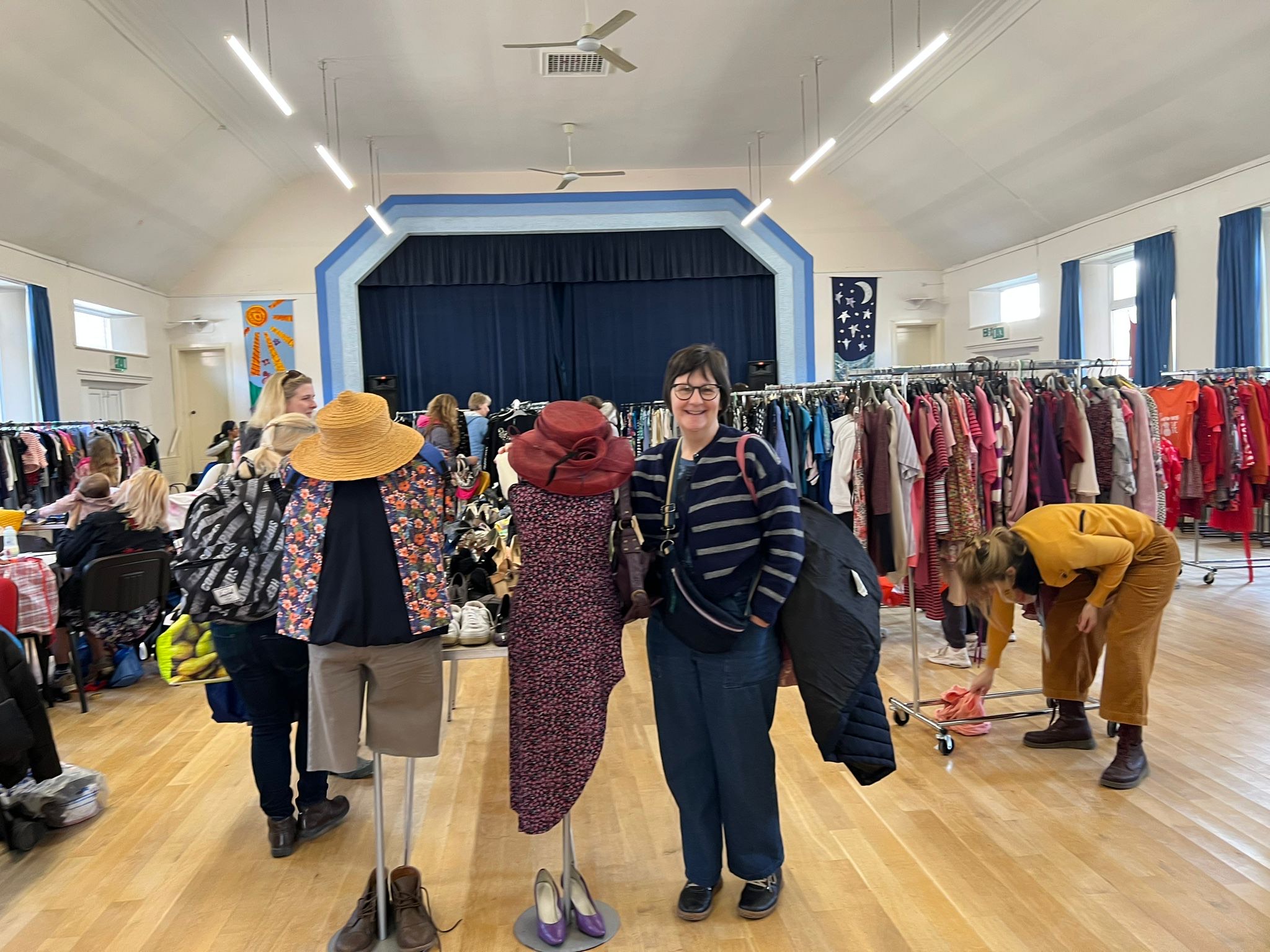
Jane and Jo, Repair Cafe textiles specialists, are hoping to address this locally and are currently planning a new to yougood quality clothing swap event on 27th September to coincide with Sustainable Fashion Week (27th September to 5th October) where our local community can have a wardrobe refresh by exchanging the clothes they no longer wear for ‘new to you’ clothes they would like to wear.
If you have any spare clothes rails or would like to volunteer to help or would like more information to participate please contact clothesswap@casav.uk
4. Waste group events in March: Repair Cafe at Swainby
March’s Repair Cafe at Swainby Village Hall was very well attended and EXCEEDED OUR RECORDS WITH 93 ITEMS in need of repair dealt with by our ever ready pink T-shirted volunteer repairing heroes and the majority were fixed to the delight and gratitude of their owners who were warmed up with cosy beverages and tasty treats served by our refreshment volunteers.
In addition, to mark the start of the growing season, we had a separate information room with a display board and leaflets on sowing and growing, resources on compost making from the North Yorkshire Rotters, a gardening book giveaway and a seed swap including some glorious Jerusalem artichoke tubers!
Volunteers in the information room were on hand to discuss all things gardening, nature and climate change and new members to the group were signed up.
2. Nature Group
This subgroup focuses on discovering more about and supporting biodiversity and our living environment. Please join us at our next face to face meeting: Thursday 17th April 15.30, Globe Community Library, Stokesley Contact Bridget for information
Environment / Biodiversity News and Actions
1. What to see and do locally in nature this month
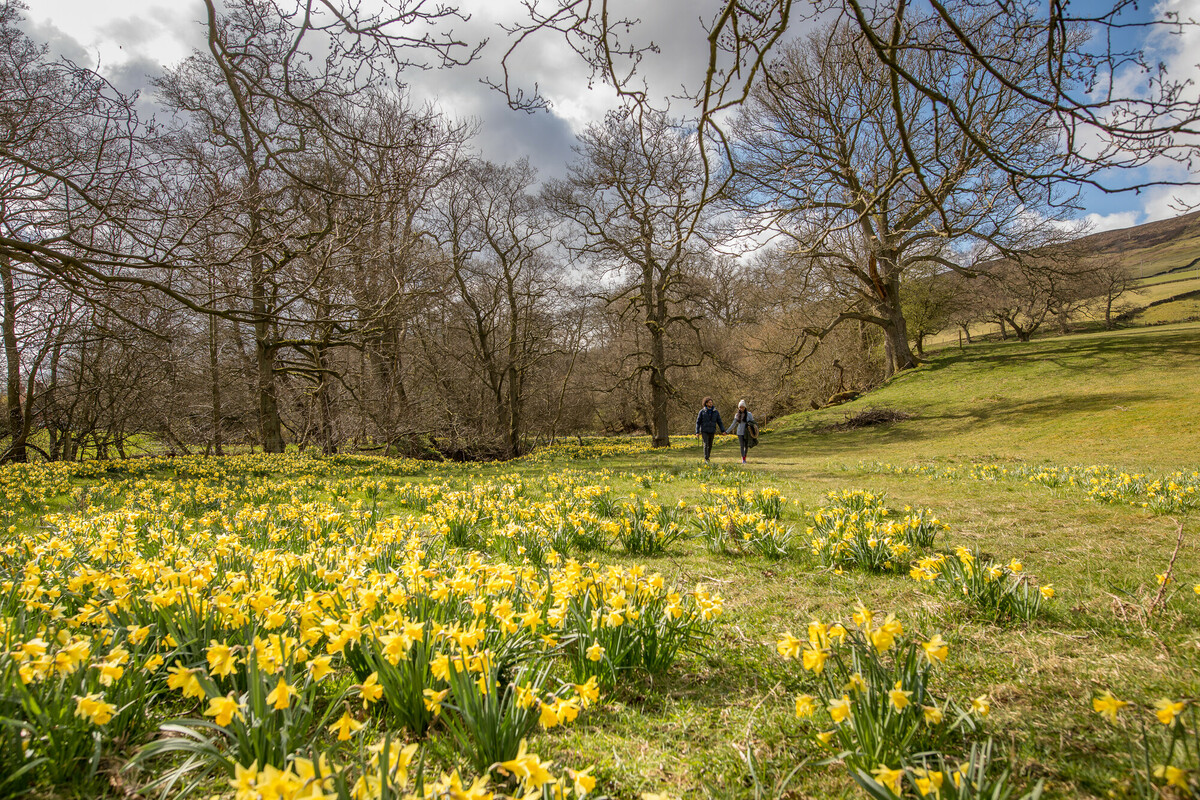
The more we connect with nature, the more motivated we are to protect it. Don’t forget to visit the natural exuberance of daffodils in Farndale. There are also some great displays in Rosedale.
2. Land Use Consultation
DEFRA is currently holding a consultation, ending on April 25th on a vision for land use in England and how to deliver it. This consultation will inform the development of a Land Use Framework.
What can I do now?
Make your voice count! The consultation is available on line but can be submitted by post if so desired. There are 24 questions and there is no need to answer all at once as it can be saved. It is probably worth looking at the accompanying analytical annex and other supporting documents.
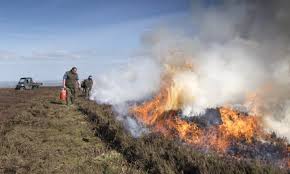
The Community Earth Project (CEP) based in the Esk Valley on the North York Moors is trying to collect data across the North York Moors for particulate matter (PM) levels during heather burning events. PMs are known carcinogens as are associated chemicals in smoke from burning organic matter. CEP is installing sensors which will contribute to the sensor.community database of global air quality measurement and hopefully will be used to increase awareness of the health issues caused by moor burning. You can see the local measurements here.
At January’s whole group meeting Mike Ford from CEP updated the group on the project’s progress. Data from sensors across the North York Moors is now being submitted which will be analysed. Mike noted that he is now talking with local MPs and raising awareness of the issue more widely.
What can I do now?
CEP is still looking for people who would be prepared to ‘host’ a PM sensor to monitor this year’s burning season. For more information contact cep.nature.recovery@gmail.com
3. Food Group
This subgroup focuses on food & its impact on climate change – from growing your own and eating seasonally to reducing food going to waste. Meetings held bimonthly on zoom, next meeting in May, see next month’s newsletter for date, contact Wendy for a link to join
1. Concerning news from the Food, Farming and Countryside commission
A new report called Paying the Price is an in depth analysis from the Food, Farming and Countryside Commission which reveals that the UK’s long-term food security is at risk from a dysfunctional food economy that’s failing the public and farmers.
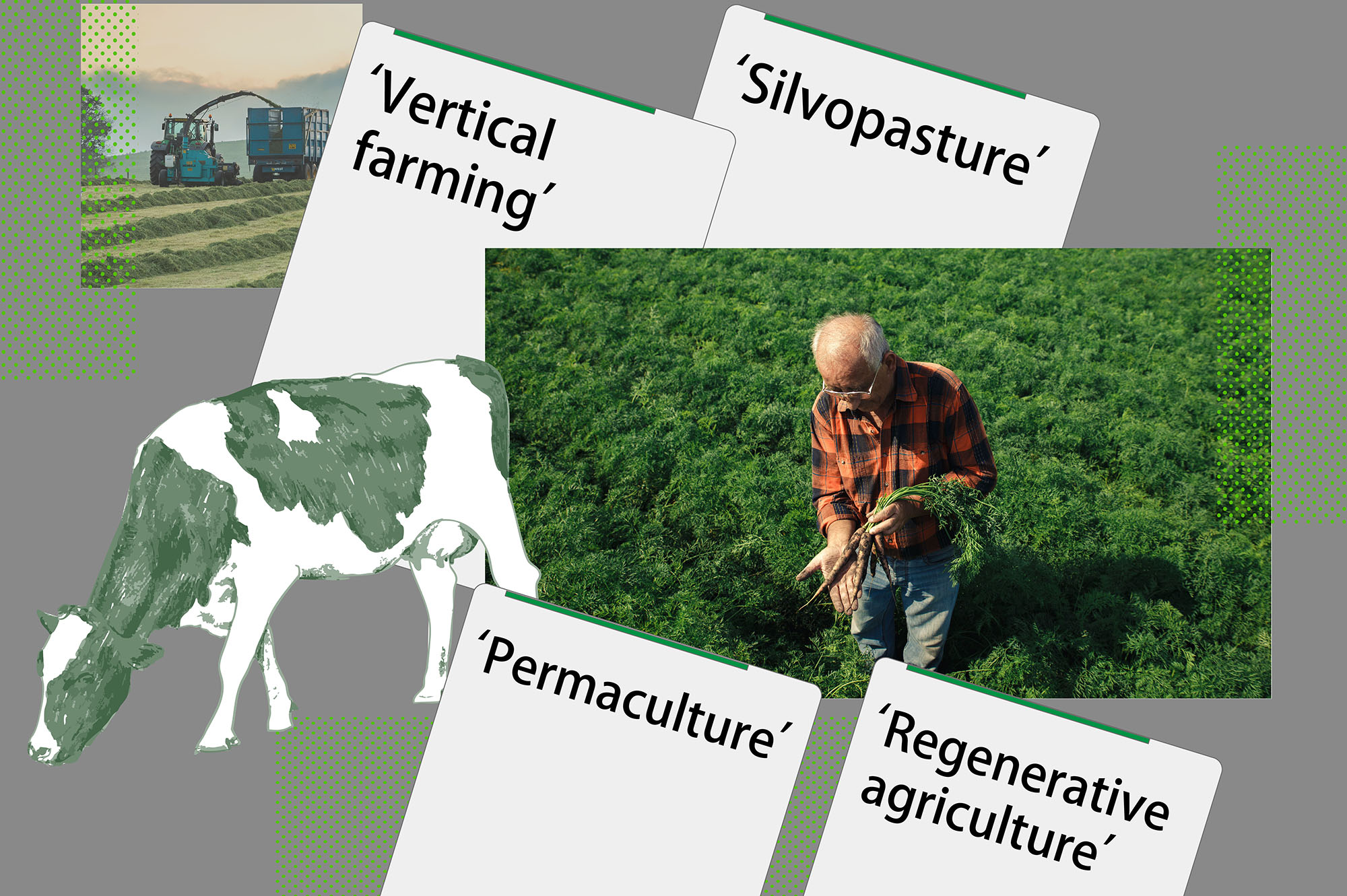
If you feel uncertain about the difference between Organic farming, Sustainable farming and Regenerative farming then you may find this article helpful. It includes this great quote –
“It may be that one of our biggest levers for trying to combat the modern public health epidemic of chronic diseases is to rethink our diet, and not just what we eat, but how we grow it”. Professor David Montgomery of the University of Washington
Environmental benefits: You can avoid pesticides and herbicides, which pollute the air and water, you can practice water conservation, you reduce food miles, you help pollinators by providing food for them.
Health benefits: you can eat more fruits and vegetables, and include them in healthy meals, homegrown vegetables are more nutritious and taste better because they are free of artificial additives.
Economic benefits: you can save money on food by growing your own vegetables and be more self-sufficient in case of food shortages or price increases.
What can I do now?
Sow outdoor varieties of tomatoes, chillies and courgettes in pots, so they’re ready to plant out in late May or June. Sow small batches of rocket and other easy salad leaves.
Sow flowering companions in the veg plot, such as pot marigolds and borage. Continue planting batches of garlic, shallots and onions every few weeks to extend the cropping period
Sow herbs such as parsley, coriander, dill and chamomile in a sunny bed or container
Sow fast-growing crops, such as radishes, to make the most of any temporary gaps
4. Seeds! Seeds! Seeds!
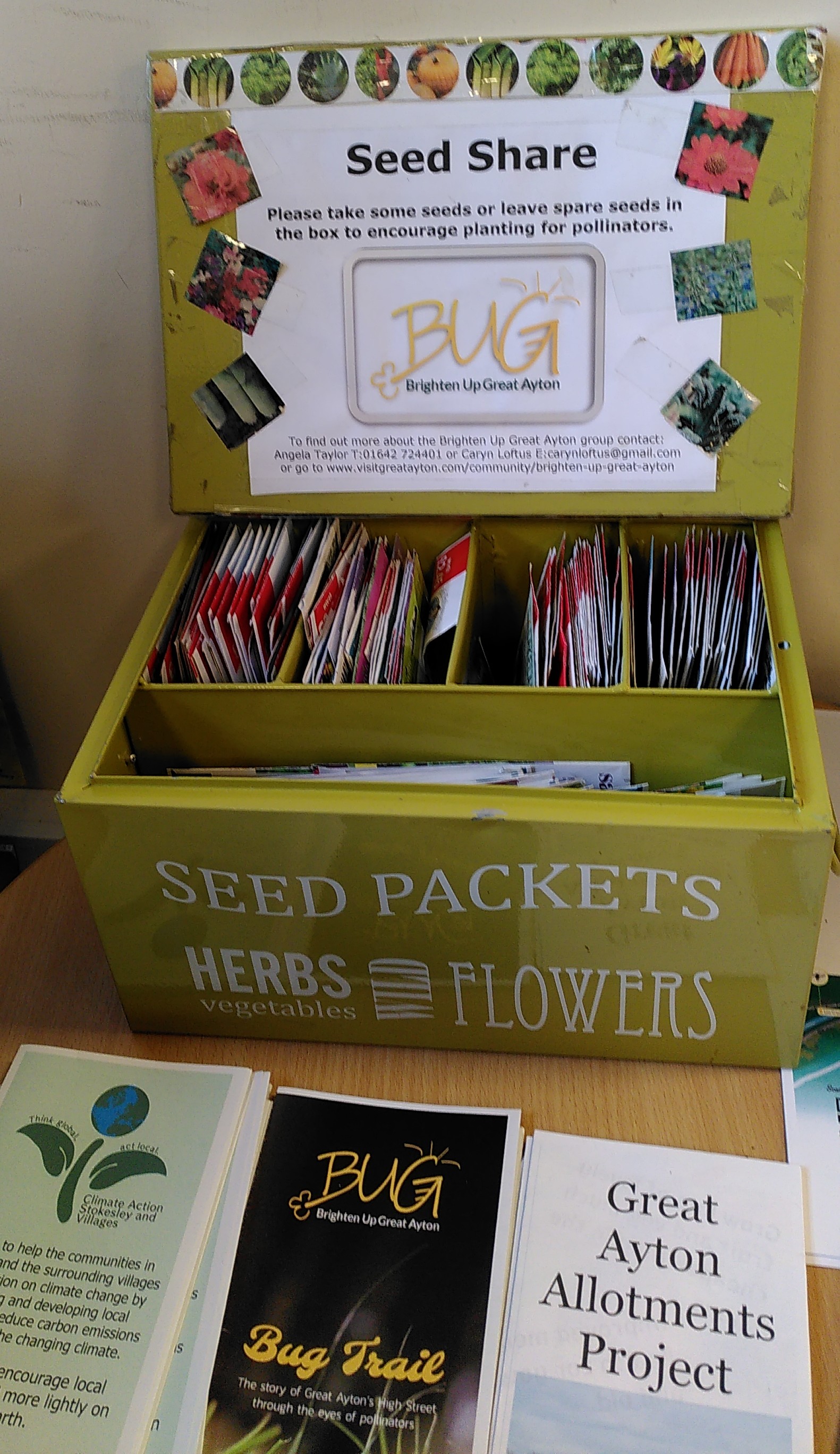
Inspired? You can try growing new plants for FREE by calling into The Globe Community Library in Stokesley or the Discovery Centre in Great Ayton and pick up seeds from our seed share points. Donations of spare seeds welcome.
5. Foodshare: surplus food prevented from going to waste and helping those in need
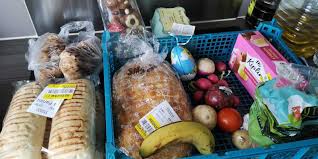
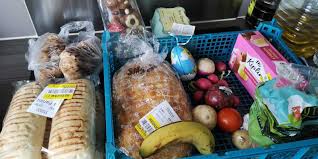
Foodshare is a joint initiative by the Food and Waste groups and is organised by Jenny. EVERY evening at 9pm a Volunteer collects surplus food from the Ayton Coop and Premier supermarket and both Stokesley Coops and takes it to various distribution centres (often in Middlesbrough) such as Nitelight (for homeless) for use/distribution amongst those in need. This is fresh food such as fruit, veg and bread, NOT the tins and dried food that are needed by Food Banks.
Foodshare collects 40 – 60 kilos of food each day with a value of approx £250. This is £78,000 worth in a year!
What can I do now?
Jenny is always keen to recruit more volunteers to support the foodshare so if you feel this is something with which you could help, please contact Jenny here Jenny Earle.
6. April Seasonal Eating
Eating food in season (local as far as possible) can have substantial positive impact on climate breakdown by reducing high-energy input from artificial heating or lighting needed to produce crops out of the natural growing season.
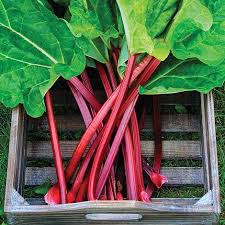
April is all about spring vegetables—asparagus and artichokes, snap peas begin to make an appearance, as well as young carrots with their fern-like carrot tops, and fava beans. Spring garlic, spring onions, leeks and fennel are thriving, as are the first spring radishes. Winter citrus is fading, and while we are seeing some early strawberries, the “fruit” of April isn’t really a fruit, but a vegetable that acts like one—rhubarb.
4. Ideas from the groups: Environment & Climate Osmotherley (ECO) Group

Environment Climate Osmotherley (ECO) meets regularly and holds events which raise awareness and address local environmental issues such as becoming a Dark Skies Village and increasing local biodiversity. Contact Rebecca for more information
Signing off
If you have any news or any event / activity you would like promoting on next month’s (May’s) update please email Kate Gibbonby Friday 25th May.
Kate also helps promote activities via Facebook and Instagram so let her know if there is anything that you would like shared via our Facebook page and Instagram if you are not a Facebook / Instagram user.
Hope to see you at the whole group CASaV meeting on Tuesday 15th April 19.30 at the Globe Community Library, Stokesley
Kate Gibbon,
on behalf of the Climate Action Stokesley and Villages Steering Group Steering group:
Our next whole group meeting will be on Tuesday 18th March, starting at 19:30 in The Globe Community Library, North Road, Stokesley.
During the meeting, as well as updates from our subgroups, we will consider the findings of the evaluation of our activities since we started in 2019 and discuss the recommendations to inform our future activities as well as planning current activities. Thank you to all those that completed the survey, were interviewed or took part in the focus group which informed the final report.
Welcome to March’s Update from Climate Action Stokesley & Villages
Thank you for your role in taking urgent action globally and locally on climate breakdown and biodiversity loss.
As the hours of daylight increase and the soil warmer a great way to reduce our carbon footprint is through growing our own so this month get your garden tools sharpened, pick up some free seeds and get info on making your own compost at the March Repair Cafe as well as learning how to prune fruit trees and shrubs alongside others at Yatton House Community Garden working party. For other ideas about getting outside and protecting nature come to the Citizen Science & Protecting Nature talk at Faceby Village Hall.
Diary dates
(details of all events below in Newsletter section)
Tuesday 18th March 19.30 – 21.00 Whole Group Meeting, the Globe Community Library, Stokesley
Sunday 9th March Sow Northern Potato Day, Norton
Tuesday 11th March 13.30 – 15.00 Yatton House Community Garden Working Party – Pruning
Tuesday 11th March 19.00 Waste Group (incl Repair Cafe) Zoom Meeting (see Waste / Circularity Group section below)
Wednesday 12th March 19.30 Protecting Nature through Citizen Science: illustrated and interactive talk, Faceby Village Hall
Saturday 15th March 10.00 – 12.00 Repair Cafe & Focus on sowing & growing seed swap, Swainby Village Hall
Monday 17th – Sunday 23rd March Food Waste Action Week
Tuesday 18th March Global Recycling Day
Thursday 20th March World Rewilding Day
Thursday 20th March 15.30 Nature Group meeting, the Globe Community Library (see Nature Group section below)
Thursday March 20th 19.00 Food Group Zoom Meeting (see Food Group section below)
Saturday 22nd Earth Hour 20.30 – 21.30 Lights Off & 60 minutes anytime to Do Something Positive for the Planet
Monday 24th March – Friday 4th April Sustrans Big Walk and Wheel Active Transport Week
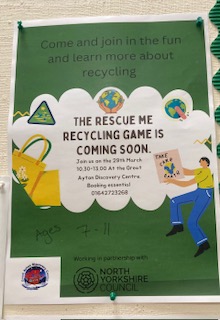
Saturday 29th March 10.30 – 13.00 ‘Rescue Me’ Recycling Game, Great Ayton Discovery Centre
Sunday 30th March UN Day of Zero Waste (see Waste / Circularity section below)
Tuesday 1st April 10:00 – 12 noon and 13:00 – 15:00 Yatton House Community Garden Additional Gardening Working Party – special feature for school children
Newsletter
Our online newsletter / magazine focuses on our group’s values and purpose, summed up by our motto ‘Think global, act local’, beginning with global / national / county issues including ways in which you can influence policy, followed by local news and activities you can participate in that develop our relationship with the environment and fight climate change and biodiversity loss.
“Think global”
Monday 17th – Sunday 23rd March Food Waste Action Week
Food waste is responsible for 8–10% of global greenhouse gas emissions as well as contributing to biodiversity loss. Furthermore, food waste uses up almost a third of the world’s agricultural land.
This year, the UK’s biggest annual food waste reduction campaign will run from 17 –23 March 2025 focusing on getting people across the UK talking about why buying loose fruit and vegetables is better.
Why? Because there is strong evidence that having the opportunity to buy loose fruit and vegetables means people buy only what they need, and less food ends up in the bin. Research has shown for example that if all apples, bananas and potatoes were sold loose, we could save 60,000 tonnes of food waste by enabling people to buy closer to their needs.
What can I do now?
Supermarkets like Tesco, Lidl and the Co-op have signed up to support this campaign so look out for their reduced packaging but why not make the most of the loose fruit and vegetables in minimal packaging at our great local markets, farmers’ markets and farm shops?
Better still – grow your own! The freshest fruit and veggies with NO packaging. See the Food Group section below on growing your own, swap / pick up free seeds at the Discovery Centre Great Ayton & the Globe, Stokesley and come to the Seed Swap and Composting Info display at this month’s Repair Cafe (see Waste / Circularity group section below).
Tuesday 18th March Global Recycling Day
Every year, billions of tons of natural resources – e.g. metal ores, fossil fuels – are taken out of the ground and in the not too distant future they will all run out. That’s why we must think again about what we throw away – seeing not waste, but valuable resources.
Recycling is a key part of the circular economy, helping to protect our natural resources. Each year the ‘Seventh Resource’ (recyclables) saves over 700 million tonnes in CO2 emissions and this is projected to increase to 1 billion tons by 2030. There is no doubt recycling is on the front line in the war to save the future of our planet and humanity.
Recycling is recognised in the UN’s Sustainable Development Goals 2030 and we are already seeing many individuals, governments and organisations taking direct action to support the global green agenda.
What can I do now?
See info on local recycling opportunities in the Waste / Circularity sub group section below and take your family to the ‘Rescue Me’ Recycling Game at the Discovery Centre, Great Ayton on Saturday 29th March 10.30 – 13.00. Also come along to repurposing events like the Clothes Swap and Give or Take household items event.
Thursday 20th March World Rewilding Day
Each year on World Rewilding Day people across the globe join together to celebrate rewilding’s vision for nature recovery. This global event harnesses the momentum of the multitude of people around the world who are on their rewilding journey, or simply believe in its power for change.
As a member of the Global Rewilding Alliance, Rewilding Britain helped establish the event at the signing of the‘Global Rewilding Charter’ in March 2021. The first-ever World Rewilding Day was launched to coincide with the start of the United Nations Decade of Ecosystem Restoration – to demonstrate that rewilding is central to achieving the important goals of this decade.
What can I do now?
Start rewilding if you can! Whether you have a garden, a smallholding, access to a lot of land, or simply would like to support rewilding in your community by being part of a local network, there is something for everyone. More info here: rewildingbritain.org.uk/get-involved/act/world-rewilding-day
If you are concerned how your neighbours will view your rewilding efforts, you can join the BLUE campaign which encourages us to put out a blue heart to start a conversation and show it is an intentional act. bluecampaignhub
Or support Wild Card with one of their rewilding campaigns; a current campaign is focusing on encouraging the Church Of England, one of the country’s biggest landowners, to rewild more of their land. More info here: wildcard.land/campaigns/rewild-the-church
Saturday 22nd Earth Hour 20.30 – 21.30 Switch Off Lights, 60 minutes anytime Do Something Positive for the Planet
Earth Hour started in 2007, Earth Hour with a “lights off” moment, with individuals, businesses and government organisations around the world switching off their lights to show support for the planet and raise awareness of the environmental issues affecting it.
What can I do now?
The organisers are asking supporters to switch off their lights 20.30 – 21.30 local time but also give an hour for Earth anytime during the daylight, spending 60 minutes doing something – anything – positive for our planet. This could be planting native flowers to support pollinators, cooking a sustainable meal to conserve water and reduce emissions, or removing litter from a local outdoor space, every hour counts toward a collective promise to protect our planet for generations to come. More info
24th March – 4th April Sustrans Big Walk and Wheel Active Transport Week
Sustrans Big Walk and Wheel inspires pupils to make active journeys to school, improve air quality in their neighbourhood and discover how these changes benefit their world. Sustrans Big Walk and Wheel is open to all primary and secondary schools in the UK, including SEN/ASN/ALN schools. It is free to take part and there are daily prizes to be won. On each day of the challenge, schools compete to see who can get the highest percentage of their pupils walking, using a wheelchair, scooting or cycling to school. Your school’s best five days will determine your final position, but you can log journeys on all ten days if you wish.
What can I do now?
If you are involved with a local school consider discussing the Big Walk and Wheel with school leaders to see if they would like to be involved. More info here: bigwalkandwheel
“Act Local”
This month’s local activities and ideas from our focus groups (Nature, Food, Waste, Energy, Transport) to address biodiversity loss and fight climate breakdown
Tuesday 18th March 19.30 Whole Group Meeting
Globe Community Library, Stokesley
Our next whole group meeting will be on Tuesday 18th March, starting at 19:30 in The Globe Community Library, North Road, Stokesley.
During the meeting, as well as updates from our subgroups, we will consider the findings of the evaluation of our activities since we started in 2019 and discuss the recommendations to inform our future activities as well as planning current activities. Thank you to all those that completed the survey, were interviewed or took part in the focus group which informed the final report.
Wednesday 12th March 19.30 Protecting Nature through Citizen Science: illustrated and interactive talk,
Faceby Village Hall
Spending time connecting with nature and also doing something worthwhile have both been shown to be very good for our total wellbeing. ‘Citizen Science’ is taking part in local, national and global environmental projects aimed at gathering essential data to contribute towards our collective knowledge about the state of nature and biodiversity and how it is changing with the impact of climate change and other factors.
What can I do now?
All are welcome (all ages!) to an illustrated and interactive talk on this subject at Faceby Village Hall on Wednesday 12th March 19.30 – 21.00. With hands on activities including identifying butterflies and birds, counting walruses and seeing how insect populations have dramatically reduced over the years, entrance is £5 which includes refreshments. All funds towards Faceby Village Hall.
Saturday 15th March 10.00-12.00 ‘Gardens Special’ Repair Cafe at Swainby Village Hall with focus on Sowing and Growing with seed swap and composting info
Our Repair cafe has GROWN from humble beginnings nearly three years ago into being a BUMPER CREAM OF THE CROP by repairing more items annually than any other Repair cafe in the UK (of those which log repairs).
To keep us BLOOMING, bring along your treasured household items in need of repair on Saturday 15th March at Swainby Village Hall. Our pink T-shirted volunteers will endeavour to fix your items, saving you the cost of buying new and protecting the climate and the earth’s natural resources by reducing waste going to landfill or incineration and reducing the need to manufacture new.
Household items for repair can include: clothing & textiles, electrical appliances, wooden furniture, toys & bikes, laptops & mobile phones, blades needing sharpening – particularly your GARDENING TOOLS – LAWN MOWER BLADES, SECATEURS & SHEARS.
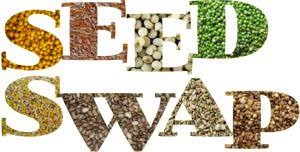
Alongside the repairing we will have a FREE SEED SWAP where you can bring along any spare seeds you are not using this year and swap them for seeds you’d like to grow. Fruit, vegetables and flower seeds all welcome and don’t worry if you don’t have any spare seeds, we will have some for you to take away for free. We will also have info and advice on sowing and growing including how to MAKE YOUR OWN COMPOST.
On average, we manage to fix 70% of items, give advice on possible repair steps for 20% and how best to recycle the 10% that are sadly beyond repair (statistics). But 100% of attendees are offered free refreshments of tea, coffee or juice as well as cakes and biscuits and a great opportunity to chat with friendly, like minded people and learn new repair skills.
This month’s free refreshments include Fair Trade beverages and home made sweet treats (including vegan!) made with Fair Trade ingredients, kindly donated by Stokesley Co-op.
What can I do now?
Come along with your item to be repaired and become an important part of the circularity movement! New repair and reception volunteers always welcome – come along, have a cuppa and a chat or email Simon Gibbon.
Tuesday 11th March 13.30 – 15.00 Yatton House Community Garden Working Party
Unfortunately the weather was too cold and wet to safely prune fruit trees at our last planned working party in February. The forecast is looking a bit warmer now so we’ll try again on Tuesday 11th March between 1:30 and 3:00pm.
If you are not sure how to prune fruit trees, come and learn about the 3 Ds and an X and have a go!
We will be having an additional working party on Tuesday 1st April from 10:00 – 12 noon and 1:00 – 3:00pm when we will be installing new features requested by children from Marwood Infant School and funded by a donation from Cleveland Mountain Rescue.
Meet in the car park at Yatton House, Guisborough Road, Great Ayton
Ideas & news from the groups
1. Waste / Circularity (including Repair Cafe)
This subgroup focuses on reducing waste through circularity: repairing, repurposing and recycling materials that might otherwise go to landfill or incineration.
Please join us at this month’s meeting: Tuesday 11th March 7.00pm by zoom – contact email Simon for a link
Circularity – what and why?
Circularity is all about reusing and eliminating waste, through making the best use of resources and preventing things being disposed in landfill or incineration. We can keep our materials in use (and so reduce the need to manufacture new) through reuse, repair and recycling. The benefits of this are that it can help tackle climate change, biodiversity loss, waste, and pollution as well as saving us money and saving the earth’s limited resources for future generations.
Local Recycling News
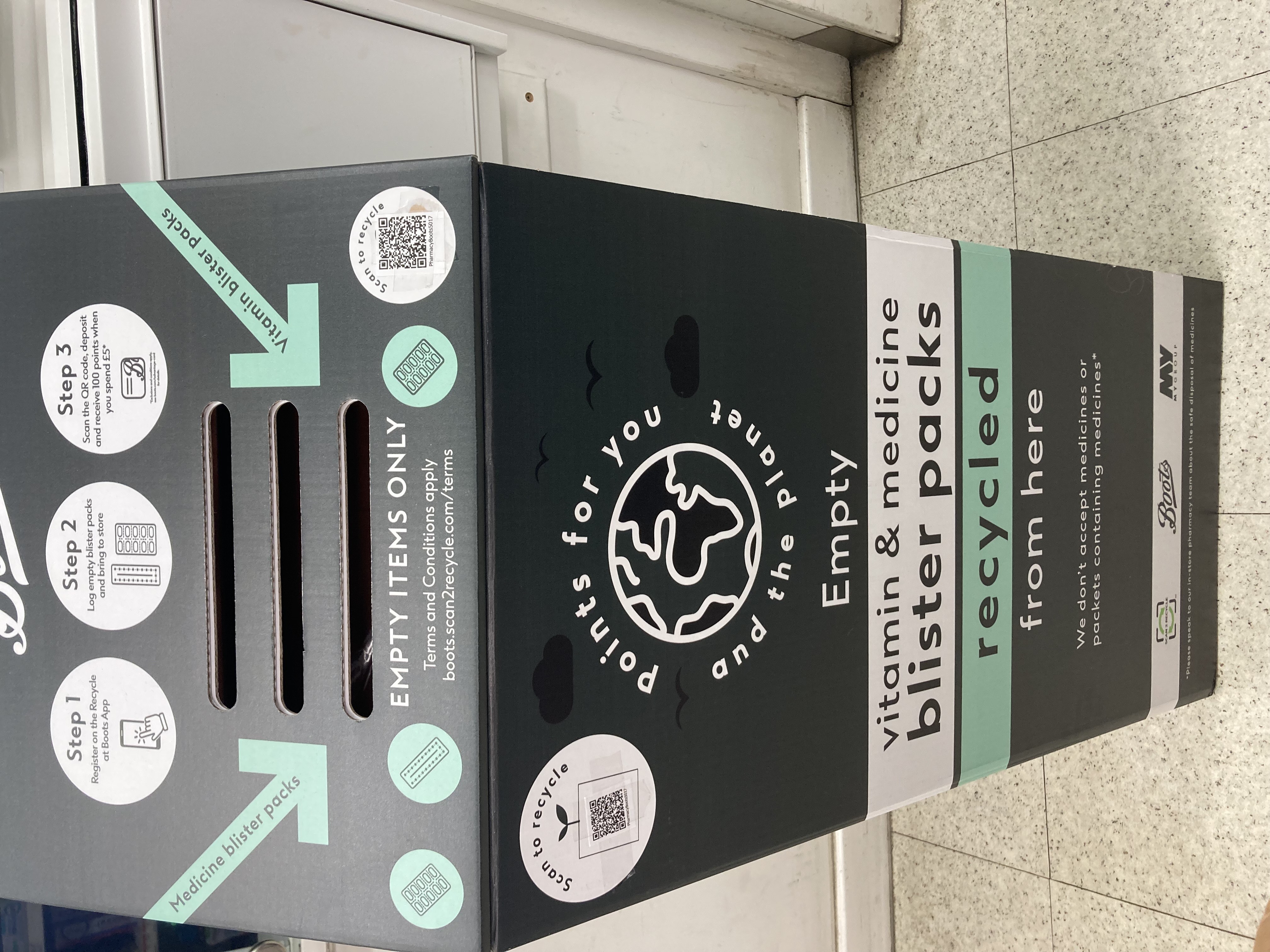
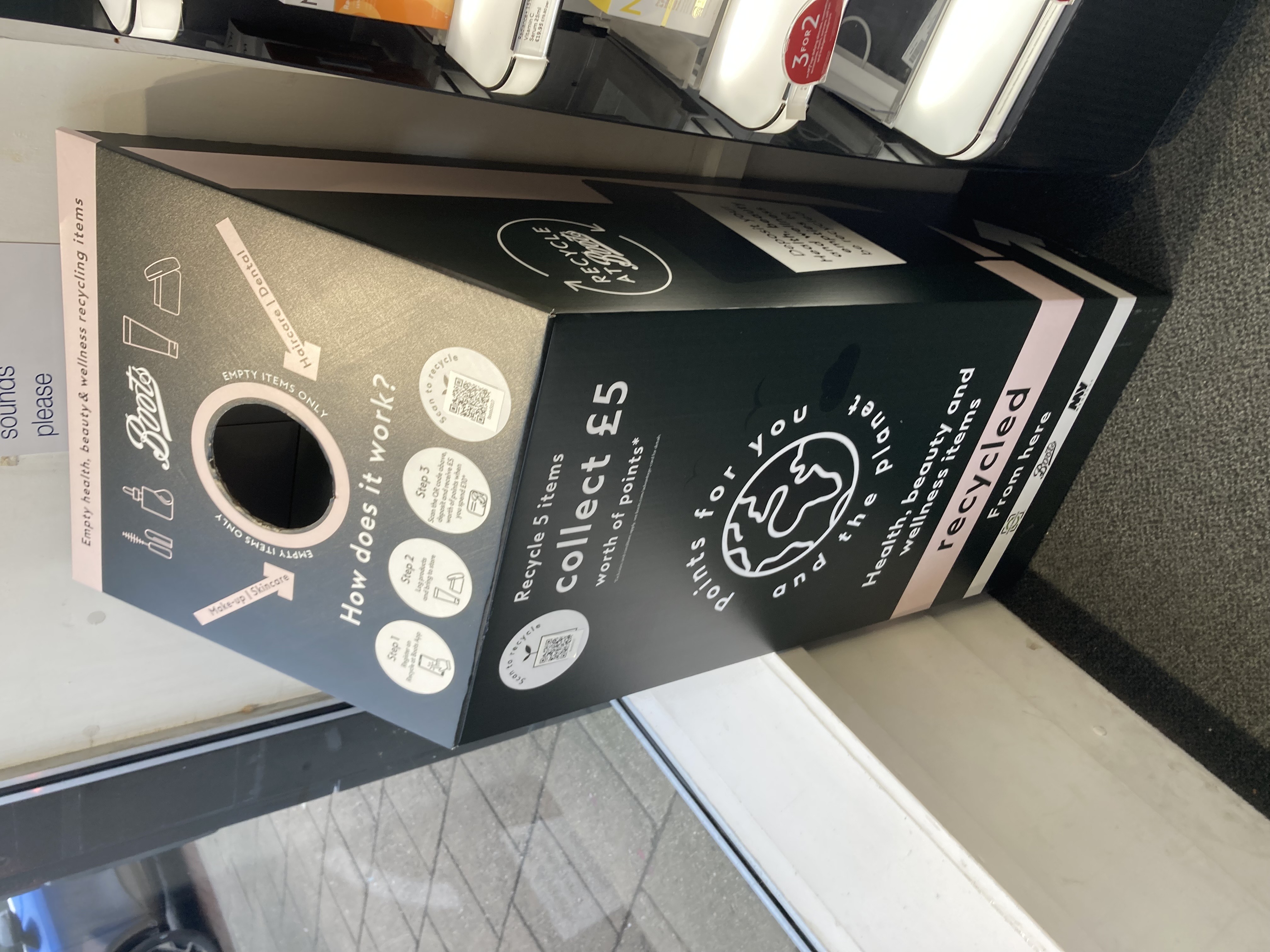
Good news at last for local recycling of medication / vitamin blister pack recycling. As blister packs are composite (plastic and metal) they are complex and expensive to recycle so cannot be put into our roadside recycling bins and although Superdrug pharmacies do take them for recycling the nearest to our area are quite a distance at Harrogate, Bridlington or Chester-le-Street. Boots the chemists recently announced that they are now rolling out a scheme nationwide after successfully trialling in the southeast for about a year. Blister pack recycling boxes are now in more local stores at Northallerton, Guisborough and Middlesbrough.
What can I do now?
If you have a Boots Advantage card you can also get points (you need to download an app, log your packets and spend £5 minimum in store) but you can forgo collecting points and just deposit packets as long as they are completely empty of any tablets. The materials will be sent to mygroup which separates the metal and plastic using a specialised process and all the material is repurposed – the aluminium metal is infinitely recyclable and used in manufacturing items such as drinks cans and the plastic is processed into a construction material a variety of uses including children’s playgrounds. Nothing goes to landfill and nothing is incinerated. More info boots-recycling-scheme/blister-pack-recycling
While you’re dropping off your blister packs for repurposing you can also recycle your empty and clean beauty, health, wellness and dental products, from any brand, that can’t be recycled in our roadside blue recycling bins.
Saturday 29th March 10.30 – 13.00 ‘Rescue Me’ Recycling Game, Great Ayton Discovery Centre
An interactive board game designed to inspire children across North Yorkshire to become recycling champions has been launched and a special event has been arranged at the Discovery Centre in Great Ayton on Saturday 29th March 10.30 – 13.00 for all ages to attend to learn about the importance of recycling and how everyone can contribute.
March 30th UN day of Zero Waste
The International Day of Zero Waste, observed annually on 30 March since 2023, highlights both the importance of bolstering waste management globally and the need to promote sustainable consumption and production patterns, values at the heart of the Waste / Circularity group.
This year we are even more on the zeitgeist as the theme is “Towards zero waste in fashion and textiles”, focusing on the urgent need to take action to reduce the waste impact from the fashion and textile sector and promote sustainability and circularity. To that end….
Clothing circularity: New to You Clothes Swap Event – equipment & volunteers & participants needed
The climate impact of clothing is significant, with the fashion industry considered one of the most polluting industries globally, contributing heavily to greenhouse gas emissions through its production processes, material sourcing, and waste generation, primarily due to the high water usage, energy consumption in manufacturing, and reliance on synthetic materials like polyester which are derived from fossil fuels.
Not only this, but “fast fashion” encourages frequent clothing purchases and quick disposal whilst garment workers are often exploited with low pay, unsafe working conditions, and long hours. Fast fashion’s affordability and new trends can make consumers value clothing less so instead of taking care of our clothing and repairing any damage to extend the life of our clothing we end up buying more and more that will sit in our wardrobes and never see the light of day.
What can I do now?
– Support sustainable and ethical fashion brands and choose high-quality clothing that lasts longer.
– Recycle or repurpose clothing when it’s no longer needed.
Most of us have far more clothing stuffed in our wardrobes that we no longer wear or in some cases have never worn after an impulse buy.
Jane and Jo, Repair Cafe textiles specialists, are hoping to address this locally and are currently planning a new to yougood quality clothing swap event on 27th September to coincide with Sustainable Fashion Week (27th September to 5th October) where our local community can have a wardrobe refresh by exchanging the clothes they no longer wear for ‘new to you’ clothes they would like to wear.
If you have any spare clothes rails or would like to volunteer to help or would like more information to participate please contact clothesswap@casav.uk
Household goods circularity: Give or Take Event – volunteers and ideas needed
As above for clothing, most of us have cupboards, under beds and garages full of household ‘stuff’ – kitchen equipment, bedding & other household textiles, books & magazines, ornaments, DVDs, CDs, toys, hobby equipment – that we never use and / or have duplicates of (just how many saucepans do you really use / need?).
At the same time there are many in the local community who need these household items but cannot afford them, particularly in this cost of living crisis as bills continue to rise
‘Give or Take’ events – where people who have unused surplus household items have a good clear out and people who need household items pick up things they need for free – have been running across the country for a while with some excellent ones running regularly in nearby Ryedale.
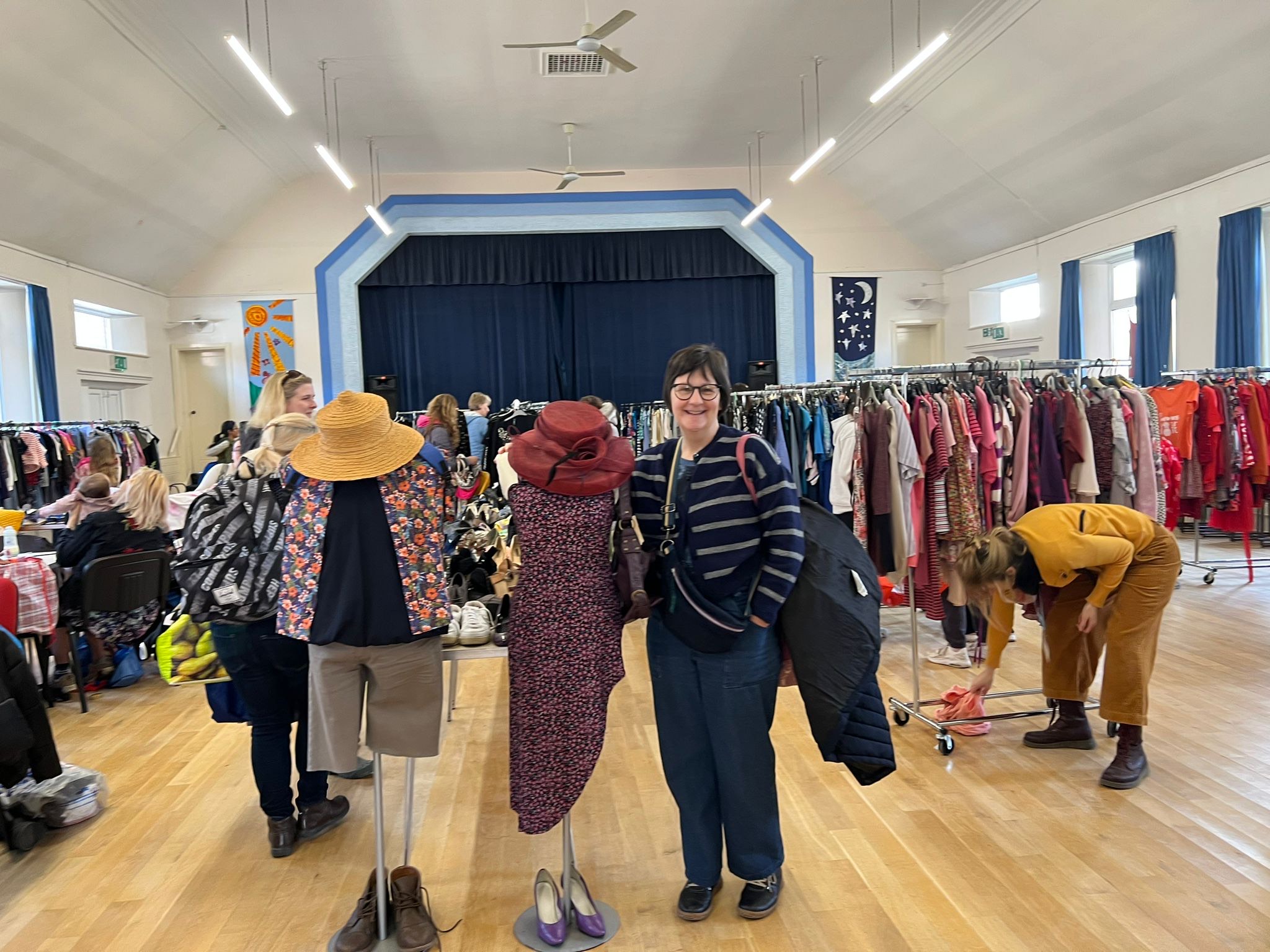
Waste / Circularity group members are planning Give or Take an event around Great Big Green Weekin June based in Stokesley for the local community to give a new life to their surplus, unused but usable household items and for others who can make good use of them. Any items left over will be offered to local charities and community groups or collected and recycled by North Yorkshire Council.
What can I do now?
We need volunteers to help plan and run the event (meeting soon) so if you can help or have household goods you want to repurpose please contact giveandtake@casav.uk
Waste group events in February: Repair Cafe
February’s Repair Cafe at the Globe, Stokesley was very well attended and our busiest yet with over 80 items in need of repair dealt with by our ever ready pink T-shirted volunteer repairing heroes and the majority were fixed to the delight and gratitude of their owners who were warmed up with cosy beverages and tasty treats.
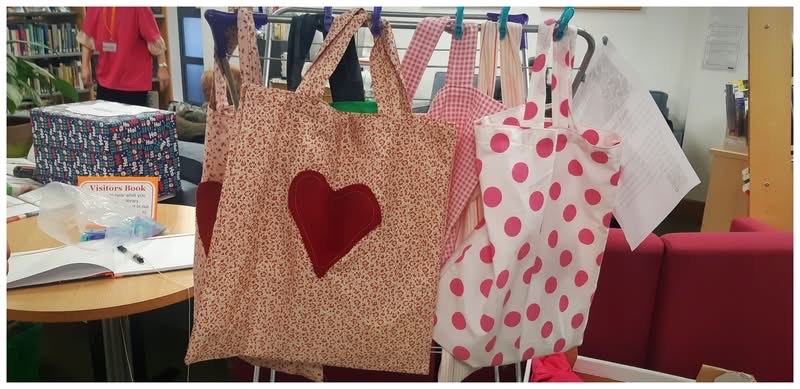
In addition, to celebrate Climate Coalition’s Show the Love month, some of the Repair Cafe sewing team took fabric that might otherwise have gone to waste and turned it into over 50 glorious sustainable shopping bags (using a morsbags design – each bag lasts 500 times longer than a plastic shopping bag). Each bag contained a range of sustainable treats such as wildflower and pea seeds, food waste prevention kitchen gadgets from the North Yorkshire Rotters and organic Fair Trade tea bags and all were given away for free to those attending the Repair Cafe to spread the sustainable living message.
2. Nature Group
This subgroup focuses on discovering more about and supporting biodiversity and our living environment. Please join us at our next meeting: Thursday 20th March 15.30, Globe Community Library, Stokesley Contact Bridget for information
Environment / Biodiversity News and Actions
1. Land Use Consultation
DEFRA is currently holding a consultation, ending on April 25th on a vision for land use in England and how to deliver it. This consultation will inform the development of a Land Use Framework.
What can I do now?
Make your voice count! The consultation is available on line but can be submitted by post if so desired. There are 24 questions and there is no need to answer all at once as it can be saved. It is probably worth looking at the accompanying analytical annex and other supporting documents.
COP 16 – the Convention on Biological Diversity reconvened on February 25th as many questions were not addressed during the conference held in November last year. Key discussions points include ‘resource mobilization, financial mechanism, and ensuring that the Kunming and Montreal targets are translated into meaningful action.
The UK has delivered a pledge for nature to the conference, unfortunately 85% of other nations have not yet done so.
The commitment is to protect 30% of land and sea by 2030.
The North York Moors National Park is running a Biofluorescent Night Walk event on the 8th March starting in Glaisdale. Biofluorescence is a unique phenomenon where certain organisms emit light in different colours than the ones they absorb, and this guided walk will enable you to discover this captivating natural phenomenon up close.
With UV torches provided, you can venture into the darkness to witness a stunning display of biofluorescent organisms in their natural habitat. From fungi to insects and plants, you can encounter a diverse array of species that come alive with vibrant hues of green, blue, red, purple, orange, and more, revealing Nature’s hidden spectacles.
This guided walk is suitable for anyone aged 8 years and above, all children must be accompanied by an adult. There are two sessions – at 18.30 and 20.00 – and they cost £20.
Pollution of the River Tees & impact on marine life presentation, February
Over 40 people including fishermen whose livelihoods have been impacted by the 2021 crab die-off and marine conservationists concerned about the almost complete wipe out of all the new seal pups in Teesmouth this year attended this fascinating talk at the Globe Stokesley before our whole group meeting in February.
What can I do now?
If you were unable to attend the event you can hear the presentation and see the slides here https://northeastfc.uk/
February tree and hedge planting
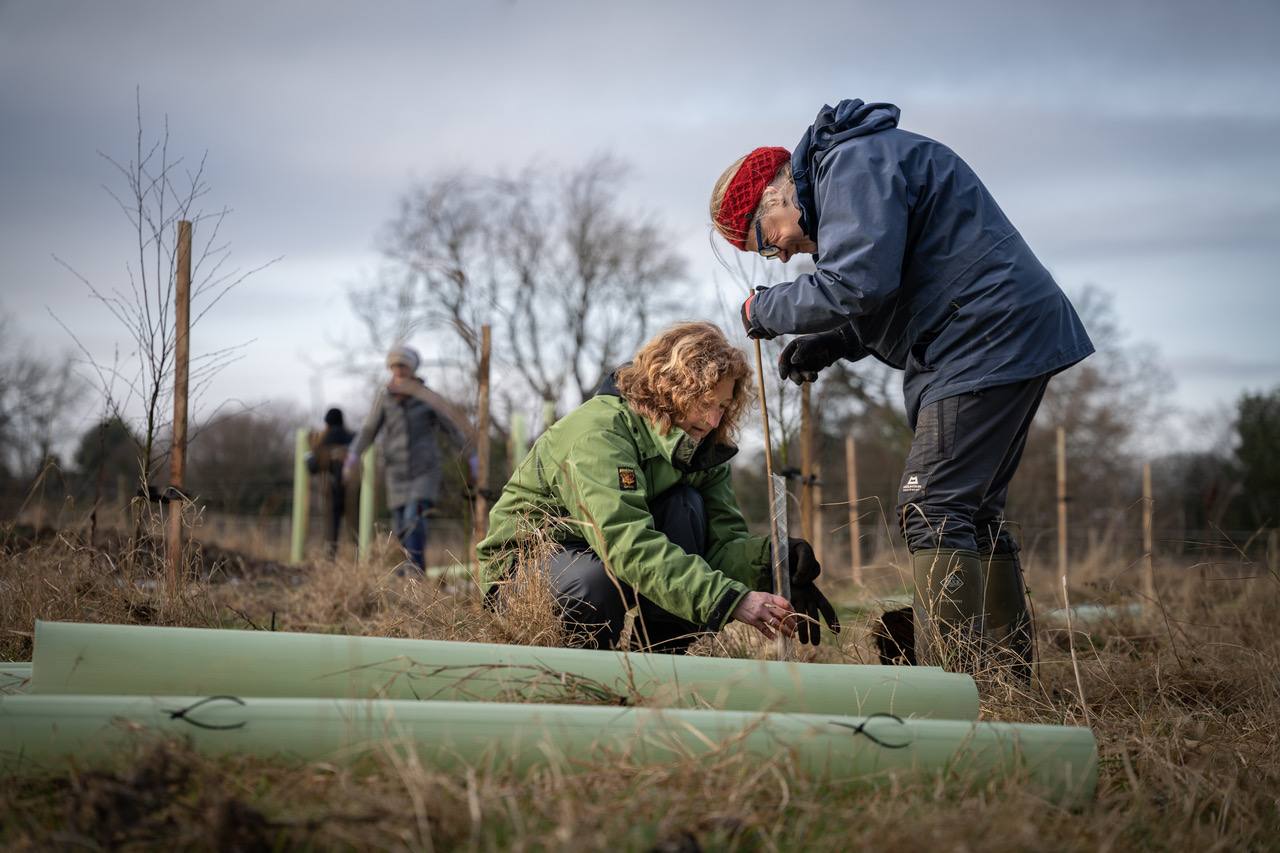
Thank you to all those who helped plant trees in Faceby and at East Angrove Farm. Over 3,200 trees and hedgerow plants have now been planted. We’ve been asked to given an extra shout out to Nige and Rod who put in the graft of about 20 people each.
What can I do now?
If you are part of a community charity or school you can get information on grants for tree planting here: treecouncil.org.uk
The Community Earth Project (CEP) based in the Esk Valley on the North York Moors is trying to collect data across the North York Moors for particulate matter (PM) levels during heather burning events. PMs are known carcinogens as are associated chemicals in smoke from burning organic matter. CEP is installing sensors which will contribute to the sensor.community database of global air quality measurement and hopefully will be used to increase awareness of the health issues caused by moor burning. You can see the local measurements here.
At January’s whole group meeting Mike Ford from CEP updated the group on the project’s progress. Data from sensors across the North York Moors is now being submitted which will be analysed. Mike noted that he is now talking with local MPs and raising awareness of the issue more widely.
What can I do now?
CEP is still looking for people who would be prepared to ‘host’ a PM sensor to monitor this year’s burning season. For more information contact cep.nature.recovery@gmail.com
3. Food Group
This subgroup focuses on food & its impact on climate change – from growing your own and eating seasonally to reducing food going to waste. Please join us on Thursday 20th March at 19.00 for a zoom meeting contact Wendy for a link to join
Growing Your own: March Tips of the Month
What are the benefits of growing your own?
Environmental benefits: You can avoid pesticides and herbicides, which pollute the air and water, you can practice water conservation, you reduce food miles, you help pollinators by providing food for them.
Health benefits: you can eat more fruits and vegetables, and include them in healthy meals, homegrown vegetables are more nutritious and taste better because they are free of artificial additives.
Economic benefits: you can save money on food by growing your own vegetables and be more self-sufficient in case of food shortages or price increases.
What can I do now?
In March, you can start seeds, plant vegetables, apply compost, prune perennials, and weed your garden.
Outside: Sow cool-season crops like lettuce, spinach, radishes, and peas directly into the garden once the soil starts to warm up. Broad beans can be sown from now but French and Runner beans need a warm soil so best kept until early May. Chard and beetroot sown before late April are more likely to bolt (go to seed this year).
Inside: Make a butterfly garden: Plant a butterfly garden in a window box with your children.
Seeds! Seeds! Seeds!
This year there won’t be our annual seed stall in Stokesley market but rest assured, you can still try growing new plants for FREE by calling into The Globe Community Library in Stokesley or the Discovery Centre in Great Ayton and also at this month’s Repair Cafe and choosing from the selection in the seed share boxes. Donations of spare seeds welcome.
Foodshare: surplus food prevented from going to waste and helping those in need
Foodshare is a joint initiative by the Food and Waste groups and is organised by Jenny. EVERY evening at 9pm a Volunteer collects surplus food from the Ayton Coop and Premier supermarket and both Stokesley Coops and takes it to various distribution centres (often in Middlesbrough) such as Nitelight (for homeless) for use/distribution amongst those in need. This is fresh food such as fruit, veg and bread, NOT the tins and dried food that are needed by Food Banks.
Foodshare collects 40 – 60 kilos of food each day with a value of approx £250. This is £78,000 worth in a year!
What can I do now?
Jenny is always keen to recruit more volunteers to support the foodshare so if you feel this is something with which you could help, please contact Jenny here Jenny Earle.
Sow Nothern: Potato day Sunday March 9th 10-12 Norton
The fantastic community growing group Sow Northern are holding a Potato day on Sunday 9 March, 10am to 12pm at The Moline Cross, NortonTS20 1PE. They’ll have lots of lovely varieties of seed potatoes to choose from.
What can I do now?
Come along, get your seed potatoes, have a cuppa and chat to other growers. They’ll also have a seed swap, so bring along any seeds you’re not going to grow, and swap them for ones you will. They’ll also have infomation about seed saving and can offer advice on that too.
March Seasonal Eating
Eating food in season (local as far as possible) can have substantial positive impact on climate breakdown by reducing high-energy input from artificial heating or lighting needed to produce crops out of the natural growing season.
Vegetables: Artichoke, Beetroot, Cabbage, Carrots, Chicory, Leeks, Parsnip, Purple Sprouting Broccoli, Radishes, Sorrel, Spring Greens, Spring Onions, Watercress
Recipe of the month: Rhubarb Vodka
Make the most of our local Yorkshire rhubarb by making some delicious rhubarbvodka
4. Ideas from the groups: Environment & Climate Osmotherley (ECO) Group
Environment Climate Osmotherley (ECO) meets regularly and holds events which raise awareness and address local environmental issues such as becoming a Dark Skies Village and increasing local biodiversity. Contact Rebecca for more information
Signing off
If you have any news or any event / activity you would like promoting on next month’s (April’s) update please email Kate Gibbonby Friday 28th March
Kate also helps promote activities via Facebook and Instagram so let her know if there is anything that you would like shared via our Facebook page and Instagram if you are not a Facebook / Instagram user.
Hope to see you at the whole group CASaV meeting on Tuesday 18th March 19.30 at the Globe Community Library, Stokesley
Kate Gibbon,
on behalf of the Climate Action Stokesley and Villages Steering Group Steering group:
On Tuesday 18th February at the Globe Community Library, Stokesley from 19.30 until 21.00 we will be holding our February monthly meeting including a talk from one of our members Simon Gibbon also part of the North East Marine Research Group – Pollution of the River Tees & its potential impact on Marine Life. The talk will focus on the lower Tees and its coast, explaining what happens in and along the river, and how industry, dredging and development pose environmental risks, likely to affect marine life from crabs to seals. Hear how the river has changed over the last 200 years and how this has affected its marine life, in the past and now.
After the talk we will update on the activities of our sub-groups and discuss plans for future activities.
All welcome to come together to share thoughts on all things climate change and biodiversity loss, updates from the sub groups.
Welcome to February’s Update from Climate Action Stokesley & Villages
Thank you for your role in taking urgent action globally and locally on climate breakdown and biodiversity loss.
This month we’re celebrating the Climate Coalition’s ‘Show the Love’ with a host of activities and events where you can explore beautiful environments with free entry to protected wetlands (World Wetlands Day), learn about pollution in our local environment (River Tees Talk and Meeting), do your bit for biodiversity by helping plant new hedgerows (hedgerow planting at East Angrove), get close to nature and pick up new gardening skills (Yatton House Community Garden pruning skills activity), share and learn yarn and textile crafts and mending (Osmotherley Mending Group) and extend the life of your cherished possessions (Repair Cafe) where you can also get yourself a FREE Show the Love goody bag full of sustainable living treats and ideas to protect the planet you love.
Diary dates
details of all events below in Newsletter section)
Tuesday 18th February 19.30 – 21.00 River Tees Pollution & Marine Die Off Talk & Whole Group Meeting, the Globe Community Library, Stokesley
1st – 28th February Climate Coalition’s Show the Love month
Saturday 1st & Sunday 2nd 10.00 – 13.00 Hedgerow planting at Great Ayton, volunteers needed
Saturday 8th February 10.00 – 12.00 Repair Cafe & Show the Love goody bag giveaway, Globe Community Library, Stokesley
Tuesday 11th February 13.30 – 15.00 Yatton House Community Garden Working Party – learn pruning skills
Tuesday 11th February 19.00 Waste Group (incl Repair Cafe) Zoom Meeting (see Waste Group section below)
Friday 14th February – Sunday 2nd March North York Moors Park Dark Skies Festival, various locations
Thursday 20th February 15.30 Nature Group meeting, the Globe Community Library (see Nature Group section below)
Monday 3rd March World Wildlife Day
Newsletter
Our online newsletter / magazine focuses on our group’s values and purpose, summed up by our motto ‘Think global, act local’, beginning with global / national / county issues including ways in which you can influence policy, followed by local news and activities you can participate in that develop our relationship with the environment and fight climate change and biodiversity loss.
“Think global”
1st-28th February The Climate Coalition’s ‘Show the Love’ month
For ten years, The Climate Coalition (which also organises the Great Big Green Week) has united communities behind the power of green hearts every February. Show The Love has grown public support for climate action through local events, heartfelt conversations and green heart craftivism in every corner of the country.
Groups and individuals across the UK who are already taking action for the people and places they love are encouraged to showcase their activities and stories to others, to government and to other national and local decision makers through the ‘Show the Love’ campaign.
The Climate Coalition believes stories are powerful; they believe every action people take together is a story that can inspire others and spark more actions. Starting this month they plan to bring these stories of hopeful action together to demonstrate to politicians that we are a nation of green hearts.
To celebrate ‘Show the Love’ month our February Repair Cafe will be making and giving away fabric goody bags full of treats and ideas for more sustainable living – see February Repair Cafe info below.
World Wetlands Day Feb 2nd
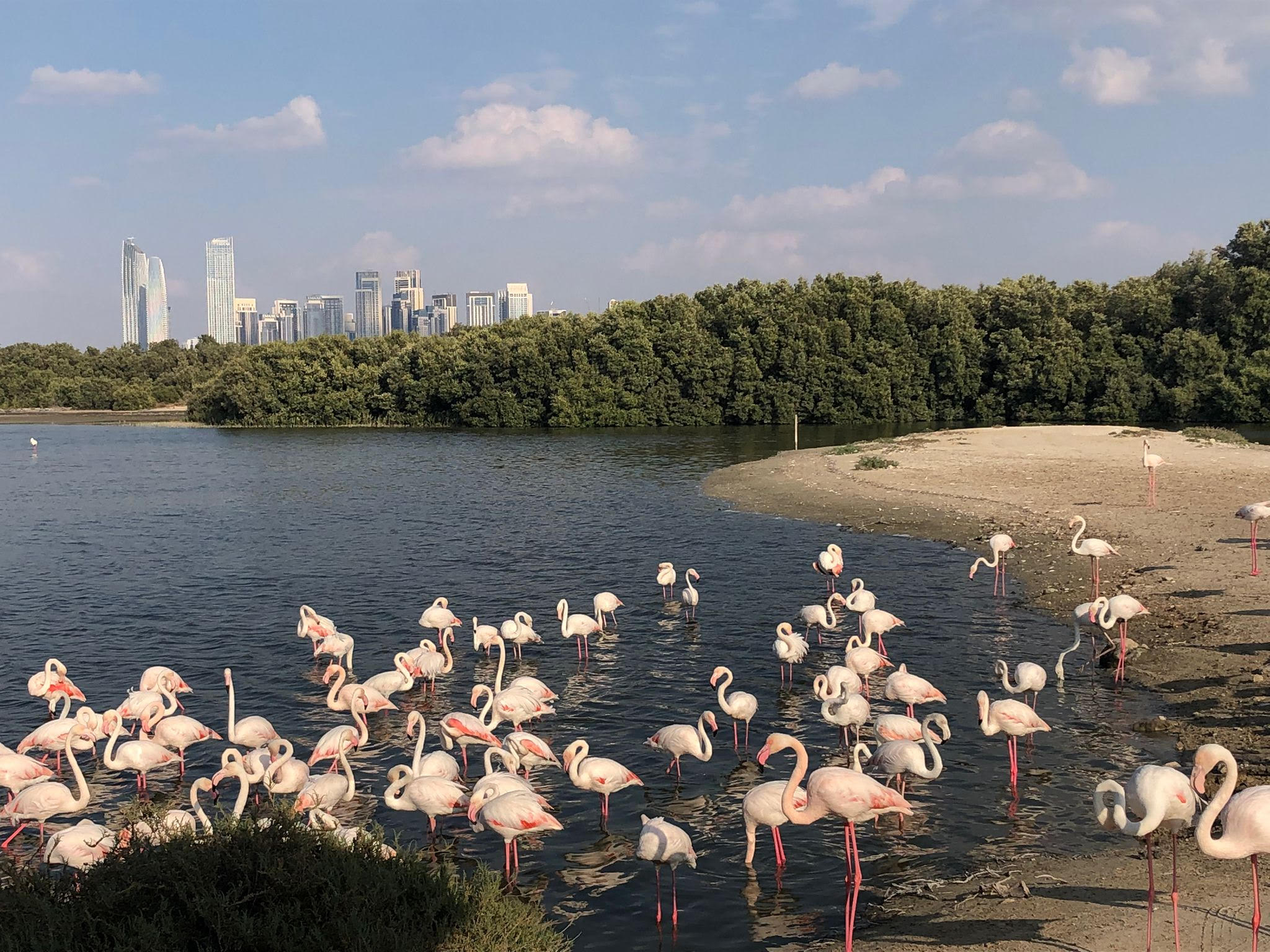
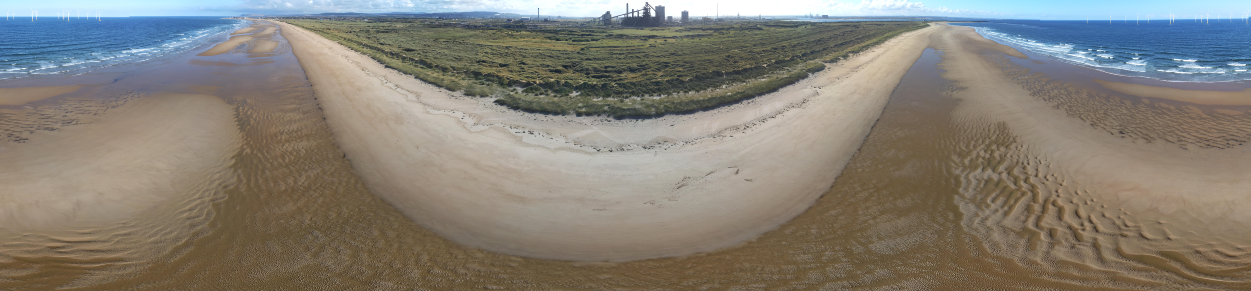
Photo from Jenny Earle of wetlands in Dubai taken this year
Wetlands are super powered, flood-busting, nature-boosting, carbon-sinking and mood-lifting habitats, that burst with life. World Wetlands Day, established in 1971, is celebrated on the second day of February every year. This day aims to highlight the significance and positive influence that wetlands have on the world, not only for people but for the planet. Community protectors and environmental enthusiasts all come together on this day to celebrate their love for for these valuable but threatened environments.
In the UK the Wildfowl and Wetlands Trust (WWT) are inviting nature-lovers to enjoy a free visit to their protected wetlands anytime from Friday 31st January – Friday 7th February. Claim your free ticket here: world-wetlands-day
Our nearest WWT centre is at Washington WWT, County Durham.
To raise awareness of endangered species and what we all can do, the UN is celebrating World Wildlife Day (WWD) on March 3, marking the day in 2013 the group signed the Convention on International Trade in Endangered Species of Wild Fauna and Flora. The WWD 2025 Theme is Wildlife Conservation Finance: Investing in People and Planet. For more information and events see wildlifeday
Growth vs Post Growth – a way forward
Noting the WWD theme of finance and investment (see above) it is interesting that the current Chancellor has said that the need for growth is a higher priority than working towards net zero.
This approach is very troubling for many people who are concerned about climate change and biodiversity loss. An alternative approach advocated by Hans Stegeman, Chief Economist for Triodos Bank is the concept of ‘post growth’ who has written an article on this with suggestions of practical steps to take: post-growth-in-action-insights-from-triodos-banks-chief-economist
In the article Hans says “It can feel overwhelming to know where to start when it comes to taking action in our everyday lives, especially when the problem can seem so huge and out of our hands at times”
Below he outlines some steps you can start to take to advocate for a post-growth transition.
Check what your pension is funding
Reduce how much you’re consuming
Vote for people whose values align
Invest in your local community
Focus on what is possible today
In the Invest in Your Local Community section the article suggests: “Community can be a powerful tool for sharing knowledge and creating grassroots initiatives that support people and the planet. Supporting your local repair shop, youth group, community garden and more can be an empowering way of adopting a post-growth mindset into your everyday life.”
A great reminder of the benefit of the activities that CASaV is undertaking – read on!
“Act Local”
This month’s local activities and ideas from our focus groups (Nature, Food, Waste, Energy, Transport) to address biodiversity loss and fight climate breakdown
Tuesday 18th February 19.30 Pollution of the River Tees & impact on marine life talk followed by whole group meeting, Globe Community Library, Stokesley
The first of this year’s bi-monthly talks is titled “The Lower Tees and its Coast – The Risks that Industry, Dredging and Development Pose to Crabs and Seals”, followed by our whole group meeting on Tuesday 18th February at the Globe Community Library, Stokesley from 19.30 until 21.00.
Simon Gibbon, retired industrial research chemist and current environmental researcher will deliver the talk. Simon started looking at the Tees after the mass crab die-off in autumn 2021, as a retired industrial chemist he has had to learn about how the river works in all senses (industry/nature) in order to be able to start to understand the challenges which the environment and industry face. From an environmental viewpoint his talk will tell us about what goes on in the lower Tees and along its banks, talk about recent studies into the high seal mortality and explain why perhaps the official explanation of the crab die-off needs further investigation.The river Tees as an industrial / post-industrial river is not unique to the UK, Europe and even globally, so these parallels will be highlighted as well.
All are warmly invited to this fascinating and important environmental talk, staying for the general meeting afterwards is optional although all are very welcome to share thoughts on all things climate change and biodiversity loss with updates from the sub groups.
Saturday 1st & Sunday 2nd February 10.00 – 13.00 Hedgerow planting at East Angrove Farm, Great Ayton
Hedgerows are vital features in our landscape and are more than an essential refuge and corridor for wildlife. Small but mighty, they also clean our air, capture carbon and reduce flooding. Three new long hedgerows of predominantly hawthorn and blackthorn are planned at East Angrove Farm, near Great Ayton and volunteers to help with planting are now being urgently sought.
If you can spare three hours on either (or both!) Saturday and Sunday 1st & 2nd February please email Hello@howardcourt.co.uk
It would be helpful if volunteers bring gardening gloves, a spade and water to drink – free hot drinks, cake and biscuits will be provided.
Saturday 8th February 10.00-12.00 Repair Cafe & Show the Love goody bag giveaway, the Globe Community Library, Stokesley
Valentine’s month’s Repair Cafe celebrates LOVE!
Show the LOVE for your treasured household items in need of repair by bringing them to be fixed by our (Valentine’s) pink T-shirted volunteers.
Feel the LOVE for the climate and the earth’s natural resources by reducing waste going to landfill or incineration and reducing the need to manufacture new
We will share the LOVE with you by giving all visitors to the Repair Cafe a handmade fabric goody bag (upcycling fabric which would otherwise go to waste) filled with treats and ideas for more sustainable living.
Household items for repair can include: clothing & textiles, electrical appliances, wooden furniture, toys & bikes, laptops & mobile phones, blades needing sharpening.
On average, we manage to fix 70% of items, give advice on possible repair steps for 20% and how best to recycle the 10% that are sadly beyond repair (statistics). But 100% of attendees are offered free refreshments of tea, coffee or juice as well as cakes and biscuits and a great opportunity to chat with friendly, like minded people.
This month’s free refreshments include Fair Trade beverages and home made sweet treats (including vegan!) made with Fair Trade ingredients, kindly donated by Stokesley Co-op.
New repair and reception volunteers always welcome – come along, have a cuppa and a chat or email Simon Gibbon.
Tuesday 11th February 13.30 – 15.00 Yatton House Community Garden Working Party
The focus of this month’s working party will be pruning the apple and pear trees in the Yatton House orchard, weather permitting. Meet in the car park at Yatton House, Guisborough Road, Great Ayton at 1:30pm. It would be great to have as much help as possible. If you are not sure how to prune fruit trees, come and learn about the 3 Ds and an X and have a go!
The North York Moors Park is celebrating the 10th anniversary Dark Skies Festival between 14th February and 2nd March. The North York Moors National Park has been a Dark Skies International Reserve since 2020, one of only 21 across the planet. There are plenty of events happening and they can be found on the North York Moors website. Looking forward to some clear nights (it will be cold so wrap up well)
14th February – 2nd March Dark Skies Festival: North York Moors events, various locations
The North York Moors Park is celebrating the 10th anniversary Dark Skies Festival between 14th February and 2nd March. The North York Moors National Park has been a Dark Skies International Reserve since 2020, one of only 21 across the planet. There are plenty of events happening and they can be found on the North York Moors website. Looking forward to some clear nights (it will be cold so wrap up well)
Nature Group meeting: Thursday 20th February 15.30, Globe Community Library, Stokesley Contact Bridget for information
The next Nature group meeting will be held face to face in the Globe Library on Thursday 20th February at 3.30pm. Come and join us to find out what we are doing locally for biodiversity and spreading the climate action message.
Planting Trees in January
Thank you to all those that braved the cold to help plant trees in Faceby. We got at least 130 native trees planted and the others are heeled in ready to be planted as time allows.
Heather burning: Community Earth Project
The Community Earth Project (CEP) based in the Esk Valley on the North York Moors is trying to collect data across the North York Moors for particulate matter (PM) levels during heather burning events. PMs are known carcinogens as are associated chemicals in smoke from burning organic matter. CEP is installing sensors which will contribute to the sensor.community database of global air quality measurement and hopefully will be used to increase awareness of the health issues caused by moor burning. You can see the local measurements here.
At January’s whole group meeting Mike Ford from CEP updated the group on the project’s progress. Data from sensors across the North York Moors is now being submitted which will be analysed. Mike noted that he is now talking with local MPs and raising awareness of the issue more widely.
CEP is still looking for people who would be prepared to ‘host’ a PM sensor to monitor this year’s burning season. For more information contact cep.nature.recovery@gmail.com
Ban driven grouse shooting petition
One of the reasons heather is being burned is to facilitate grouse shooting. Some environmental organisations have concerns about driven grouse shooting in which several dozen shooters wait in a line for the birds to be chased over their heads by a line of ‘beaters’ who walk through the moorland flushing out the birds in the direction of the shooters. A collaboration of concerned environmental groups have created a petition to ban driven grouse shooting because of these concerns:
– the scale of (legal) killing of Red Grouse – around 500,000 birds in an average year
– the scale of (legal) killing of Carrion Crows, Foxes, Stoats etc to ‘protect’ Red Grouse for a few weeks so that they can be shot in the shooting season
– the scale of illegal killing of birds of prey such as Golden and White-tailed Eagles, Peregrine Falcons and Hen Harriers and mammals such as Badgers and Hedgehogs
– the use of lead shot as the ammunition of choice which affects the environment and contaminates any Red Grouse which enter the human food chain
– damage to protected upland habitats through burning and drainage to attempt to engineer a heather monoculture for Red Grouse for shooting
NB This petition is not about banning individuals from shooting game.
If you feel strongly about this, consider signing the active petition started in January which has already reached nearly 50,000 signatures. If it reaches 100,000 the matter will be debated in parliament. Driven Grouse Shooting Ban Petition
2. Ideas from the groups: Food Group
Meetings bimonthly, next meeting March (date tbc) by zoom contact Wendy for a link to join
Growing Your own: February Tips of the Month
Be extra vigilant checking your stored home grown fruit and vegetables (onions, squash, roots, apples etc) this month. The short growing season last year means they may have been less mature when harvested so keep less well.
Finish winter pruning of fruit trees and plant new fruit trees, bushes, canes and vines if the soil isn’t waterlogged or frozen.
As long as the ground isn’t frozen, you can prepare seedbeds this month. If it’s a new plot, test your soil before the season starts. It’s also your last chance to winter prune fruit.
Chit early seed potato tubers as soon as you have them.
From mid-February onwards sow tomato, chilli, cucumber and aubergine seed for greenhouse growing.
Plant out garlic and shallots in light soils only; heavy soils need longer to warm up.
Foodshare: surplus food prevented from going to waste and helping those in need
Foodshare is a joint initiative by the Food and Waste groups and is organised by Jenny. EVERY evening at 9pm a Volunteer collects surplus food from the Ayton Coop and Premier supermarket and both Stokesley Coops and takes it to various distribution centres (often in Middlesbrough) such as Nitelight (for homeless) for use/distribution amongst those in need. This is fresh food such as fruit, veg and bread, NOT the tins and dried food that are needed by Food Banks.
Foodshare collects 40 – 60 kilos of food each day with a value of approx £250. This is £78,000 worth in a year!
Jenny is always keen to recruit more volunteers to support the foodshare so if you feel this is something with which you could help, please contact Jenny here Jenny Earle.
February Seasonal Eating
Eating food in season (local as far as possible) can have substantial positive impact on climate breakdown by reducing high-energy input from artificial heating or lighting needed to produce crops out of the natural growing season.
Fruit and vegetables in season in February include
UK-grown Apples, Beetroot, Brussels Sprouts, Carrots, Celeriac, Chicory, Jerusalem Artichokes, Kale, Leeks, Mushrooms, Onions, Parsnips, Pears, Purple Sprouting Broccoli, Red Cabbage, Salsify, Savoy Cabbage, Spring Greens, Spring Onions, Squash, Swedes, and White Cabbage.
Go Bananas!
Although we aim to eat locally and seasonally, the UK isn’t well suited for growing bananas but we’d hate to go without this tasty treat. Jenny from the Food Group notes that she has just received some wonderful organic bananas from crowdfarming
This company distributes organic produce, which is as local as possible and fairly traded.
Do you know the ethical and environmental record of your bananas? Ethical consumer has done the hard work for us so you can easily find out.
This month’s Waste Group (including Repair Cafe) Meeting Tuesday 11th February 7.00pm by zoom – contact Simon Gibbon for a link
A Small Step Forward in Reducing Waste
After a long wait (first proposed in 2018 with a start date of 2021) finally the deposit return scheme (DRS) for drinks containers will start on 1st October 2027. The law has now been passed with England, Scotland and Northern Ireland working in unison but Wales will make their own plan.
After many delays, in December 2024 the government advertised for an organisation to run the scheme – the Deposit Managements Organisation (DMO) – and this will be appointed in April 2025. So it is now only a matter of getting the details right – what’s in and what’s out (bottles, cans, glass, etc), who does what (retailers, drinks producers, suppliers), how the scheme is measured and enforced.
So after 7 years of waiting, only two and a half to go!
Meanwhile…..a Plastic Free Community for Stokesley & Villages?
At our November meeting Edith Reeve told us all about the Plastic Free Communities (PFC) network, created by Surfers Against Sewage to tackle plastic pollution at source – from beaches and green spaces right back to the brands and businesses that create it – read about it here.
Would you be interested in helping to set up a Plastic Free Community in Stokesley & Villages (Great Ayton, Hutton Rudby, Great Broughton & Kirby, Seamer, Swainby, Osmotherley, Picton, Rountons) to support individuals, businesses, schools and organisations work towards reducing single use plastics? If so contact Kate
Refurbished tech helps the planet
Backmarket is a buy and sell used (aka preloved!) platform with a difference – it specialises in refurbished electronic goods and their tagline is “We believe in a world that does more with what we already have.” As well as being able to pick a ‘new to you’ laptop they also provide lots of useful tips on how to make your gadgets last longer e.g. how to charge your phone to extend the life of your battery.
January’s Repair Cafe at the Swainby Village Hall was well attended with nearly 50 items in need of repair dealt with by our ever ready pink T-shirted volunteer repairing heroes and the majority were fixed to the delight and gratitude of their owners who were warmed up with cosy beverages and tasty treats.
4. Ideas from the groups: Environment & Climate Osmotherley (ECO) Group
All welcome to our monthly meeting to plan and discuss events and activities, meet at Osmotherley Methodist Chapel.
Signing off
If you have any news or any event / activity you would like promoting on next month’s (March’s) update please email Kate Gibbonby Monday February 25th
Kate also helps promote activities via Facebook and Instagram so let her know if there is anything that you would like shared via our Facebook page and Instagram if you are not a Facebook / Instagram user.
Hope to see you at the River Tees pollution and marine die-off talk & whole group CASaV meeting on Tuesday 18th February 19.30 at the Globe Community Library, Stokesley
Kate Gibbon,
on behalf of the Climate Action Stokesley and Villages Steering Group Steering group:
We start 2025 with planning for another year of our whole group’s activities and actions at our whole group meeting on Tuesday 21st January at the Globe Community Library, Stokesley from 19.30 until 21.00.
All welcome to come together to share thoughts on all things climate change and biodiversity loss, updates from the sub groups.
The Loftus family would like some help, on Sunday 12th January, to plant 200 native trees round some new ponds in Faceby to help improve the biodiversity of the area. Tree planting will be taking place in the morning from 10am – 12 noon and in the afternoon from 1pm – 3pm, weather permitting. To keep everyone warm there will be homemade soup and bread provided at lunchtime. If you would like to help please contact us for details.
Welcome to January’s Update from Climate Action Stokesley & Villages
Wishing you a very Happy New Year and thank you for your role in taking urgent action globally and locally on climate breakdown and biodiversity loss.
This month we have a wealth of ideas and activities to help you if you’ve made New Year’s resolutions to do more for biodiversity (tree planting), to learn a new sustainable craft (Osmotherley Mending Group), to learn hands on gardening skills (Yatton House Community Garden working party), to make your possessions last longer (Repair Cafe), to get out and meet more like minded people (all of our events!)
Action all!!
Please complete the online survey exploring the impact of our group
– closing date January 10th
As we start 2025 planning ahead for a year of events, activities and actions by CASaV, it is a useful time to assess if we are meeting our goals of making a tangible impact. Having been in existence for just over five years we have commissioned an assessment of our impact in the local community so far. This will be conducted by CaVCA (Coast and Vale Community Action) with funding from the UK Shared Prosperity Fund North Yorkshire. The findings will help us shape the actions we take over the coming years to tackle and adapt to climate change locally.
Please help us by completing this short online questionnaire – CASaV Impact Survey
The survey has 10 main questions and should only take up to five minutes to complete. The survey is anonymous and the data collected will be used only for the purpose of assessing the impact of Climate Action and Stokesley and Villages.
The survey will close on Friday 10th January.
As part of the study David Stone, from CaVCA, will also be undertaking some individual interviews with stakeholders and holding a focus group of CASaV members in December/January. He will then produce a report for us in February
Diary dates
(details of all events below in Newsletter section)
Tuesday 21st January 19.30 – 21.00 Whole Group Meeting, the Globe Community Library, Stokesley
Wednesday 1st – Friday 31st January ‘Veganuary’
Tuesday 7th January – Friday 14th February Big Schools’ Birdwatch
Sunday 12th January 10.00 – 12.00, 13.00 – 15.00 Tree Planting, Faceby
Tuesday 14th January 19.00 Waste Group (incl Repair Cafe) Meeting & Wassail Gathering in Swainby (see Waste Group section below)
Tuesday 14th January 13.30 – 15.00 Yatton House Community Garden Working Party
Wednesday 15th January 19.30 Environment Climate Osmotherley Group meeting, Methodist Chapel, Osmotherley
Thursday 16th January 15.30 Nature Group meeting, the Globe Community Library (see Nature Group section below)
Saturday 18th January 10.00-12.00 Repair Cafe, Swainby Village Hall
Friday 24th – Sunday 26th January Big Garden Birdwatch
Thursday 30th January 19.00 Food Group Meeting by zoom (see Food Group section below)
Newsletter
Our online newsletter / magazine focuses on our group’s values and purpose, summed up by our motto ‘Think global, act local’, beginning with global / national / county issues including ways in which you can influence policy, followed by local news and activities you can participate in that develop our relationship with the environment and fight climate change and biodiversity loss.
“Think global”
Veganuary
Veganuary has inspired and supported millions of people to try vegan since 2014 – with participants from almost every country in the world.
At CASaV we are interested in the impact veganism can have in reducing the impact of climate change for example:
Reducing carbon footprint: A vegan diet can reduce an individual’s annual carbon footprint by up to 2.1 tons.
Reducing greenhouse gas emissions: A vegan diet can help reduce greenhouse gas emissions, which are a major contributor to climate change:
Tuesday 7th January – Friday 14th February Big Schools’ Birdwatch
Getting out in nature is good for our well-being and gathering data on the state of nature is good for the well-being of the planet. Big Schools’ Birdwatch is a great way to do both. If you are a school pupil, or are connected to any of our local schools – junior and secondary – find out how you can join thousands of other schools to find out which birds visit your school grounds. More information here: big-schools-birdwatch
Friday 24th – Sunday 26th January Big Garden Birdwatch
Big Garden Birdwatch is the world’s largest garden wildlife survey. Every year, hundreds of thousands of people who care about wildlife take part, helping to build a picture of how garden birds are faring.
The information gathered is essential for monitoring biodiversity. Across the UK, over 600,000 people took part in Big Garden Birdwatch 2024, counting 9.7 million birds. House Sparrows took the top spot, but counts of these birds are down by 60% compared to the first Birdwatch in 1979.
It is hugely concerning that we’ve lost 38 million birds from UK skies in the last 60 years. With birds facing so many challenges, it’s more important than ever to get involved in the Birdwatch. Every bird you do – or don’t – count will give us a valuable insight into how garden birds are faring.
Global Plastics Treaty 2024 UN Negotiations – outcome
Plastics are key materials in innovation and for helping us reduce greenhouse gas emissions and tackle climate change. Our everyday lives rely on plastics, but any plastic waste in the environment is unacceptable. While plastics have had a history of innovation, particularly in supporting areas like healthcare and food preservation, plastic pollution is a growing crisis.
The Global Plastics Treaty is a legally binding instrument that aims to address the negative effects of plastic pollution on the environment and human health.The fifth session of the Intergovernmental Negotiating Committee (INC-5) took place in Busan, Republic of Korea, from 25 November to 1 December 2024.
The talks aimed to finalise a Global Plastics Treaty but concluded without a formal decision.
A resumed meeting will now be held at a later date. This means that member states did not meet the ambition under the UNEA 5.2 mandate to deliver a treaty before the end of 2024.
Talks are continuing but while we wait for global and national decisions we can take action ourselves locally and individually – see the Plastics Free Communities information in the Waste section below.
“Act Local”
This month’s local activities and ideas from our focus groups (Nature, Food, Waste, Energy, Transport) to address biodiversity loss and fight climate breakdown
Tuesday 21st January 19.30 Whole Group Meeting
Globe Community Library, Stokesley
We start 2025 with planning for another year of our whole group’s activities and actions at our whole group meeting on Tuesday 21st January at the Globe Community Library, Stokesley from 19.30 until 21.00.
All welcome to come together to share thoughts on all things climate change and biodiversity loss, updates from the sub groups.
We’re a friendly bunch and we welcome everyone!
New Yorkshire & Humber Climate Commission website and video
The new website for the Yorkshire & Humber Climate Commission is now live. This is the new home for the Commissions research, projects, news, events, case studies and publications, as well as an overview of how the Commission is working to tackle the climate and nature crises. There’s also lots of information about how you can get involved in the Commission and how you can play your part.
The new website makes finding out about the 60 actions in the Yorkshire and Humber Climate Action Plan easy, with an interactive preview showing specific actions for different sectors, as well as case studies of work already happening.
Tuesday 7th, 14th, 21st & 28th January 14.00 – 16.00 Osmotherley Mending Group – Osmotherley Quakers Meeting House
The weekly creative and sustainable community activity organised by ECO (Environment Climate Osmotherley) starts again for the new year. Meet for coffee, cake & conversation with knitting, crochet, darning & sewing, an opportunity to share your skills with experienced & novice friends. Check the ECO group on social media for any updates.
Sunday 12th January 10.00 – 12.00 & 13.00 – 15.00 Tree Planting Day, Faceby
Planting trees can have a significant impact on climate change and biodiversity, including:
Climate change – Trees are effective at capturing and storing carbon dioxide (CO2) from the atmosphere through photosynthesis. This carbon is stored in the leaves, roots, and soil of the tree, and can remain locked up for centuries. Trees can also help reduce flooding by reducing the amount of rainwater that enters watercourses.
Biodiversity – Planting trees can help re-establish biodiversity by creating habitats and corridors that help wildlife spread.
To help improve local biodiversity, the Loftus family are holding a tree planting day on Sunday 12th January, aiming to plant 200 native trees round some new ponds in Faceby, all are invited to help. Tree planting will be taking place in the morning from 10am – 12 noon in the afternoon from 1pm – 3pm, weather permitting.
To keep everyone warm there will be homemade soup and bread provided at lunchtime!
If you would like to help please contact Caryn for details
Tuesday 14th January 13.30 – 15.00 Yatton House Community Garden Working Party
(Image: winter catkins at Yatton House Community Garden)
The monthly working party in the Yatton House Community Garden will be on Tuesday 14th January (2nd Tuesday of the month) from 1:30 – 3:00 pm.
Following a visit to Marwood C of E Infant School in Great Ayton, we will be looking at the ideas the children have suggested for the garden. Cleveland Mountain Rescue are kindly donating some of the proceeds from their Santa Sleigh Tour of the village towards making the children’s ideas a reality.
All welcome to come and help or just sit and watch.
Saturday 18th January 10.00-12.00 Repair Cafe, Swainby Village Hall
Start the new year with good intentions to reduce waste going to landfill or incineration and protect the earth’s natural resources whilst saving yourself the cost of buying new and keeping your treasured belongings in use for longer by coming along to our January Repair Cafecasav.uk/repaircafe on Saturday 18th January 10 – 12 at Swainby Village Hall.
As always, our pink T shirted repair volunteers will be eager to fix your household items – clothing & textiles, electrical appliances, wooden furniture, toys & bikes, laptops & mobile phones, blades needing sharpening – as well as giving you hands on demonstrations to encourage us all to extend the life of things we own.
As usual, through coming to the Repair Cafe you can save yourself money, the earth’s resources and prevent climate damaging gases from waste going to incineration or landfill. On average, we manage to fix 70% of items, give advice on possible repair steps for 20% and how best to recycle the 10% that are sadly beyond repair (statistics). But 100% of attendees are offered free refreshments of tea, coffee or juice as well as cakes and biscuits and a great opportunity to chat with friendly, like minded people.
This month’s free refreshments include Fair Trade beverages and home made sweet treats (including vegan!) made with Fair Trade ingredients, kindly donated by Stokesley Co-op.
New repair and reception volunteers always welcome – come along, have a cuppa and a chat or email Simon Gibbon.
Ideas & news from the groups
1. Nature Group
Nature Group meeting: Thursday 16th January 15.30, Globe Community Library, Stokesley Contact Bridget for information
The next Nature group meeting will be held in the Globe Library on Thursday 16th January at 3.30pm. Come and join us to find out what we are doing locally for biodiversity and spreading the climate action message.
Heather burning: Community Earth Project
The Community Earth Project (CEP) based in the Esk Valley on the North York Moors is trying to collect data across the North York Moors for particulate matter (PM) levels during heather burning events. PMs are known carcinogens as are associated chemicals in smoke from burning organic matter. CEP is installing sensors which will contribute to the sensor.community database of global air quality measurement and hopefully will be used to increase awareness of the health issues caused by moor burning. You can see the local measurements here.
CEP is looking for people who would be prepared to ‘host’ a PM sensor to monitor this year’s burning season. For more information contact cep.nature.recovery@gmail.com
2. Ideas from the groups: Food Group
Meetings bimonthly, next meeting Thursday 30 January 7pm at 19.00 by zoom contact Wendy for a link to join
Growing Your own: January Tips of the Month
Try and resist the temptation to sow seeds early. The seedlings may need to be planted out before soil and air temperatures are suitable.
But you can get growing microgreens inside on your window sill – microgreens are vegetables that are harvested when they are about one to three inches tall, soon after the first adult leaves have developed. They are high in nutrients and a great way to grow your own fresh food in winter.
Choose the right seed – Mustard greens and other brassicas, like broccoli and kale, are good choices for winter microgreens because they are robust and don’t need much light.
Prepare the seeds – Soaking seeds overnight can speed up germination, but it’s not required.
Prepare the container – Use a small seed tray or a recycled food tub. Sterilize the tray by soaking it in water with a little bleach for five minutes.
Plant the seeds – Sow the seeds thickly, with a space between each seed equal to the size of the seed.
Provide the right conditions – Place the container in a warm windowsill to germinate.
Love Food, Hate Waste
Love Food, Hate Waste are looking for your food saving success stories to shout about. If you have savvy shopping habits – like writing an epic shopping list or only buying loose fruits and veggies, they would love to hear from you: lovefoodhatewaste
Foodshare: surplus food prevented from going to waste and helping those in need
Foodshare is a joint initiative by the Food and Waste groups and is organised by Jenny. EVERY evening at 9pm a Volunteer collects surplus food from the Ayton Coop and Premier supermarket and both Stokesley Coops and takes it to various distribution centres (often in Middlesbrough) such as Nitelight (for homeless) for use/distribution amongst those in need. This is fresh food such as fruit, veg and bread, NOT the tins and dried food that are needed by Food Banks.
Foodshare collects 40 – 60 kilos of food each day with a value of approx £250. This is £78,000 worth in a year!
Jenny is always keen to recruit more volunteers to support the foodshare so if you feel this is something with which you could help, please contact Jenny here Jenny Earle.
January Seasonal Eating
Eating food in season (local as far as possible) can have substantial positive impact on climate breakdown by reducing high-energy input from artificial heating or lighting needed to produce crops out of the natural growing season.
This month’s Waste Group (including Repair Cafe) Meeting / Wassail Gathering Tuesday 14th January December 7.00pm CASaV in Swainby – contact Simon Gibbon for address and to let us know you are coming
After the Christmas rush is over, the Waste Group / Repair Cafe is having their January meeting as a Wassail Gathering in Swainby. All are warmly welcomed to raise a glass of fortified apple wassail, feast on sweet and savoury nibbles and reflect on all things waste reduction and repair cafes.
As 2025 starts we are all thinking about things we can do differently. On 1st January the Daily Difference email from the Carbon Almanac Network had some simple ideas, which I have added some links to CASaV resources and local/UK groups. Good to see that reducing waste is strongly represented in their list directly, but of course many of the other actions also act to reduce waste, less fossil fuels means less CO2 waste.
One change, as you think about your goals for the year ahead, consider one change you can make that supports climate change efforts. Some thought starters:
Reducing your food waste or adopt a more plant-based diet – Veganuary above / seasonal eating / CASaV Food Group
Subscribe to a climate newsletter – you already get this newsletter but most climate interested groups also have useful newsletters (see list under donation above).
A Plastic Free Community for Stokesley & Villages?
At our November meeting Edith Reeve told us all about the Plastic Free Communities (PFC) network, created by Surfers Against Sewage to tackle plastic pollution at source – from beaches and green spaces right back to the brands and businesses that create it – read about it here.
Would you be interested in helping to set up a Plastic Free Community in Stokesley & Villages (Great Ayton, Hutton Rudby, Great Broughton & Kirby, Seamer, Swainby, Osmotherley, Picton, Rountons) to support individuals, businesses, schools and organisations work towards reducing single use plastics? If so contact Kate
Waste group events in December:
Christmas Repair Cafe & festive meal out!
December’s Christmas Repair Cafe at the Globe, Stokesley was very well attended with over 60 items in need of repair dealt with by our ever ready pink T-shirted volunteer repairing heroes and the majority were fixed to the delight and gratitude of their owners who were also treated to vegan mince pies and mulled juice.
After all their hard work the volunteers relaxed with a slap up vegan Christmas meal at the Station Coffee & Kitchen in Stokesley.
4. Ideas from the groups: Environment & Climate Osmotherley (ECO) Group
Wednesday 15th January 19.30 Environment Climate Osmotherley Group meeting, Methodist Chapel, Osmotherley
The Environment Climate Osmotherley Group continues to thrive with new events and activities to engage and inspire the local community to take steps to fight climate change and biodiversity loss.
The weekly Mending Group has been bringing together skilled enthusiasts and enthusiastic beginners with darning, felting and knitting skills being shared and perfected, saving resources from going to waste and making loved items last longer.
Signing off
If you have any news or any event / activity you would like promoting on next month’s (February‘s) update please email Kate Gibbonby the end of January
Kate also helps promote activities via Facebook and Instagram so let her know if there is anything that you would like shared via our Facebook page and Instagram if you are not a Facebook / Instagram user.
Don’t forget to complete our online impact survey by January 10th!
As a year of numerous events, activities and actions by CASaV comes to a close, it is a useful time to assess if we are meeting our goals of making a tangible impact. Having been in existence for just over five years we have commissioned an assessment of our impact in the local community so far. This will be conducted by CaVCA (Coast and Vale Community Action) with funding from the UK Shared Prosperity Fund North Yorkshire. The findings will help us shape the actions we take over the coming years to tackle and adapt to climate change locally.
Please help us by completing this short online questionnaire – CASaV Impact Survey
The survey has 10 main questions and should only take up to five minutes to complete. The survey is anonymous and the data collected will be used only for the purpose of assessing the impact of Climate Action and Stokesley and Villages.
The survey will close on Friday 10th January.
As part of the study David Stone, from CaVCA, will also be undertaking some individual interviews with stakeholders and holding a focus group of CASaV members in December/January. He will then produce a report for us in February.