Full notes below, quick summary – follow links for the detail:
- Waste:
- There is not just sewage in the River Tees and our north east seas, but lots of dredged contaminated sediment is dumped in our seas, should this be limited or is development too important to protect the environment?
- While recycling is best for plastic waste in good condition, the discovery of a fungi that will eat UV degraded polyethylene will help to remove this additional waste.
- Recycle / Reuse / Circularity:
- Every little bit of plastic waste we don’t create is a step close to less plastic in our environment, so woollen tree shelters that just rot are a geat step forward.
- Ocado have move a step towards zero plastic supermarket deliveries with their refill-reuse concept.
- Tesco are helping to reduce plastic waste by encouraging the use of concentrated products which are diluted in reused cleaner sprayers.
- Get your food in fabric bags and then send the bags back for reuse, that’s the idea behind Zero Waste Bulk Food – a bit of yesterday showing us how the future can be better.
- Night:
- 24hour street lights make leaves thicker which makes them harder for insect to eat.
- Food:
- You may not be able to get to the Wandi Nut Fest in Wandiligong, but instead on 6th September come along to the Osmotherley Nut Harvest Festival and help get the nuts in.
- Repair Cafes:
- Next Repair Cafe 21st September in Swainby Village Hall.
- CASaV Wide
- How do we get the North York Moors National Park to go green.
- We need to have conversations with people who don’t get it, so understanding how to have good conversations is important.
- The Nature group has dark skies, hedgehogs and bats in its future.
Actions:
- All, if you live in the national park or visit then read and feedback on NYMNP new design code, to ensure that it is appropriately climate friendly.
- All complete NYC’s “Let’s Talk Rubbish” survey to shape future recycling schemes.
- All – please keep the pressure on local and national governments to tackle waste in all its forms including pollution of our rivers and seas.
Background – Our Monthly Waste Discussions
If you have just signed up to the Waste Group, then welcome, I hope these notes of our discussion make sense.
We meet once a month to talk about topics connected to waste and plan / report progress on our ongoing activities such as the Repair Cafes, Foodshare, Refill scheme and events such as the Bilsdale Show. If you visit the “Thoughts on Waste” page on the CASaV website you can find all our past discussions – https://climateactionstokesleyandvillages.org/waste/thoughts-on-waste/
Please get in touch if you have any questions.
Notes form 9th July 2024 CASaV Waste Group
Updates
Wendy
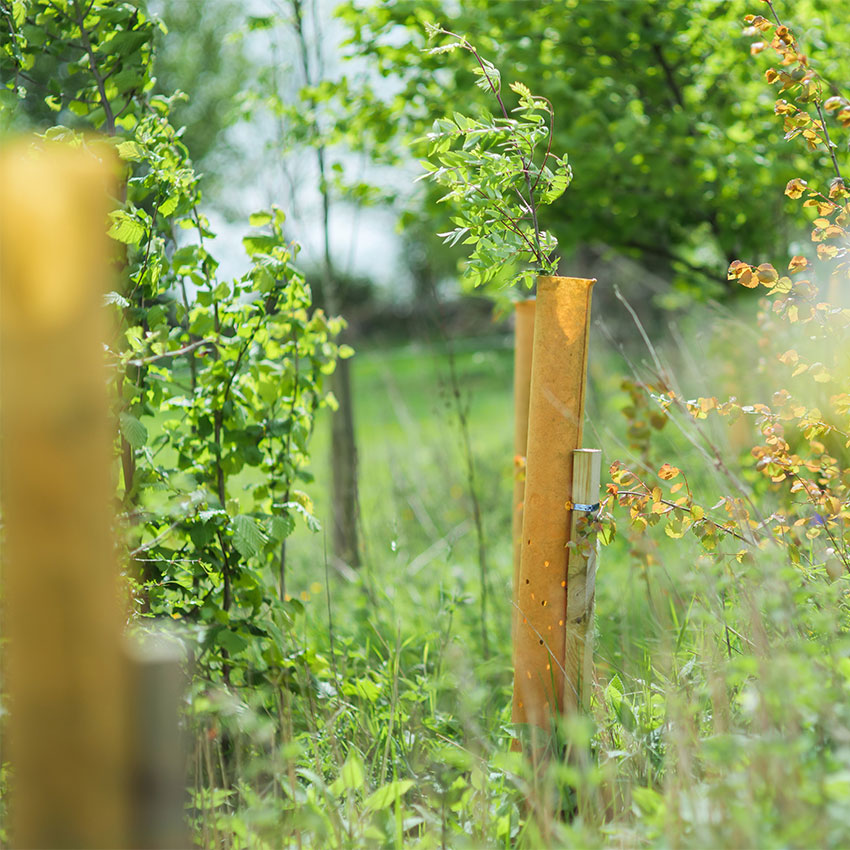
The Northern Farmer included monthly with the Darlington and Stockton Times had an interesting article on NextGen TreeShelters made from British Wool as an environmentally degradable and sustainable protection for your trees in place of ubiquitous green honeycomb plastic tree shields currently used. The woollen tree shelters last 5 years before starting to biodegrade, unlike the plastic tree shelters that remain for years after the tree no longer need protection.
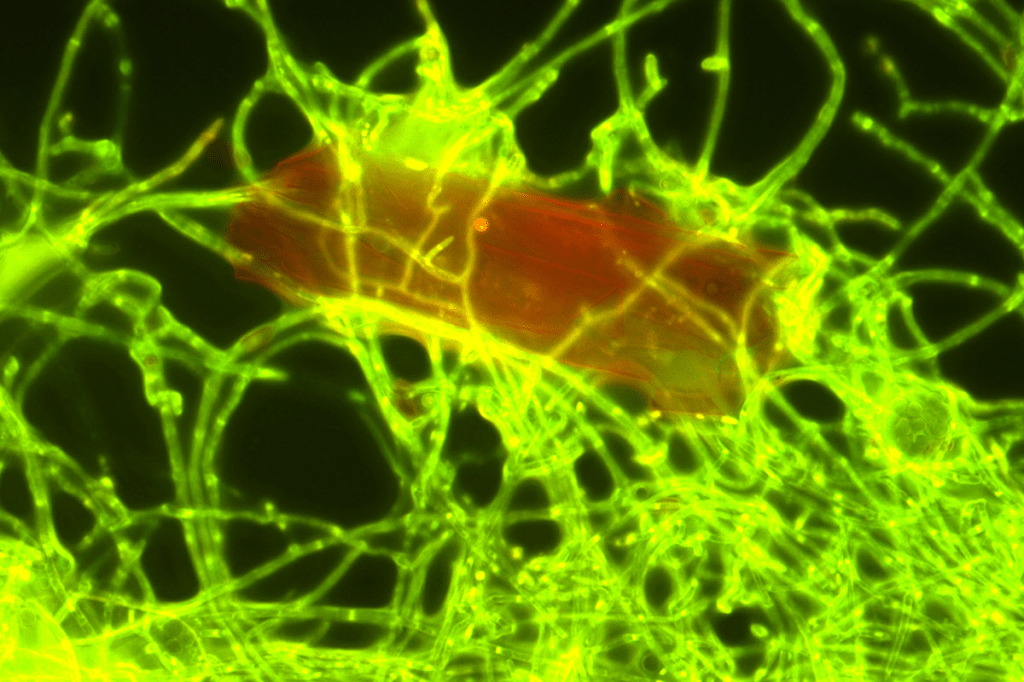
Dutch Researchers have found a marine fungus on plastic litter in northern Pacific Ocean which will breakdown UV degraded polyethylene. UV degraded polyethylene would not be suitable for recycling as the UV degradation will have already broken down the polyethylene chains which is no doubt part of what makes it susceptible to breakdown by the fungus. The fungi will still generate CO2 in breaking down the polyethylene. There is no intention to mass release this fungi back into the wild, rather to operate as a brewing process, growing vats of fungi into which recovered plastic is added. As much of the waste plastic in the oceans is discarded fishing gear, the best solution is still to stop discarding fishing gear and stop other sources of plastic waste from entering the ocean.
Fred
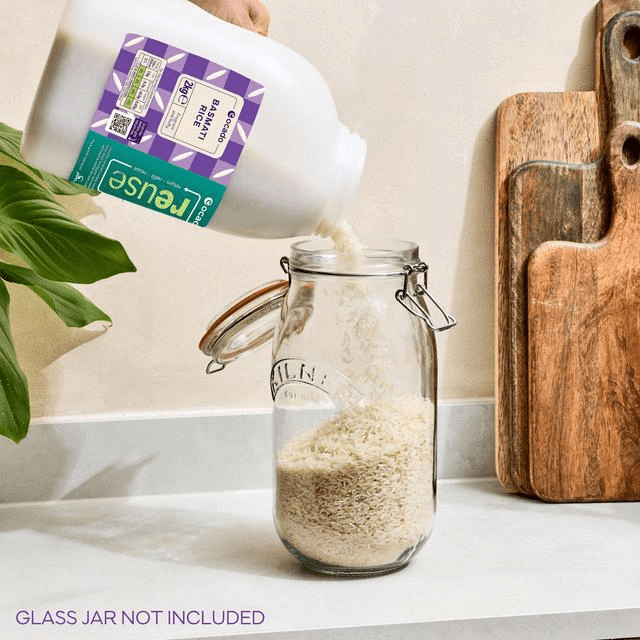
Ocado have started encouraging reusing containers with a refill-reuse scheme on currently only rice and pasta. The containers are functional but are not attractive, so hopefully this will mean people are more likely to return them to the driver when they get their next delivery, obviously Ocado hope the scheme will also increase customer loyalty. While this is in many ways only a small step it others it could be seen as revolutionary for an online supermarket and even for physical stores, as unlike normal refill options where you are left with the paper or even plastic bag that the refill items comes in to dispose, in this scheme the container is returned for Ocado to refill. It’s the same as taking your own container to the local refill shop and filling up with pasta from the bulk container, but most of us rely at least partly on the paper bags the shop provides. So the Ocado scheme is truly zero plastic waste.
Tesco are promoting a different approach encouraging people to use a concentrated product pouch and add this to a cleaning spray which you refill with water, so certainly reuse of the spray and less waste not zero waste.
Reuse is not new glass milk bottle were successfully reused for most of the 20th century, current 21st century zero waste shops work on people bringing their own containers, but most distribution systems see the packaging as being disposable waste which may be recycled. While zero waste shops locally are closing, Earth Unwrapped is Northallerton has followed What Planet are We On in Guisborough and is closing. more shops locally are offering refill of some products. In Guisborough 2 shops now offer refill but none offer refill delivery yet. 30 Westgate is still collecting jam jars for reuse.
Guisborough Eco-group are looking Redcar and Cleveland Borough Council to give a talk to at one of their regular meetings about waste. They will let us know when is arranged.
Jackie

24 hour street lighting increases the thickness of leaves such that they can become inedible to insects – phys.org. It has long been known that artificial light has a detrimental effect on the natural environment, through confusing bats, upsetting moths natural behaviour and even to humans, but the effect on plants is a new unexpected challenge. While changing the colour of artificial light decreases the effect on animals, it not currently known the mechanism behind the leaf thickening as the study has only looked at 2 tree species in one city. Hypotheses include that the light means that predators are able to see the insects eating the leaves and that the artificial light is causing direct changes in the trees’ biology. Until a mechanism is understood aside from reducing street lighting it is not obvious what can be done to reduce the effect. Watch this space (in the dark).
Jenny
(Editor’s note The author William Gibson said “”The future is already here — it’s just not very evenly distributed“. So on top of Ocado hopefully future zero waste approach this Zero Waste Bulk Food is another small bit of the future already here).

Zero Waste Bulk Food (ZWBF) as they say themselves is “A return to the old way“, basically they send you find food in fabric bags and you use the supplied postage paid envelope to send the empty bags back. The bags are then laundered and reused for the next customer’s dry goods. Having tried pulses, beans, nuts and peanut butter all have been excellent, with lots of British organic options to choose from.
If ZBWF is the old way then perhaps the future has been here all the time.
As part of North Yorkshire Sport I am going to attending some continuing professional development on holding good conversations, one thing that resonated with “A gift for conversation” was the concept of spontaneous trait transference. Spontaneous trait transference is the observed fact that if you describe somebody in a certain way then it is likely that the people you speak to will think you have that trait, so describing someone as overconfident then people can transfer that trait to you, it works both for positive and negative traits. So when talking to people about climate change we need to consider things like this if we want to have a productive conversation, rather than create further barriers.
The Food Conversation has created a Sustainable Food Conversation toolkit to support its “Host a Food Conversation” events. Good Food Oxfordshire has a simpler useful guide on Talking about Sustainable Eating.
Bridget
Helen and I are doing training on dark skies – training in Brotton Village to see what they are doing and how we could implement some of their improvements locally.
Nature Group: monthly meeting Thursday 15th Globe Stokesley3.30pm / 28th Bat Walk and Talk 7.30pm Methodist Chapel Osmotherley (email Bridget if you want to attend) /
15th October – Teesside Hedgehog Preservation Society Talk.
Robert
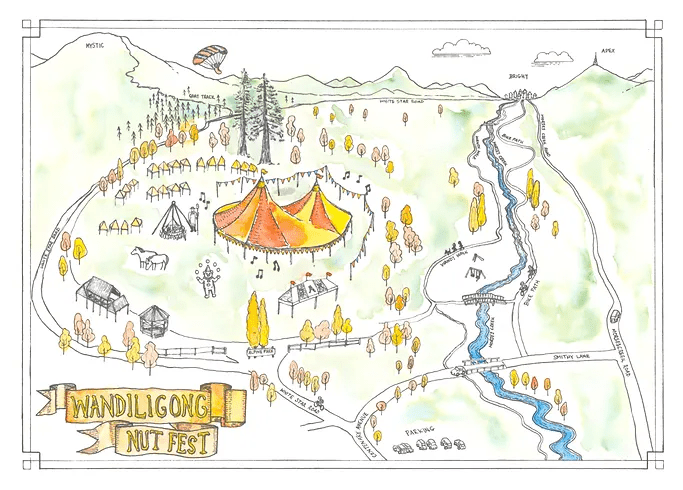
Friday 6th September 7pm – 8.30pm take part in the nut harvest at Robert Thorneley-Walker’s come along to the Festival of the Nut Harvest lots of nuts, gathering hazelnuts, grinding your nuts, plus cider.

Currently North York Moors National Park (NYMNP) planning policies can be seen as anti-climate change – how do we get them to change. They are currently seeking feedback on the new design code – https://www.northyorkmoors.org.uk/planning/policy/have-your-say-on-the-design-code – so please get your feedback in now.
Action: All, if you live in the national park or visit then read and feedback on NYMNP new design code, to ensure that it is appropriately climate friendly.
The National Planning Framework gives a route to having some local say by encouraging each community to have a local plan in order to ensure your area allows climate friendly things.
Debbie Trebilco has been working for NYMNP and NYC on climate policies, so she may be able to help on how to influence NYMNP’s attitude to climate action.
Osmotherley Village Show looking into introducing biodiversity classes for radishes etc.., even foraging, move jams away from 100% sugar, allow reused jars, etc..
Simon
Waste in our rivers and seas.
Commercial operations on the River Tees requires dredging operations both to keep the navigable channel deep enough to allow shipping to operate and as part of new developments within and along the River Tees. Dredging of the River Tees involves dumping the waste at sea as this is the cheapest way for the bodies dredging the Tees to dispose of the material they have dredged.
I have been involved as part of the North East Fishing Collective (fishers plus other interested parties impacted by the 2021 mass crab dies in the sea surrounding the Tees estuary) and latterly the North East Marine Research Group (academics from Newcastle, Durham, York and Hull plus locals interested in environmental science).
Since the crab die-off in 2021 we have investigated both possible causes of the crab die-off and understanding dredging happening in the Tees as this is a major source of contamination in the river and the local seas. The crab die-off has been ascribed to being caused by an algal bloom, pyridine, an unidentified marine pathogen or other chemicals in the marine environment. Quick summary: algal bloom now discounted, but always unlikely as only crabs impacted; pyridine likely but discounted by government agencies; novel unidentified pathogen is the “as likely as not” option which DEFRA has now closed any investigation; other chemicals more and more are showing up as every time we look at the previous sampling of sediment. While DEFRA scientists originally raised the issue of raised pyridine concentrations in the dead crabs, CEFAS have subsequently developed a new test which they claim shows there was no pyridine in the crabs.
While we can’t change what happened in the past we can try to stop things happening in the future, so I am currently looking the application to dredge Able Middlesbrough Port (MLA/2024/00166).
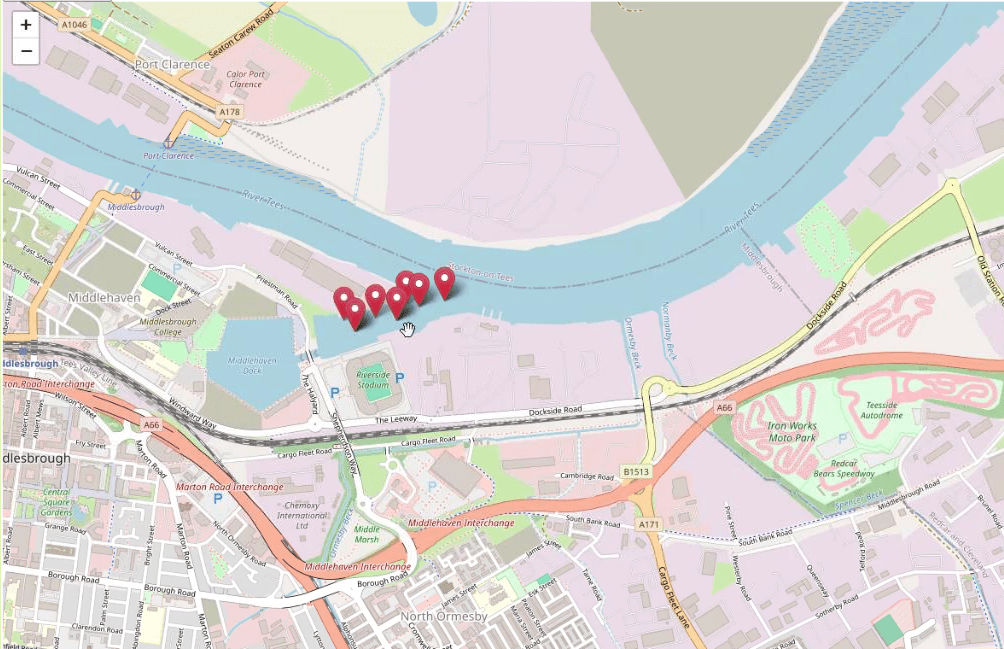
The River Tees is particularly contaminated with hydrocarbons, the most toxic of which are polycyclic aromatic hydrocarbons (PAHs), these occur naturally in small amount but are mainly either from oil (petrogenic) or high temperature combustion of fossil fuels (pyrogenic). All ports have petrogenic contamination from the ships that use them, but the River Tees also has a large amount of pyrogenic contamination due the large number of coke works which were part of the steel making process for 140 years along the river banks.
While for many chemicals there are set limits to the concentration above which contaminated sediments can not be disposed of at sea, do not yet have such a level set in legislation. However, Gorham-Test developed a protocol which is widely used internationally and is used by the Centre for Environment, Fisheries, and Aquaculture Science (CEFAS) to judge whether PAH contaminated sediment is safe to be dumped sea.
Sadly the dredged sediment from the River Tees has historically been allowed to be disposed of at sea. Much of the argument you can read in the Marine Planning Statement written in support the proposed dredge by the applicant’s advisers is basically that as previous disposal at sea of such sediments has been allowed it would be unreasonable to make Able UK bear the additional cost of bringing the dredge material to land, as this would impede development. I am concerned that primacy of development combined with the acceptance by regulators that the River Tees is a contaminated river, will result rather than in an improved River Tees in a slowly deteriorating environment. Incidents such as the crab die off may be a direct results of this approach.
Looking at the PAHs in the sediment samples taken at Able Middlesbrough Port I have applied the Gorham-Test protocol which sums the concentrations of 7 low molecular weight PAHs (7ΣLMW) and 6 high molecular weight PAHs (6ΣHMW). Due to the higher mobility of the lower molecular weight PAHs, 7ΣLMW is considered to determine acute toxicity and 6ΣHMW is considered to determine chronic toxicity. Gorham-Test defined effects range low sum (ERL) and effects range median sum (ERM) both for 7ΣLMW and 6ΣHMW. Below ERL the PAHs are expected to have little biological effect and above ERM, the PAHs will have a detrimental effect on the marine environment.
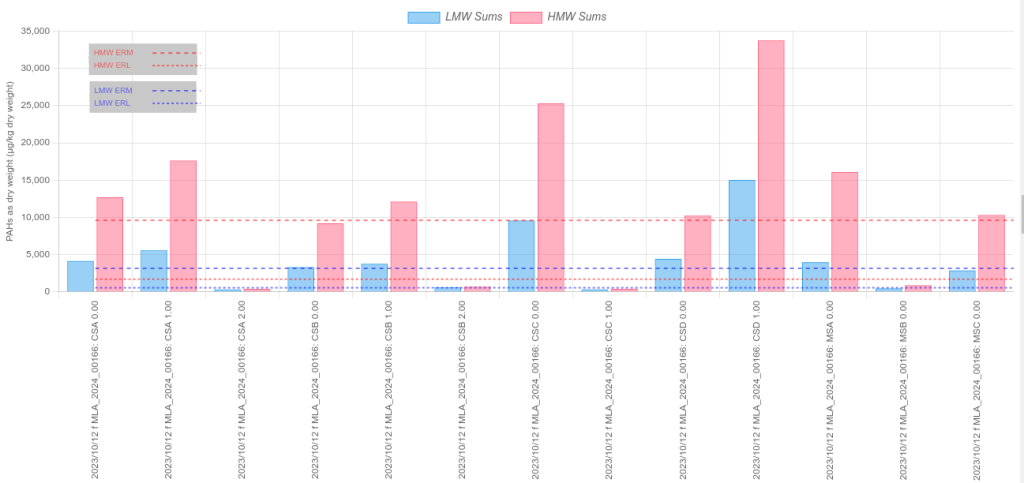
Basically if any red bar is above both red lines and / or any blue bar is above both blue lines then that sample should not be disposed of at sea. So these 10 samples taken as representative of the over 44,000m3 proposed to disposed of at sea, 60% fail the Gorham-Test protocol so disposal at sea should not be permitted.
I am submitting a representation objecting to disposal at sea and will let you know the outcome.
What can you do? The major thing is to keep stressing to those in power that you care about our marine environment, not just sewage pollution and that you require standards of water quality within our river and seas to improve, not just be allowed to remain an unfit environment for many marine creatures.
Action: All – please keep the pressure on local and national governments to tackle waste in all its forms including pollution of our rivers and seas.
Matters Arising
Bilsdale Show 31st August
CASaV’s stall will once again be at the show highlighting what we do locally, looking to involve local showgoers, engage showgoers from further away to connect with their local groups and highlighting water quality with Surfers again Sewage.
The show are encouraging use of Moorsbus and car sharing.
We would love to see you there too.
Repair Cafes:
20th July Swainby & 10th August Stokesley
Swainby Repair Cafe dealt with 40items. 86 items were dealt with at the Stokesley Repair Cafe, which was somewhat of a surprise as we had considering not holding one in August expecting people to be on their holidays.
21st September Swainby
The next repair cafe building on all the items repaired so far this year.
Actions from Last Meeting
- All complete NYC’s “Let’s Talk Rubbish” survey to shape future recycling schemes.
Still time to complete the survey until 16th September. - All please contact Kate if you would like to help run different repurposing workshops.
- Simon
contact SAS – John Reave – to see if Surfers Against Sewage would be interested in coming to the Bilsdale Show.
SAS are keen to attend Bilsdale Show, both John and Edith Reave plan to attend. - Simon
contact North Yorkshire Rotters / Open North Yorkshire / Adult Learning
Spoke to Jeff Coates, who coordiantes North Yorkshire Rotters, they are interested in attending just seeking confirmation from Bilsdale Show that this is ok - All –
please let Simon know if you are able to volunteer to spend some time helping on our Bilsdale Show stall.
Thanks to have all who volunteered, see you at the show, everybody else please come along to the show too.
 Climate Action Stokesley and Villages