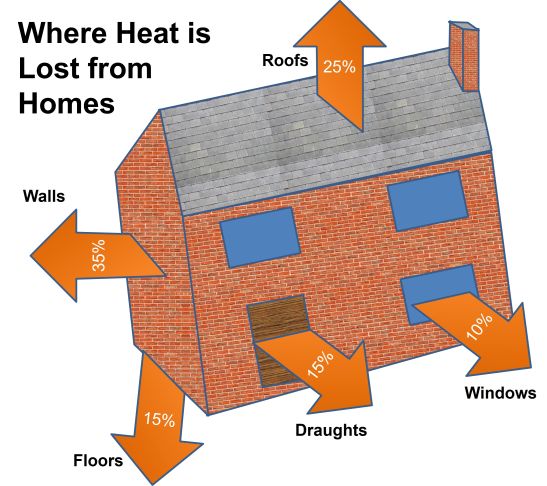
Up to a quarter of UK global warming gases come from energy use in our homes. With increasing electricity and gas costs, reducing energy use is a great way that we can help the planet and save ourselves money.
There is lots of great information online on how to save energy, so we are not going to repeat that here, instead this leaflet is aimed at encouraging you to understand your own energy use, highlight the things you can do to right now to cut your energy use and the bigger projects that you could consider, spending now to save money later.
Before you start it’s helpful to understand your energy use.
1. Understanding your energy use
Whenever you turn on a socket or light the gas, you are using energy, but both the amount of energy used and its cost vary drastically depending on what is connected.
Don’t forget that your home’s largest energy use is probably automatic and depends on how your heating and hot water systems are set up.
To save the most energy it is good to concentrate first on large uses – so heating rather than mobile phone charger for example. Remember, not using energy is the best way to reduce your usage.
2. What you can do today
Reduce large energy uses
Appliances that heat up are likely to be using a lot of energy, so anything you can do to use these less or at a lower temperature will be saving you energy.
Home heating:
- turn your thermostat down a little
- reduce the flow temperature in your radiators
- don’t warm rooms you don’t use
Hot water:
- if you find yourself cooling your hot water with cold in mixer taps for example, you could look at turning down the hot water temperature on your boiler or tank
- we rarely need lots of hot water all day, so you can adjust your boiler to heat only when you need it
- make sure your hot water cylinder is properly insulated
Washing machine / tumble dryer / dishwasher:
- Do fewer bigger washes
- Try to always use the low temperature eco settings – they may take a bit longer but will use less energy and water
- Tumble driers, while convenient, use lots of energy, so try to dry clothes outside or get an old fashioned clothes horse. Aim not to use radiators for drying clothes as this stops them heating your home and can encourage mould.
Cooking:
- Microwaves / air-fryers / slow cookers use a lot less energy than an oven
- Turn on the oven less – batch cook if possible, or just cook two meals together
- Turn down your stove top with lids on your pans – saves energy and reduces moisture which could be causing damp
- Only boil as much water as you need in your kettle
Stop wasting heat
Whether you feel warm in your home depends on how hot the air is, so anything that moves too much air in or out of your home will be wasting heat:
- don’t leave outside doors open
- if a room is too hot turn the heating down don’t just open a window (sounds daft but we do it!)
- heat your room not your furniture – move furniture away from radiators
- in winter let the sun in to warm your rooms during the day and close your curtains to keep the warmth in when the sun sets
- in summer close your curtains to keep the sun’s heat out during the day
The little things add up
With so many lights in our homes, in total they use considerable energy:
- switch off lights when you leave a room
- switch off external lights unless they have motion detectors
While a mobile phone charging when its battery is full is only using a small amount of energy it is still using energy:
- switch off your charger when your phone is full, saves energy and preserves battery life
- TVs / monitors / computers / printers turn off at the wall – they use power on standby otherwise
- if you want to check if something is on standby then feel if it is at all warm – a toaster is using no energy when not operating, so no need to switch off at the wall, but a plugged in computer charger is so will feel a little warm to the touch
3. Simple things to add to your home
Lights
Having the right bulb saves a lot of energy:
- old style bulbs use 10x as much energy as an LED light
- compact fluorescent bulbs can use 4x as much energy as an LED bulb
- make sure all your bulbs are LED
- LEDs are more expensive, but last a lot longer and the energy savings pay for them over the course of typically a year
- External lights should have motion sensors so that they switch off unless somebody is near, this not only saves energy but is kinder to nocturnal wildlife and your neighbours
Draughts
Our houses need to be ventilated to be healthy, but if you can feel draughts in your home then that is normally too much ventilation:
- a simple draught excluder can stop the draught under a door
- DIY stores will have draught strips you can fit around draughty windows and doors
- unused chimneys will lose a lot of energy, so getting a chimney balloon will stop this, but make sure its removed if the fireplace is going to be used
- use pet flaps rather than leaving doors open for pets
4. Professional help
A boiler service visit is a great opportunity to ask for your boiler settings to be changed to be more energy efficient. Usually simple tweaks mentioned above can reduce your energy use a lot through lower flow temperature, lower hot water temperature and reduced heating times but the expert will know others too.
Has your house got an EPC rating (energy performance certificate), you can check here, if so this will tell you how energy efficient your home is and make suggestions for changes to make it more energy efficient. If you haven’t got one, then you can pay for one to be produced, required for any grants (find an assessor).
5. Retrofitting
By 2050 the UK needs to make all our homes more energy efficient in order to get to Net Zero, this will reduce CO2 emissions through the use of less energy and so lower energy bills. All homes can be improved to waste less energy, but it will depend on your home as to what can be done and the cost.
Retrofitting is a 3 step process – 1. reduce heat loss (insulation), 2. efficient heat production (heat pumps), 3. generation of energy (solar panels). You don’t need to do all 3 all at once, but the best approach is called fabric first, i.e. reduce heat demand through insulation, so that you need less heat, from a smaller boiler and so can use less energy.
Retrofitting is portrayed as being expensive, but often no more so than a new kitchen and the benefits will last longer for you and the planet than a kitchen.
N.B.
Many of the links on this web page are to the excellent MoneySavingExpert Energy Saving Tips page, hopefully if you have already clicked on some you will have read around the specific tip linked to, if you haven’t then it worthwhile reading the full page as it cover many more tips and gives more details than we do here.
And don’t forget to check out CASaV’s Energy page where we have links to energy related websites and some case studies of whole house retrofits.
CASaV Leaflets
This page is also available as one of a series of CASaV Leaflets, so you can download a printable pdf here – double sided tri-fold leaflet or an editable version which you can make your own and use for your group – OpenOffice document.
 Climate Action Stokesley and Villages