Welcome to May’s Update from Climate Action Stokesley & Villages
Thank you for your role in taking urgent action globally and locally on climate breakdown and biodiversity loss.
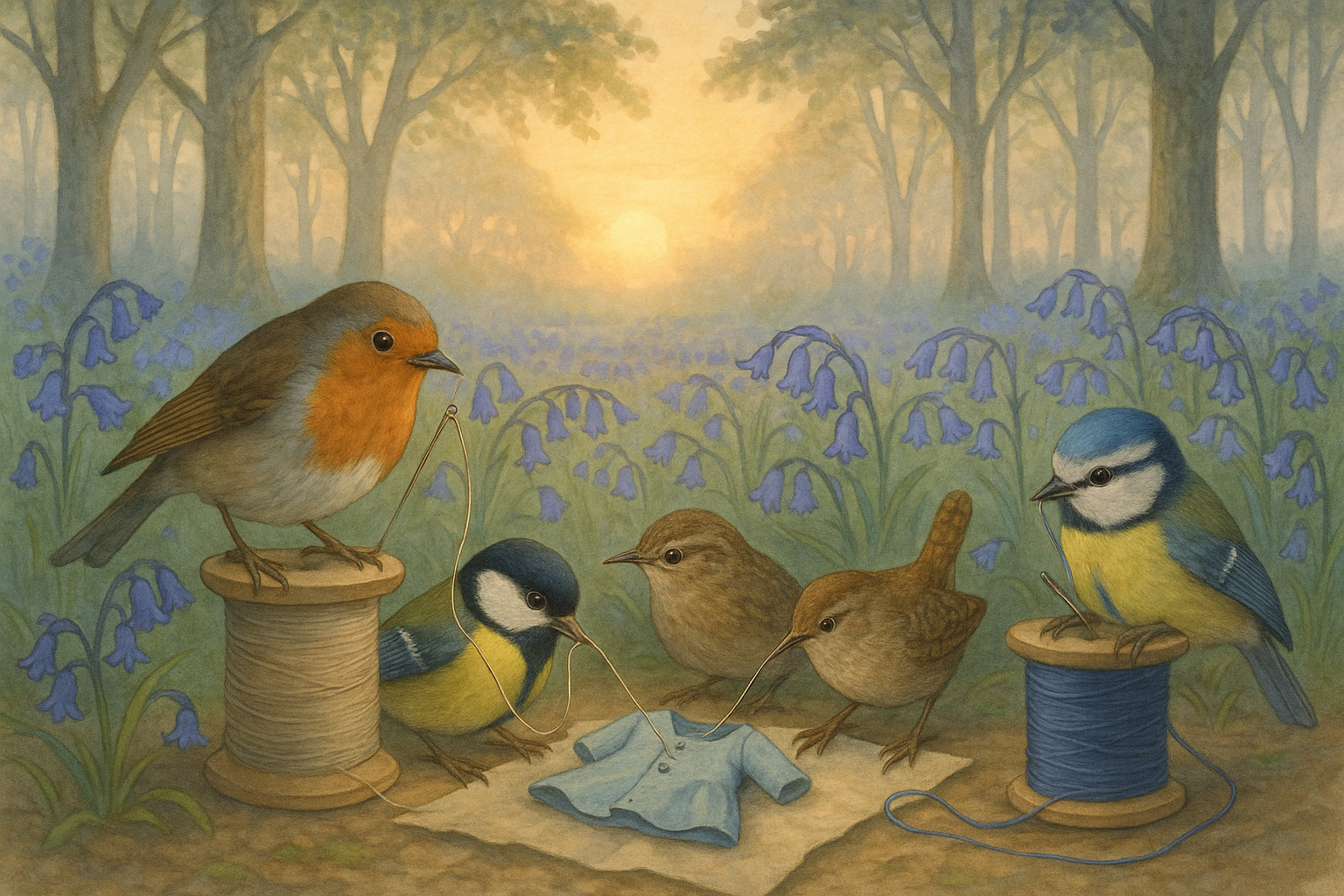
With lighter, warmer mornings what better way to greet the day and feel closer to nature than getting up early to listen to the Dawn Chorus, with several nearby nature reserves celebrating International Dawn Chorus Day with guided walks; it’s time for getting out your lighter clothes and if they’re in need of mending come along to May‘s Repair Cafe together with any other household items in need of fixing. Mend It May is also here to encourage you to make your favourite clothes last longer and reduce textile waste and if you want to master the art of mending and learn sustainable sewing superpowers there are free hand sewing lessons on two dates in May at Stokesley. You can also learn gardening skills alongside others at Yatton House Community Garden May working party and then return to relax in your garden leaving at least some of your lawns and verges to grow throughout No Mow / Let It Grow May and beyond to save our pollinators as well as create habitats for our essential hedgehogs, celebrated in Hedgehog Awareness Week this month.
Diary dates
Tuesday 20th May 19.30 – 21.00 Whole Group Meeting, Globe Community Library, Stokesley
- 1st – 31st May National No Mow May / Let it Grow to boost biodiversity & protect pollinators
- 1st – 31st May The Big Fix, national focus on repair cafes and right to repair
- 1st – 31st May Mend It May, National Sustainable Fashion May
- 3rd – September 28th Moorsbus, summer bus network servicing the North York Moors National Park
- Sunday 4th May International Dawn Chorus Day (see Nature Group section below)
- Sunday 4th – Saturday 10th May National Hedgehog Awareness Week (see Nature Group section below)
- Tuesday 13th May 13:00 – 15:00 Yatton House Community Garden Gardening Working Party, Great Ayton
- Thursdays 8th & 15th May 14.00 Free Hand Sewing / Mending Lessons, Globe Community Library, Stokesley (linked to Mend It May)
- Tuesday 13th May 19.00 Waste & Circularity Group (incl Repair Cafe) Zoom Meeting (see Waste & Circularity Group section below)
- Thursday 15th May 15.30 Nature Group meeting (face to face) Globe Community Library, Stokesley (see Nature Group section below)
- Friday 16th – Friday 30th May Big Ideas by the Sea, events about history, the arts and the environment, Scarborough
- Saturday 17th May 10.00 – 12.00 Repair Cafe & Focus on Circularity with free household items giveaway, Swainby Village Hall
- Sunday 25th May Deadline to complete DEFRA online consultation on moorland heather & grass burning
- Thursday 29th May 19.00 Food Group Zoom Meeting (see Food Group section below)
- Looking ahead: 7th – 15th June – Great Big Green Week
Newsletter
Our online newsletter / magazine focuses on our group’s values and purpose, summed up by our motto ‘Think global, act local’, beginning with global / national / county issues including ways in which you can influence policy, followed by local news and activities you can participate in that develop our relationship with the environment and fight climate change and biodiversity loss.
“Think global”
1st – 31st May National No Mow May / Let it Grow to boost biodiversity & protect pollinators

We’ve lost approximately 97% of flower-rich meadows since the 1930’s and with them gone are vital food needed by pollinators, like bees and butterflies. But your lawn and outside verges can help! A healthy lawn with some long grass and wildflowers benefits wildlife, tackles pollution and can even lock away carbon below ground. With over 20 million gardens in the UK, even the smallest grassy patches add up to a significant proportion of our land which, if managed properly, can deliver enormous gains for nature, communities and the climate.
What can I do now?
No Mow May / Let It Grow is the perfect starting point to get your greenspace on track for a wild summer. You’ve taken the first step – now learn more about how to manage your wild lawn all year round! your-no-mow-may-lawn-guide/
“Where flowers bloom, so does hope” – Lady Bird Johnson
1st – 31st May The Big Fix, national focus on Repair Cafes and Right to Repair
 Repairing broken items is important because it saves money, reduces waste and minimises environmental impact. It generally is a more environmentally friendly alternative to recycling, as recycling requires significant energy and infrastructure.
Restarters is a global community of people who make local repair events – like Repair Cafes but also individuals repairing – happen and campaign for our right to repair. This month they are inviting any person or organisation to join in The BIG FIX 2025, running Any Day in May, to help raise awareness of the importance of repair generally and Repair Cafés in particular to their communities and in helping protect the planet.
What can I do now?
Our Repair Cafe is signing up to the Big Fix so you can come along to our May Repair Cafe on 17th May, details see below, with your item in need of fixing and our repair volunteers will fix it whilst sharing their repair know how with you. You can also sign up as an individual fixer to log your own repairers to contribute towards a national picture of how much repairing is happening in the UK. More info here: the-big-fix-may-2025
1st – 31st May Mend It May, National Sustainable Fashion

“Mend It May” is a national campaign, associated with Sustainable Fashion Week, that encourages people to mend clothing throughout the month of May rather than buying new items. The goal is to reduce textile waste, encourage sustainable consumption, and celebrate the art of mending.
With fast fashion making clothing more disposable than ever, why aren’t we making do and mending? A lack of sewing and textile education—both in schools and at home—means we’re losing essential skills that keep our clothes in use for longer. In fact, 1 in 3 people never learned how to sew at all. Mend It may is here to change that.
What can I do now?
Check out the free sewing lessons being offered locally here in Stokesley this month – details in ‘Act Local’ section below or look for Mend It May on Instagram and join in with their mending challenges.
3rd May – September 28th Moorsbus, summer bus network serving the North York Moors National Park

Moorsbus operates a bus network servicing the North York Moors National Park in summer, May 3rd – September 28th, with services on Saturdays, Sundays and Public Holidays. For very low cost you can travel across the moors from Stokesley & Great Ayton to visit Castle Howard, Danby Lodge, Malton, Easingwold, Rosedale Abbey and more.
This year there are some service expansions, but also unfortunately some service withdrawals, so please check the soon to be uploaded timetables carefully, as there are some significant changes since last year.
Moorsbus is run by a group of volunteers aiming to create an affordable transport system to and around the North York Moors. They want to help locals, as well as visitors from home and abroad, to travel without cars. In 2014 we formed the Friends of Moorsbus and the Moorsbus Community Interest Company as not-for-profit organisations, working with communities and other groups to develop and promote local bus services. They depend on donations to keep the services running as the fares and the low pass reimbursement only pay for about half the bus costs each year.
What can I do now?
Check out the Moorsbus website for timetables and updates and start planning your car free travels around the beautiful moors this summer, information here: moorsbus
Friday 16th – Friday 30th May Big Ideas by the Sea, events about history, the arts and the environment, Scarborough


Big Ideas By the Sea is now an annual event, this year running 16th – 30th May, bringing a host of events focusing on history, the arts and the environment to entertain and inform audiences from Scarborough and beyond.
What can I do now?
Of particular interest to all interested in sustainability and protecting our fragile marine environments, get tickets for talks and events by TV Explorer and environmentalist Paul Rose and prominent marine conservationist Hugo Tagholm, UK director of Oceana, will lead the Sustainable Coast event.
Find out more information here: bigideasbythesea
Sunday 25th May Deadline to complete DEFRA online consultation on moorland heather & grass burning
England’s peatlands are of huge international importance, and it is vital that we protect these sites for future generations. However, 80% of England’s peatlands are degraded, with rotational burning being a contributory factor in upland regions like on the North York Moors.
Protecting peat from further damage is crucial to its restoration and recovery. In the uplands, protection is provided by The Heather and Grass etc. Burning (England) Regulations 2021 (the Regulations) which were introduced to prevent unnecessary burning on peatlands. Repeated burning risks permanently altering the species composition and hydrology of peatland habitats.
This consultation seeks your views on the potential amendments to the Regulations to bring England’s regulations more into line with Scotland. If implemented, these changes will increase the area currently protected from 222,000 hectares to over 368,000 hectares of England’s total 677,250 hectares of deep peat (around half of England’s deep peat is in lowland areas). The entire area of upland deep peat that is potentially subject to burning would be protected.
What can I do now?
Complete the DEFRA online survey on heather and grass burning now before the deadline of 25th May 2025.
peatland-protection-team/heather-and-grass-burning-in-england/
“Act Local”
This month’s local activities and ideas from our focus groups (Nature, Food, Waste, Energy, Transport) to address biodiversity loss and fight climate breakdown
Tuesday 20th May 19.30 Whole Group Meeting, the Globe Community Library, Stokesley

Come along to our face to face whole group meeting when we will be agreeing our plans for Great Big Green Week (7th – 15th June) and discussing the different projects our sub-groups are working on.
Thursdays 8th & 15th May 14.00 Free Hand Sewing / Mending Lessons, Globe Community Library, Stokesley (linked to Mend It May)
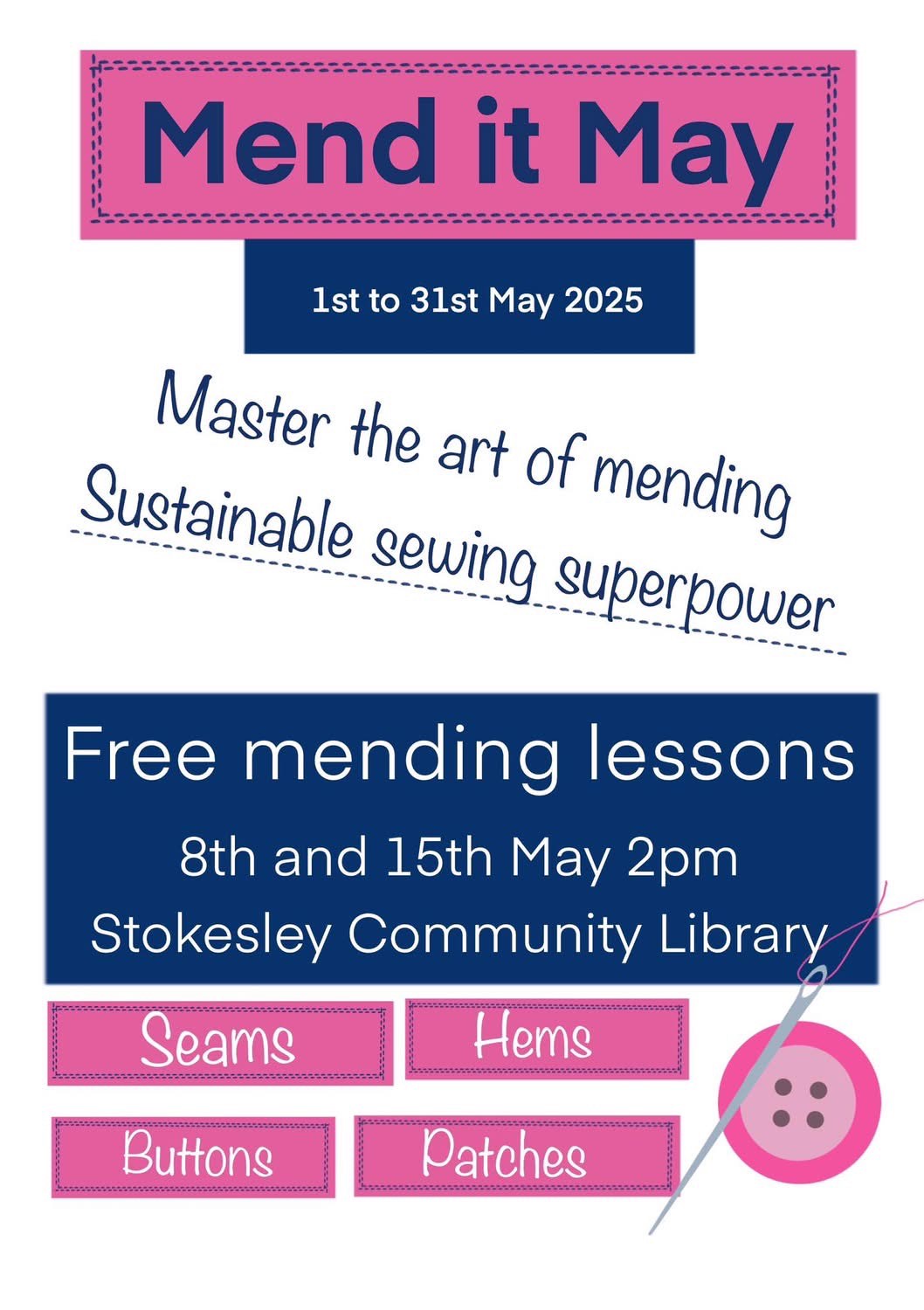 Inspired by Mend It May’s purpose to reduce textile waste, encourage sustainable consumption, and celebrate the art of mending, textile artist and mending tutor Jane and sewing and alterations businesswoman Jo are offering two sessions of free face to face hand mending lessons where you can learn how to sew up seams and hems as well as sew on buttons and patches to make your cherished clothing or textile items last longer.
What can I do now?
All materials will be provided so just turn up on the day, either or both Thursday 8th May or 15th May at 14.00 at the Globe Community Library, Stokesley with items you need to mend or learn with provided materials. All participants will also receive a free mini sewing kit to carry on your sewing superpowers at home!
Tuesday 13th May 13.00 – 15.00 Yatton House Community Garden Working Party, Great Ayton
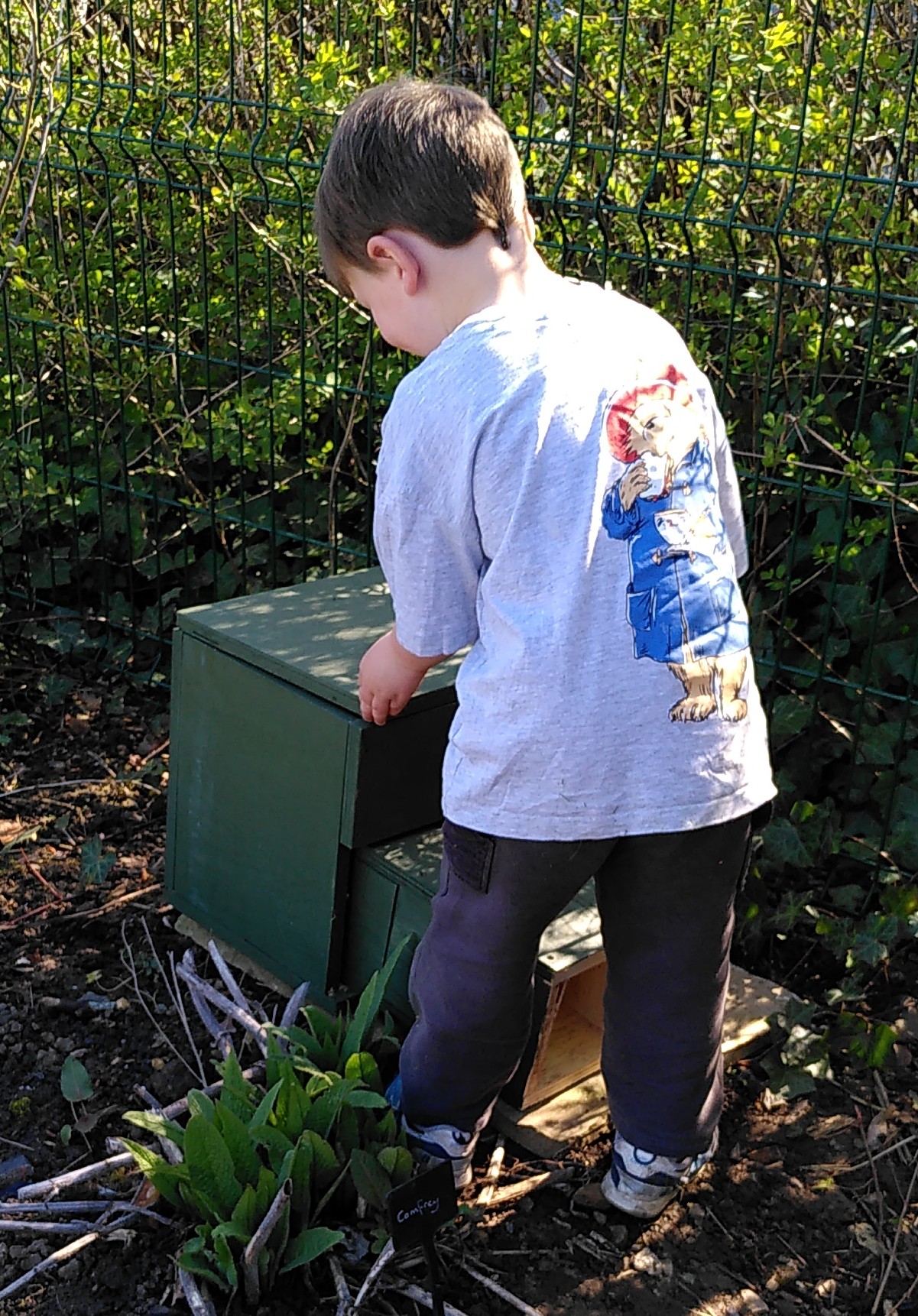
Photo of child at Yatton House Community Garden published with permission
Thank you to those who came and helped at the full day working party in the community garden last month. Great progress was made. A hedgehog box, made by a local resident, is in place; stepping stones now lead you across the grass past some lovely cowslips; a mirror might take you by surprise; and a bird feeder is starting to be used and hopefully we might be able to spot what is visiting it on camera. We are looking forward to seeing the designs for a reflective area sign from the children at Marwood CofE Infant School and also need some help in constructing a hide.
What can I do now?
If you can help construct a hide, please contact Caryn or come along to our next working party on Tuesday 13th May, from 1:30 – 3:00 pm when we will be sowing seeds, including climbing french beans as suggested by Wendy in the Food Group section, and weeding.
Saturday 17th May 10.00-12.00 Repair Cafe at Swainby Village Hall
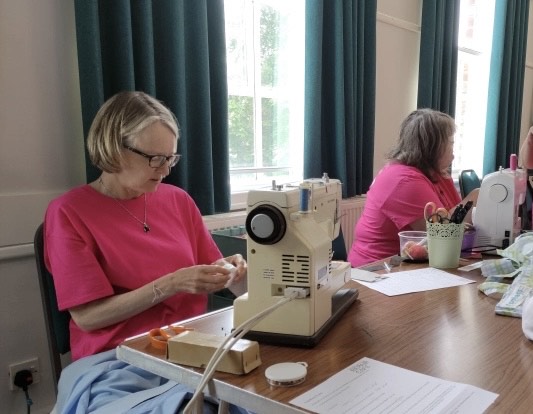
Since we started our incredible volunteers have fixed nearly 2000 items, saving their owners money and allowing them to carry on using their cherished items for longer as well as saving waste from landfill or incineration and so reducing carbon emissions.
Our May Repair Cafe includes free Fair Trade beverages and biscuits to refresh you whilst our wonderful volunteer repairers meet your fixing needs. Bring along your treasured household items in need of repair on Saturday 17th May 10-12 at Swainby Village Hall, High Street, Swainby. Our pink T-shirted volunteers will endeavour to fix your items, saving you the cost of buying new and protecting the climate and the earth’s natural resources by reducing waste going to landfill or incineration and reducing the need to manufacture new.
Household items for repair can include: clothing & textiles, electrical appliances, wooden furniture, toys & bikes, laptops & mobile phones and just in time to get your garden tools in action, our brilliant blade sharpener is back!
On average, we manage to fix 70% of items, give advice on possible repair steps for 20% and how best to recycle the 10% that are sadly beyond repair (statistics). But 100% of attendees are offered free refreshments of tea, coffee or juice as well as cakes and biscuits and a great opportunity to chat with friendly, like minded people and learn new repair skills.
This month’s free refreshments include Fair Trade beverages and home made sweet treats (including vegan!) made with Fair Trade ingredients, kindly donated by Stokesley Co-op.
What can I do now?
Come along with your item in need of repair and sit with our skilled repairers as they share their fixing knowledge with you. New repair and reception volunteers always welcome – come along, have a cuppa and a chat or email Simon Gibbon.
Ideas & news from the groups
1. Waste / Circularity (including Repair Cafe)
This subgroup focuses on reducing waste through circularity: rethinking & reducing consumption; and repairing, repurposing and recycling materials that might otherwise go to landfill or incineration.
Please join us at this month’s meeting: Tuesday 13th May 19.00 by zoom – contact email Simon Gibbon for a link
1. Circularity – what and why?

Circularity, in terms of sustainability, aims to minimise waste and maximise resources by keeping products and materials in use through practices like reusing, repairing, repurposing, and at the last resort, recycling. The benefits of this are that it can help tackle climate change, biodiversity loss, waste, and pollution as well as saving us money and saving the earth’s limited resources for future generations.
At this month’s Repair Cafe there will be a display / information on Circularity Living and an opportunity to reuse books and magazines on sustainable themes such as plant based cookery, gardening & growing your own and mending or repurposing your household items.
2. Household items circularity: Give or Take Event in July
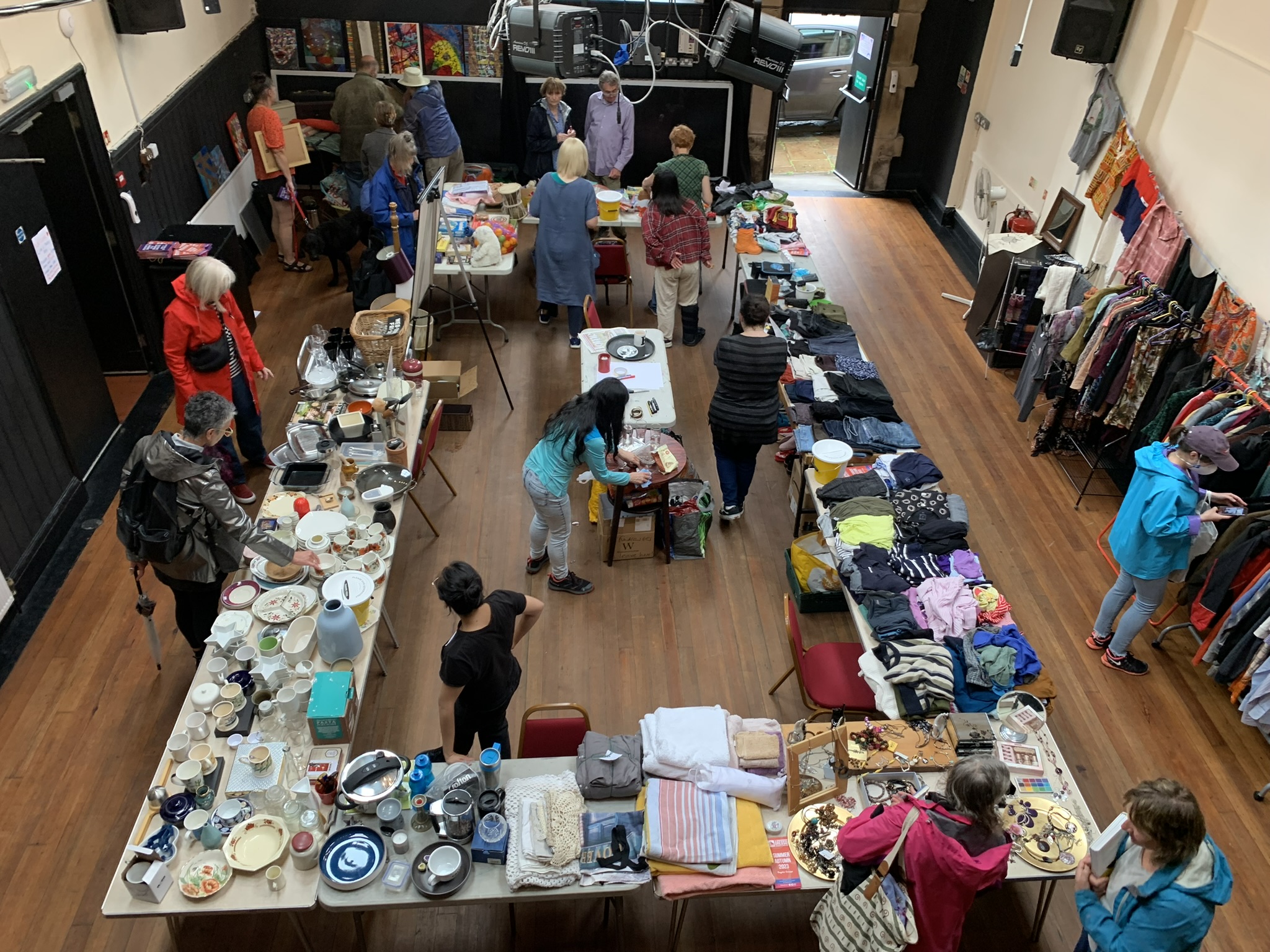 Most of us have cupboards, under beds and garages full of household ‘stuff’ – kitchen equipment, bedding & other household textiles, books & magazines, ornaments, DVDs, CDs, toys, hobby equipment – that we never use and / or have duplicates of (just how many saucepans do you really use / need?).
At the same time there are many in the local community who need these household items but cannot afford them, particularly in this cost of living crisis as bills continue to rise
‘Give or Take’ events – where people who have unused surplus household items have a good clear out and people who need household items pick up things they need for free – have been running across the country for a while with some excellent ones running regularly in nearby Ryedale.
Waste / Circularity group members are planning a GIVE OR TAKE EVENT in July based in Stokesley (venue to be confirmed) for the local community to give a new life to their surplus, unused but usable household items and for others who can make good use of them. Any items left over will be offered to local charities and community groups or collected and recycled by North Yorkshire Council.
What can I do now?
We need volunteers to help plan and run the event (meeting soon) so if you can help or have household goods you want to repurpose please contact
3. Clothing circularity: New to You Clothes Swap Event in September – equipment & volunteers & participants needed
The climate impact of clothing is significant, with the fashion industry considered one of the most polluting industries globally, contributing heavily to greenhouse gas emissions through its production processes, material sourcing, and waste generation, primarily due to the high water usage, energy consumption in manufacturing, and reliance on synthetic materials like polyester which are derived from fossil fuels.
Not only this, but “fast fashion” encourages frequent clothing purchases and quick disposal whilst garment workers are often exploited with low pay, unsafe working conditions, and long hours. Fast fashion’s affordability and new trends can make consumers value clothing less so instead of taking care of our clothing and repairing any damage to extend the life of our clothing we end up buying more and more that will sit in our wardrobes and never see the light of day.
What can I do now?
– Support sustainable and ethical fashion brands and choose high-quality clothing that lasts longer.
– Recycle or repurpose clothing when it’s no longer needed.
Most of us have far more clothing stuffed in our wardrobes that we no longer wear or in some cases have never worn after an impulse buy.
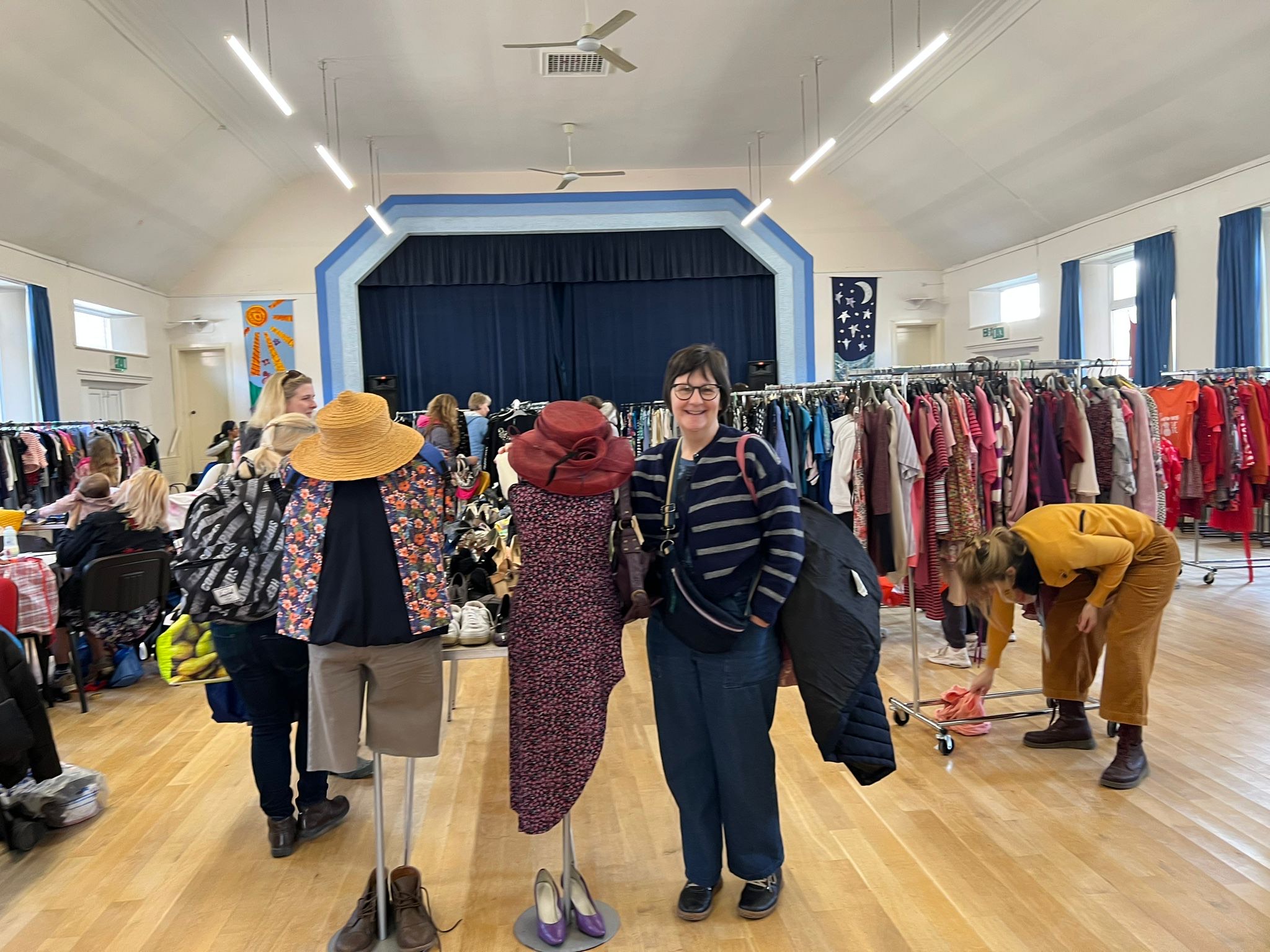
Jane and Jo, Repair Cafe textiles specialists, are hoping to address this locally and are currently planning a new to you good quality clothing swap event on 27th September to coincide with Sustainable Fashion Week (27th September to 5th October) where our local community can have a wardrobe refresh by exchanging the clothes they no longer wear for ‘new to you’ clothes they would like to wear.
If you have any spare clothes rails or would like to volunteer to help or would like more information to participate please contact clothesswap@casav.uk
4. Waste group events in April: 3rd Birthday Repair Cafe at the Globe, Stokesley

April’s Repair Cafe at the Globe, Stokesley started with celebrating three years of running our monthly Repair Cafe. Candles were lit, Happy Birthday was sung and cake was eaten! Our ever ready pink T-shirted volunteer repairing heroes rose to the challenge yet again and 53 items were fixed to the delight and gratitude of their owners
Volunteers were also on hand on our now regular information stand to discuss the all things biodiversity and climate change and new members to the group were signed up.
2. Nature Group
This subgroup focuses on discovering more about and supporting biodiversity and our living environment. Please join us at our next face to face meeting on Thursday 15th May at the Globe Community Library, Stokesley. Contact Bridget for more information.
1. Sunday 4th May International Dawn Chorus Day
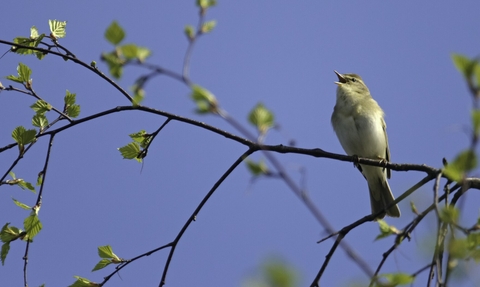
Each year, the first Sunday of May is dedicated to the chorus of birdsong that can be heard each day at dawn. While it is often enjoyed (or sometimes found unpleasant!) for its various tunes, tones and melodies, it has a much more practical, underlying purpose for the survival of birds across the world – it is performed by birds looking for love and to defend their patch. Dawn Chorus Day takes place on the first Sunday of May, as it marks the beginning of the breeding season. Some species sing throughout the day, but it’s at dawn, as the morning light begins to break, that many different birds join together to perform.
Listening to birdsong is a great way of potentially increasing our happiness and well-being. A recent study found that listening to 6-minute recordings of birdsong reduced feelings of anxiety, depression and paranoia across 295 participants, whereas listening to recordings of traffic noise was connected to a significant increase in depression.
Birds are highly sensitive to changes in the environment, making them great indicators of environmental health, including changes in the climate. However, this also means they are vulnerable to climate change, which is one of the main drivers of biodiversity loss across the world. Climate change may also alter the future of the dawn chorus. Climate modelling has predicted that early morning temperatures may become suboptimal for vocal communication due to warmer temperatures at night, which may shift singing times to even earlier in the morning when light levels and foraging abilities are lower.
What can I do now?
To feel more connected to nature and for your own interest and wellbeing, get up early and sit outside to listen to this wonderful nature event. There are a number of smart phone apps that can identify the tunes of different birds or you can have a listen here:
You can join in local organised Dawn Chorus walks here:
ywt.org.uk/events/2025-05-04-dawn-chorus
Make sure you support and protect habitats for nesting birds. You should only cut hedges outside of bird-nesting months – typically between March and August every year, but they may vary depending on weather conditions. It is a legal offence to harm nesting birds, or their eggs, under Section 1 of the Wildlife and Countryside Act of 1981.
2. Sunday 4th – Saturday 10th May National Hedgehog Awareness Week

This national annual campaign highlights the problems hedgehogs face and how to help them. Hedgehogs are important because they serve as natural pest control in gardens, are indicator species for healthy ecosystems, and contribute to the overall biodiversity of an area. They consume invertebrates like slugs and beetles, helping to keep populations in check and reducing the need for chemical pesticides. Their presence also suggests a healthy environment with enough food and vegetation.
What can I do now?
This year people are being asked to ‘Give hedgehogs the edge!’ by making the edges of their gardens and green spaces havens for wildlife, and encouraging landowners such as schools and councils to do the same. More information here: hedgehog-awareness-week
Last year our group were treated to a special talk from Smoggy Hogs Rescue based in Middlesbrough but supporting the rescue and nursing back to health of hedgehogs across all TS postcodes. More information here: smoggyhogsrescue
3. What to see and do locally in nature in May
For ideas on things to do in nature in May have a look at Natures Calendar from the North York Moors National Park. northyorkmoorsnature-calendar/may

What can I do now?
The more we connect with nature, the more motivated we are to protect it. This month make sure you catch the beautiful bluebells under the dappled shade of our deciduous woodlands such as those at Hackfall Wood, Newton Wood & Roseberry Topping .
4. Dandelion Day Market Stall Success
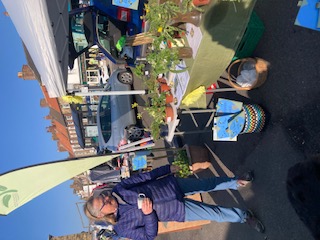
On Friday 4th April the Nature Group held an information stall at the busy Stokesley Friday market. As well as beautifully blooming dandelions there were a display of other wild flowers including violets and primroses (carefully taken from group members’ gardens not from the wild!) for people to take away along with leaflets on local wild flowers and their importance and uses (Dandelion flower cocktails anyone?). Dozens of market shoppers stopped to discuss all things wild and encouraging biodiversity. Free blue heart signs to encourage people to leave areas of their gardens and verges to grow wild to create habitats for pollinators were also given away. Find out more on Let It Grow.
3. Food Group
This subgroup focuses on food & its impact on climate change – from growing your own and eating seasonally to reducing food going to waste. Meetings held bimonthly on zoom, next meeting 29th May 19.00 contact Wendy for a link to join
1. Growing Your own: May Tips of the Month
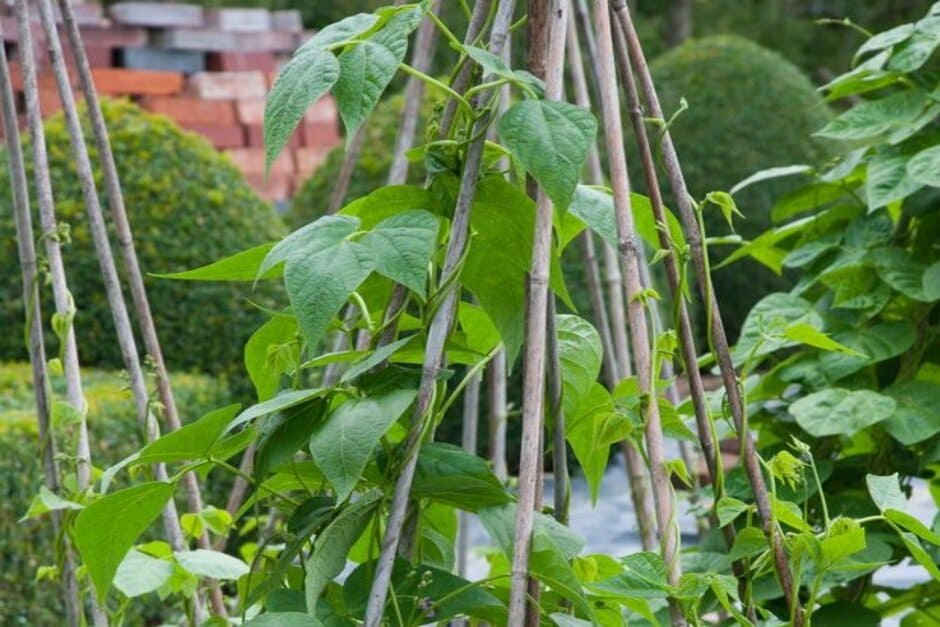
What are the benefits of growing your own?
Environmental benefits: You can avoid pesticides and herbicides, which pollute the air and water, you can practice water conservation, you reduce food miles, you help pollinators by providing food for them.
Health benefits: you can eat more fruits and vegetables, and include them in healthy meals, homegrown vegetables are more nutritious and taste better because they are free of artificial additives.
Economic benefits: you can save money on food by growing your own vegetables and be more self-sufficient in case of food shortages or price increases.
What can I do now?
This year why not try growing climbing French beans which produce many more beans than the dwarf sort from the same area of ground (or pot). And out of reach of slugs! Can be planted now if soil is warm enough.
2. The EAT-Lancet Commission on Food, Planet, Health
This recent research brought together 37 world-leading scientists from across the globe to answer this question: Can we feed a future population of 10 billion people a healthy diet within planetary boundaries? The answer is yes, but we it will be impossible without transforming eating habits, improving food production and reducing food waste.
The EAT-Lancet report is the first full scientific review of what constitutes a healthy diet from a sustainable food system, and which actions can support and speed up food system transformation. One of its key recommendations was that people in the global north eat less meat to benefit both the planet and their health.
What can I do now?
You can see / read a summary of the key findings here: can-healthy-food-save-the-planet-animation/
3. Climate Friendly Farming Methods
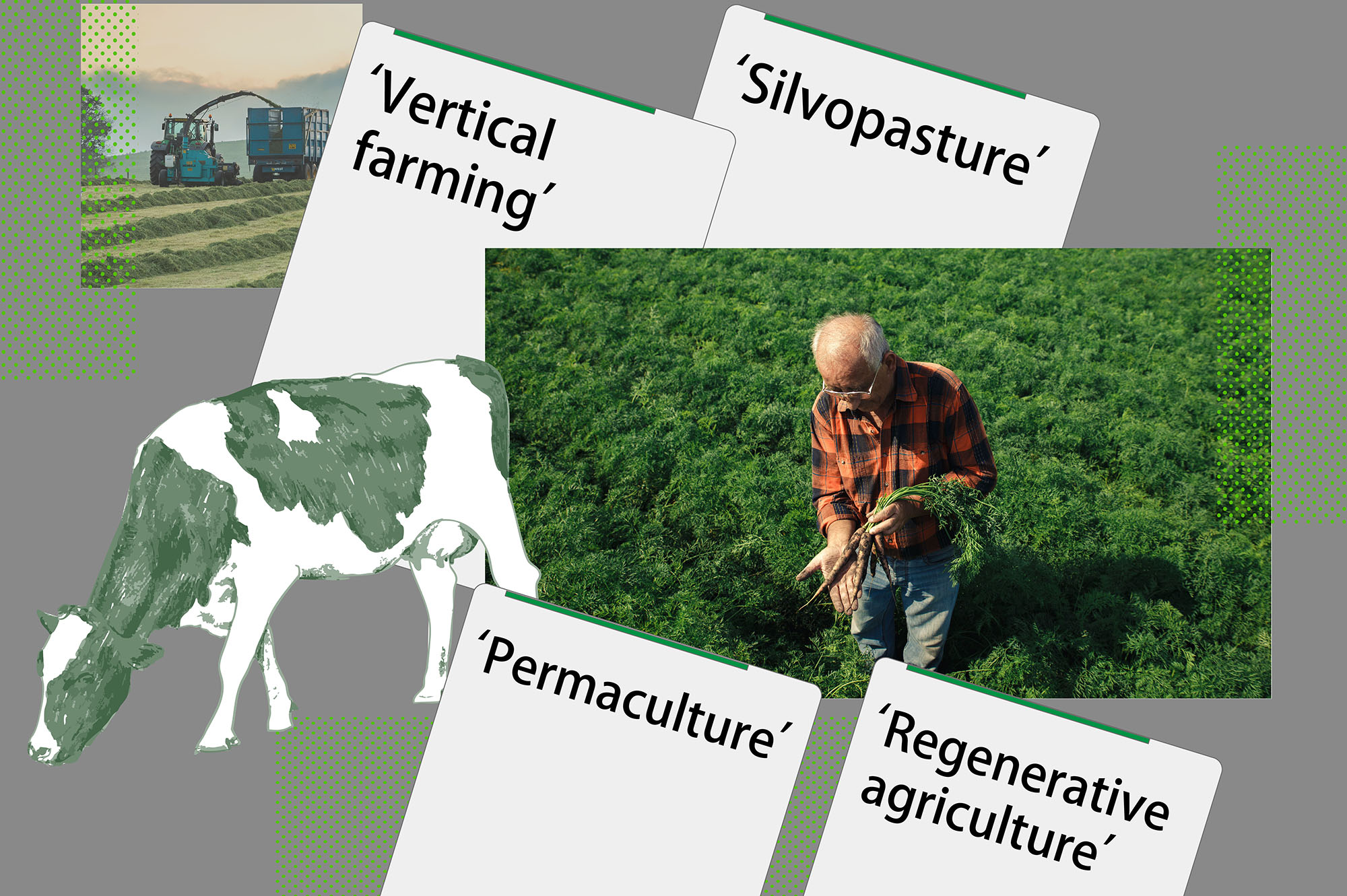
One of the key findings from the EAT-Lancet report above was the need to change food production methods. For example, global food systems are responsible for around one third of planet-warming greenhouse gas emissions each year. Carbon Brief has produced a guide of 25 ‘climate friendly’ farming methods you can read here: https://interactive.carbonbrief.org/glossary/agriculture/index.html
4. Cooking and eating rice safely
Rice is a staple part of the world’s diet but, as with all food preparation, caution is needed to ensure safe eating. Arsenic, a naturally occurring element, can be found in rice, particularly in flooded rice fields. it can be a cause for concern, especially for infants and young children. Rice tends to absorb more arsenic from the soil and irrigation water than other cereals.
New research found that as “carbon emissions rise and the Earth continues to warm, so too will arsenic levels in rice”, BBC News reported. While “almost all rice contains arsenic”, amounts can vary, the study noted. Rising CO2 levels could contribute to “approximately 19.3m more cancer cases in China alone” due to increased arsenic intake, it said. The outlet pointed out that the worst-case warming scenario in the study was “beyond the high emissions” scenario used by the Intergovernmental Panel on Climate Change. But, it added, the research “provides a snapshot” of what could happen to rice crops globally – not just in China, where the researchers conducted their experiments.
What can I do now?
To reduce the arsenic in your rice, first give it a good rinse. Place the grains in a fine mesh strainer and pour water over them until it runs clear. Cook the rice in excess water, at a ratio of one cup of rice to six cups of water, and drain any extra leftover once the grains are tender.
5. Foodshare: surplus food prevented from going to waste and helping those in need
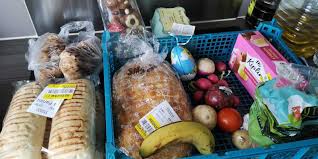
Foodshare is a joint initiative by the Food and Waste groups and is organised by Jenny. EVERY evening at 9pm a Volunteer collects surplus food from the Ayton Coop and Premier supermarket and both Stokesley Coops and takes it to various distribution centres (often in Middlesbrough) such as Nitelight (for homeless) for use/distribution amongst those in need. This is fresh food such as fruit, veg and bread, NOT the tins and dried food that are needed by Food Banks.
Foodshare collects 40 – 60 kilos of food each day with a value of approx £250. This is £78,000 worth in a year!
What can I do now?
Jenny is always keen to recruit more volunteers to support the foodshare so if you feel this is something with which you could help, please contact Jenny here Jenny Earle.
6. May Seasonal Eating

Eating food in season (local as far as possible) can have substantial positive impact on climate breakdown by reducing high-energy input from artificial heating or lighting needed to produce crops out of the natural growing season.
Recipe of the month: Spinach gnocchi spinach-and-ricotta-gnocchi
Fruit and vegetables in season in May – after the hungry gap May brings lots of fresh new vegetables to enjoy such as asparagus, broccoli, carrots, jersey royal new potatoes, lettuce & salad leaves, new potatoes, peas, radishes, rocket, samphire, spinach, spring onions, watercress, wild nettles. Also herbs are coming in to their own – basil, chervil, chives, coriander, dill, oregano, mint, nasturtium, parsley (curly), rosemary, sage, sorrel, tarragon
4. Ideas from the groups: Environment & Climate Osmotherley (ECO) Group

Environment Climate Osmotherley (ECO) meets regularly and holds events which raise awareness and address local environmental issues such as becoming a Dark Skies Village and increasing local biodiversity. Contact Rebecca for more information
Signing off
If you have any news or any event / activity you would like promoting on next month’s (June‘s) update please email Kate Gibbon by Friday 30th May.
Kate also helps promote activities via Facebook so let her know if there is anything that you would like shared via our Facebook page and Instagram if you are not a Facebook user.
Hope to see you at the whole group CASaV meeting on Tuesday 20th May 19.30 at the Globe Community Library, Stokesley
Kate Gibbon,
on behalf of the Climate Action Stokesley and Villages Steering Group Steering group:
Bridget Holmstrom, Caryn Loftus, Ron Kirk, Barry Warrington Simon Gibbon
 Climate Action Stokesley and Villages